Send the request type, manufacturer, equipment model/year, part reference, ratings, quantity, destination, required date, and any drawing or photo notes. The SUVELL team will review the request.
Email: admin@suvell.com
Phone: +86 189 6871 1705
Factory: No.208 Wei 12 Rd, Yueqing Economic Development Zone, Wenzhou, Zhejiang, China
Epoxy Resin Insulator Manufacturing Process: From Mold Design to Routine Tests
Follow cast epoxy insulator production from mold and insert approval through resin preparation, casting, cure and inspection, with clear boundaries for routine and sample testing.
Mold approval, insert layout, resin preparation, casting, cure and finishing form a connected process; changes need part-specific review.
Indoor and outdoor resin systems have different intended exposure conditions. APG or vacuum casting parameters must follow the selected material and validated tooling.
Separate design validation, per-unit routine tests and additional sample checks. A published inspection capability list does not establish the tests performed on a delivered part.
A cast epoxy insulator is not one operation but a chain — mold and design approval, resin preparation, insert placement, metering and degassing, gelation and cure, finishing, then testing — and decisions at each stage constrain later stages. The practical consequence for a buyer is that tooling and validation decisions affect purchase price and lead time before the first part is cast, because tooling geometry, insert anchorage and the approved cure cycle are fixed into the process rather than into the part. This article maps that chain, marks where public manufacturer evidence ends, and lists what has to be settled before an RFQ or a replacement decision.
Two documented casting routes are APG and vacuum casting, and the choice changes the process rather than only the equipment: resin systems guidance from Huntsman describes prepared, degassed and metered mix being fed either to a vacuum-casting chamber or to a hot mold in automated pressure gelation (APG). The comparison below frames the decision, not the settings.
Decision point
Automated pressure gelation (APG)
Vacuum casting
Process consideration
Cycle time and repeatability in series production
Void control and filling of larger or insert-heavy geometries
Mold condition
Heated tool, gelation initiated in the mold
Mold charged under vacuum after mix preparation
Where the risk concentrates
Gel timing and insert displacement under fill pressure
Mix degassing quality and cavity evacuation
Evidence needed for approval
Tool qualification and gel-cycle validation on the specific part
Vacuum level, leak integrity and fill pattern validation on the specific part
What stays identical
Resin preparation, metering and mixing steps; drawing-governed insert location; post-cure and test plan
Same
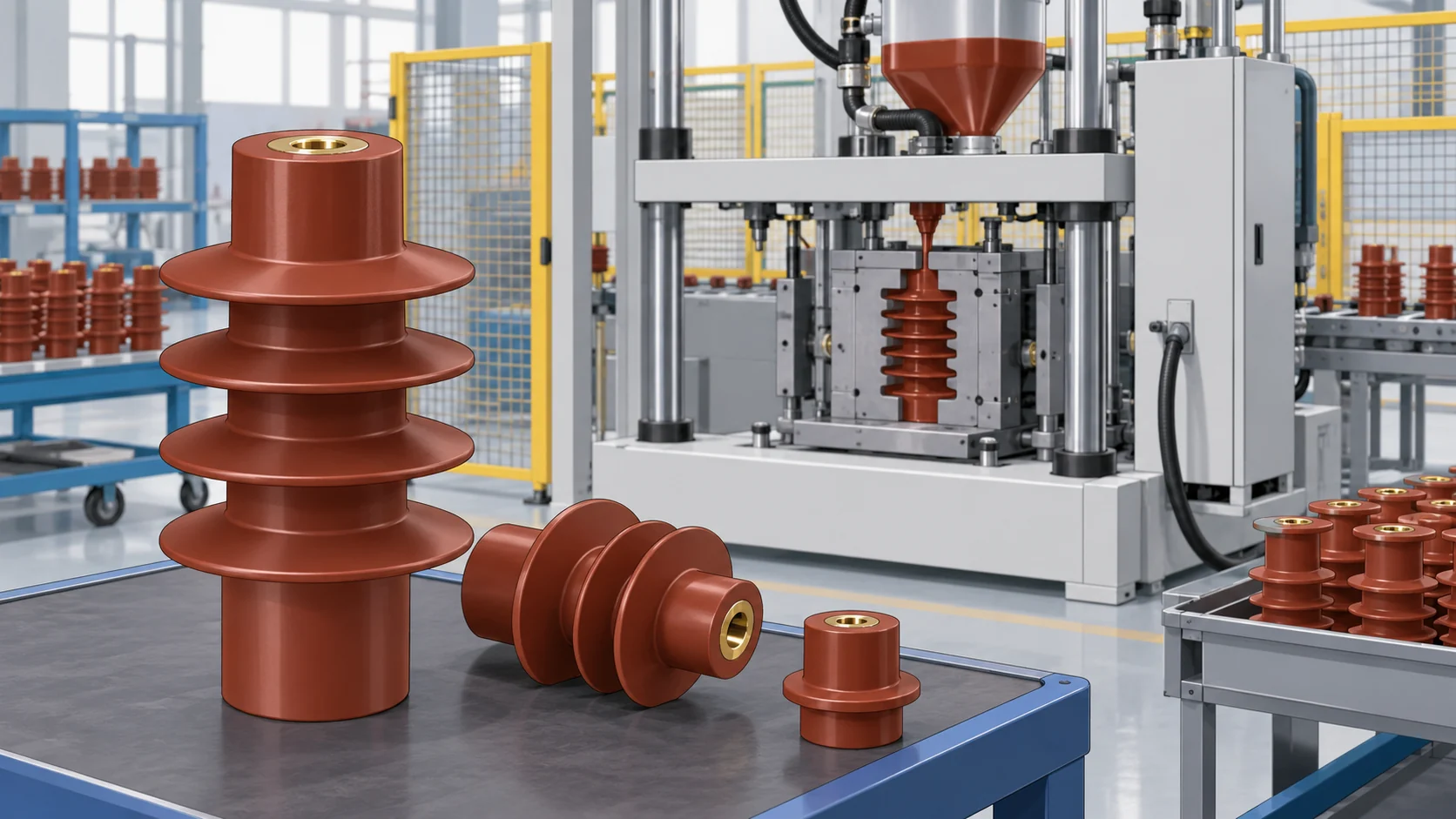
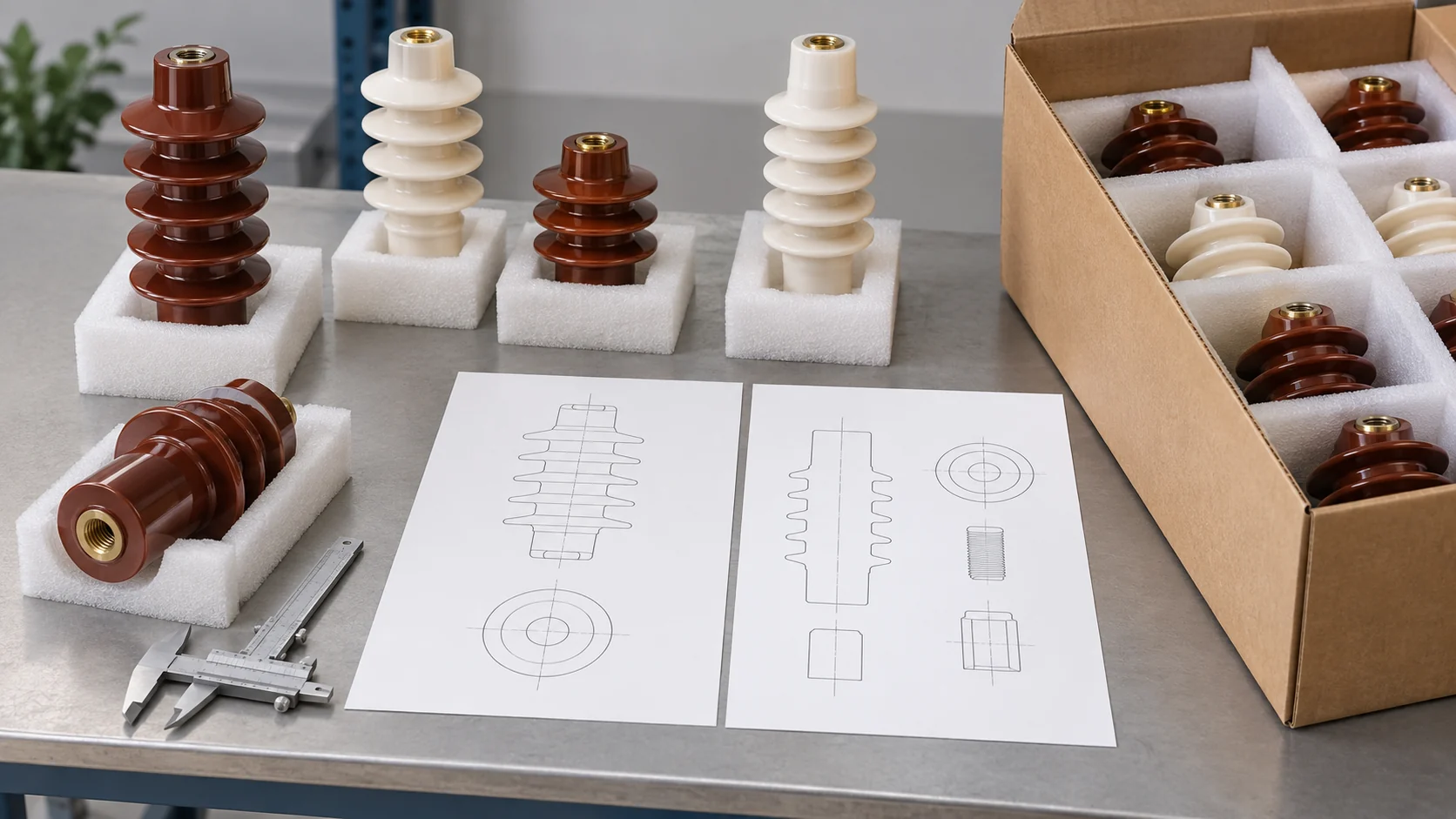
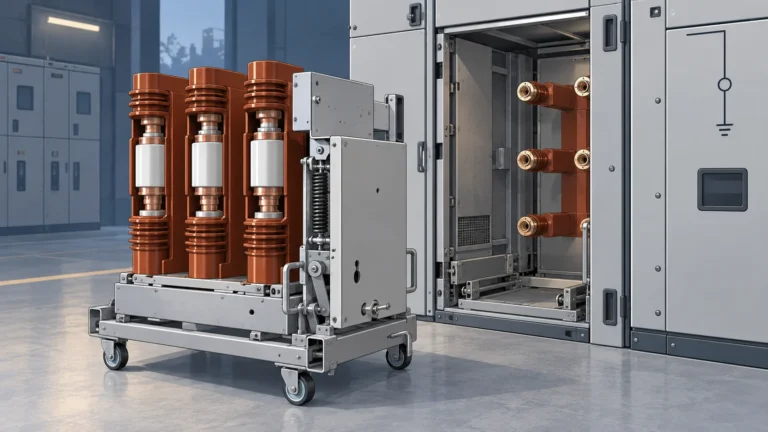
Conceptual engineering illustration; not a photograph of a named manufacturer product or factory.
Design and mold approval is the start of the process, not pre-production admin
Manufacturers that publish their sequence tend to place requirements assessment and an approved solution concept ahead of tooling, and initial or type testing ahead of series manufacture. GIPRO's published development path follows that order — requirements, approved concept, resin selection and tool engineering, then initial/type testing before series production. That ordering matters commercially: a change made after tooling approval is a re-approval, and the change can affect the agreed delivery schedule.
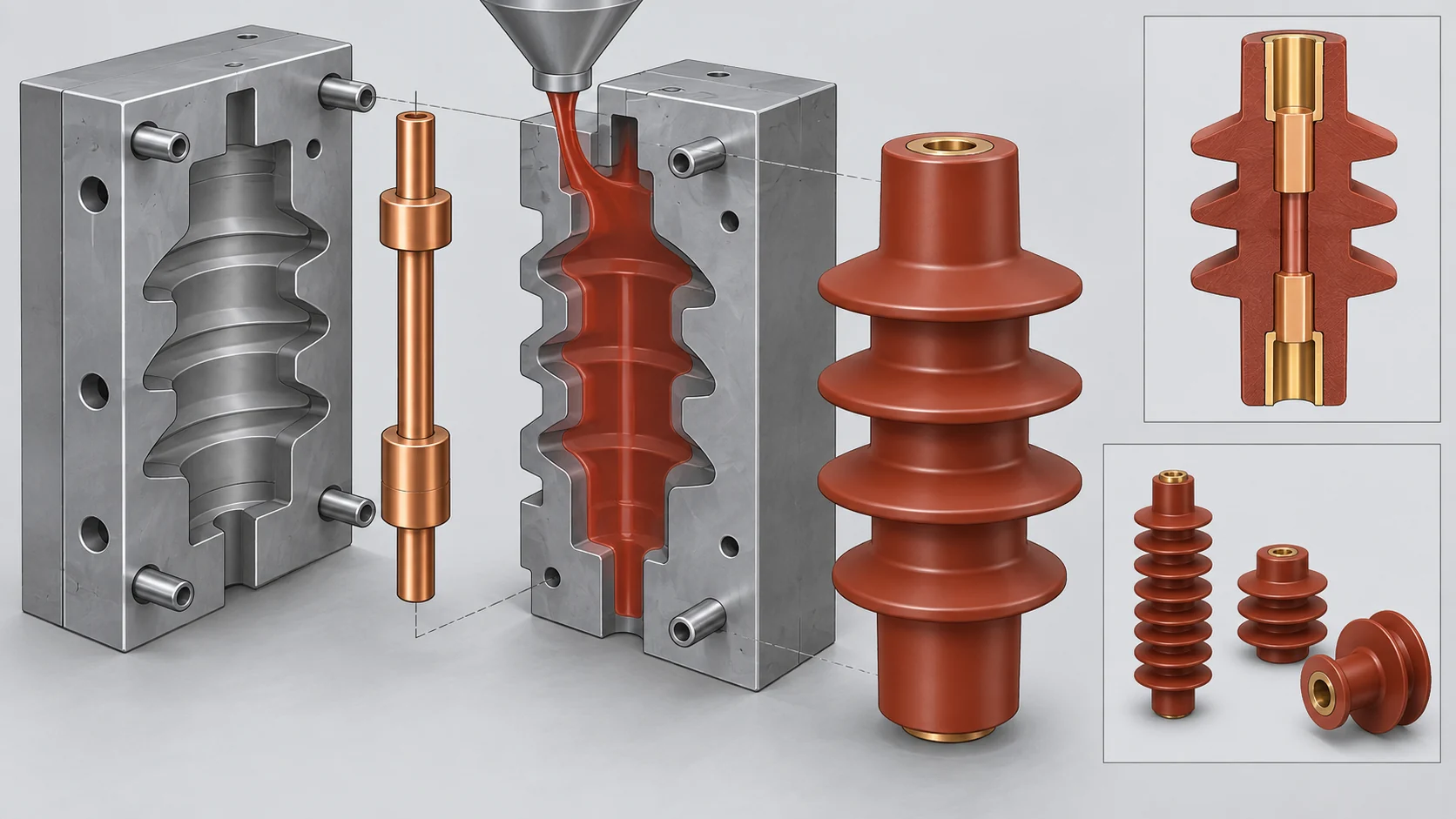
This is also the point at which the drawing stops being a sketch and becomes a process constraint. Insert positions, wall thickness, sealing interfaces, gate placement and the surfaces that will be permitted to be machined all have to be resolved on the approved component drawing, because the mold only executes what the drawing already decided. Where a figure of a molded bushing or insulator shows a mounting insert, read it as an interface definition rather than a manufacturing detail.
The distinction between a design-approval routing and a manufacturer's internal quality system is worth holding on to. GIPRO's sequence is one producer's described workflow; it is not proof that every producer runs an equivalent approval system, and it is not evidence about the internal procedures of any other supplier. When a buyer asks "is the tool approved?", the answer they need is part-specific: which drawing revision, which insert layout, which first-article result.
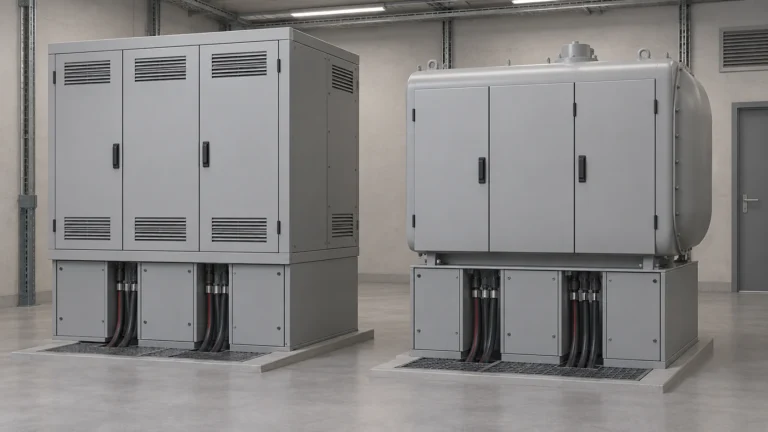
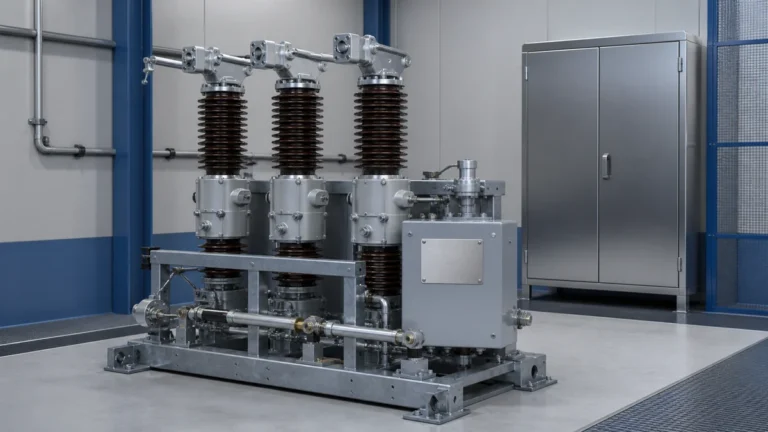
Conceptual engineering illustration; not a photograph of a named manufacturer product or factory.
Resin selection follows the service environment, not the word "epoxy"
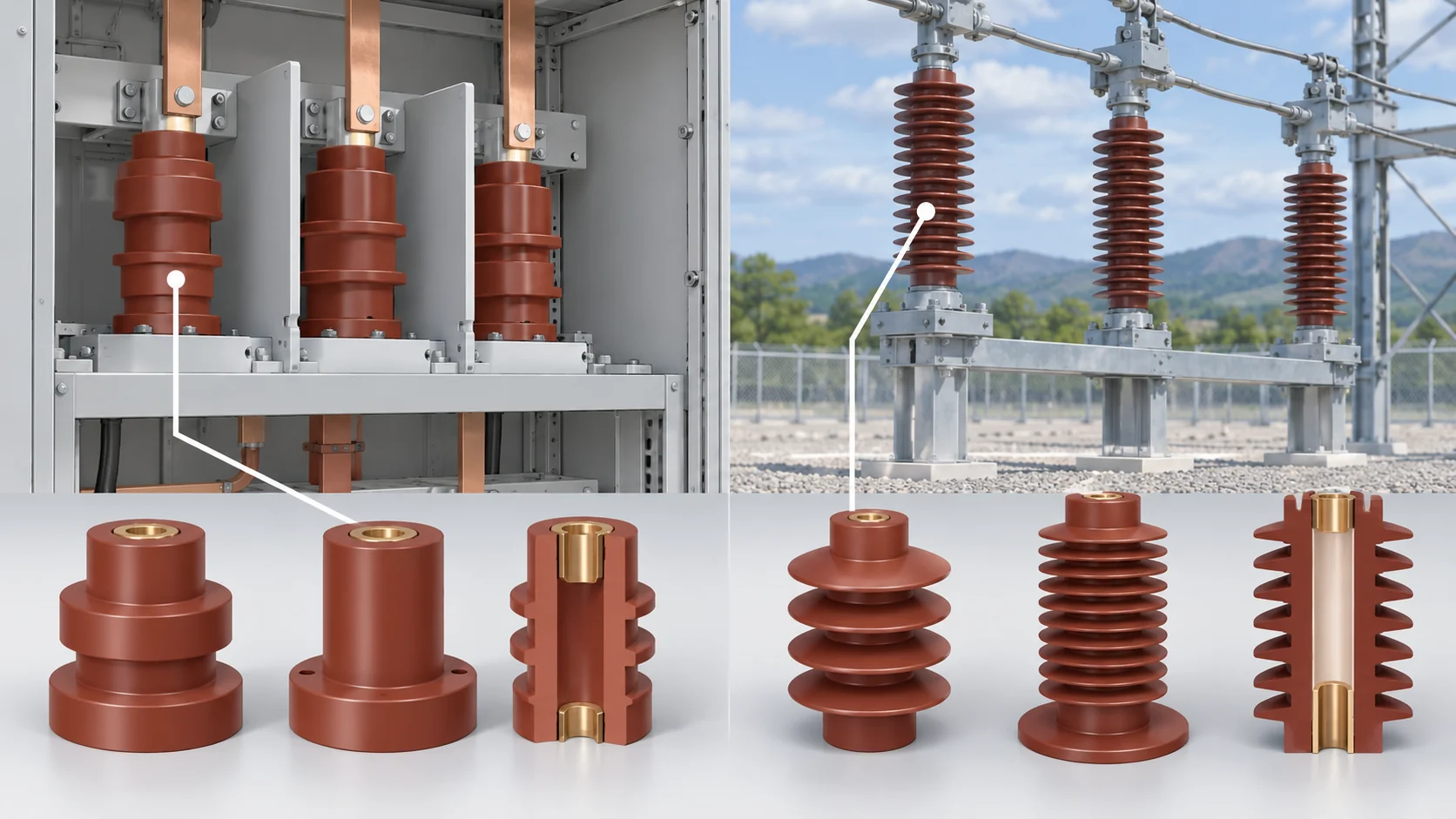
Generic labelling can hide the service-environment requirements behind material selection. Huntsman's published portfolio illustrates the split directly: CW229-3/HW229-1 is described as an indoor electrical-insulation casting system, while CW5817/HY1235/DY062 is described as a heat-curing cycloaliphatic system intended for outdoor medium-voltage use, with APG and vacuum casting both listed as applicable methods. Same family name, different intended environment.
So the selection question is not "epoxy or not" but "which formulation is justified for this exposure" — ultraviolet and weathering exposure, pollution level, condensation, tracking and erosion duty, and the continuous and short-time thermal envelope. Environmental suitability and tracking/erosion behaviour are formulation-specific, so nothing in a general article should be read as equating one epoxy grade with outdoor service. Nor should the two named systems be read as ranked: the indoor example and the outdoor example complement each other, and neither establishes superiority.
Preparation then applies to whatever system is chosen. Huntsman's guidance for its indoor casting system describes degassing and homogenising the components, metering and mixing them, then feeding the prepared mix to a vacuum chamber or a hot APG mold. Those are the generic roles — preparation, proportioning, degassing, then delivery to the cavity. The numbers behind them are not generic. Ratios, temperatures, pressures, times and expected properties belong to the applicable current technical data sheet and to a validated tooling and material process; copying a resin supplier's example values onto a different part, mold and plant can bypass the required part-specific process validation.
Inserts, interfaces and the bonding layer
Metal inserts convert a cast polymer body into a mechanical and electrical component, and they are where casting and materials engineering meet. The drawing fixes insert geometry and position; the process has to fill around them without displacing them, and the cured resin has to bond and seal at the metal–resin interface. Differential thermal expansion between insert and resin body means that interface is loaded every time the part changes temperature, in service and during cure.
That is why sealing evidence is separate from electrical evidence. Helium leak testing, where a manufacturer lists it, interrogates relevant sealed interfaces rather than the whole component, and it applies only where such an interface exists. A bushing with a cast-in conductor and a gasketed interface does not carry the same leak-testing question as a fully encapsulated part. Test scope, sample plan and limits have to be agreed for the specific product.
Filler content is the other insert-adjacent variable. Fillers move thermal expansion, mechanical stiffness and shrinkage, so a filler-content check is part of confirming that the delivered material is the qualified material — not a quality verdict on the finished casting by itself.
From prepared mix to cured body: gelation, cure and why the cycle is not transferable
Gelation and post-cure are where crosslinking develops, and Huntsman's guidance notes that gel and post-cure cycles can influence crosslinking and glass-transition behaviour. The operational reading is straightforward: the cure schedule is a material variable that shows up later as a mechanical and thermal property, so it belongs to the validated process rather than to the shop floor's judgement.
Glass transition temperature is the usual way that influence is made visible. Where a manufacturer lists DSC analysis of glass transition, it is measuring the state of the cured matrix — a material-evidence method, distinct from electrical tests and from dimensional inspection. It does not by itself prove the part will perform at temperature; it supplies material evidence for comparison with qualified reference values and production records.
This is also why a resin supplier's example cycle should never be presented as a site parameter. A cycle validated for one geometry, one insert mass and one heating arrangement transfers poorly: thicker sections and heavier inserts change the thermal path through the part, and the gel point arrives differently. Any cycle used in production should trace to a part-specific validation.
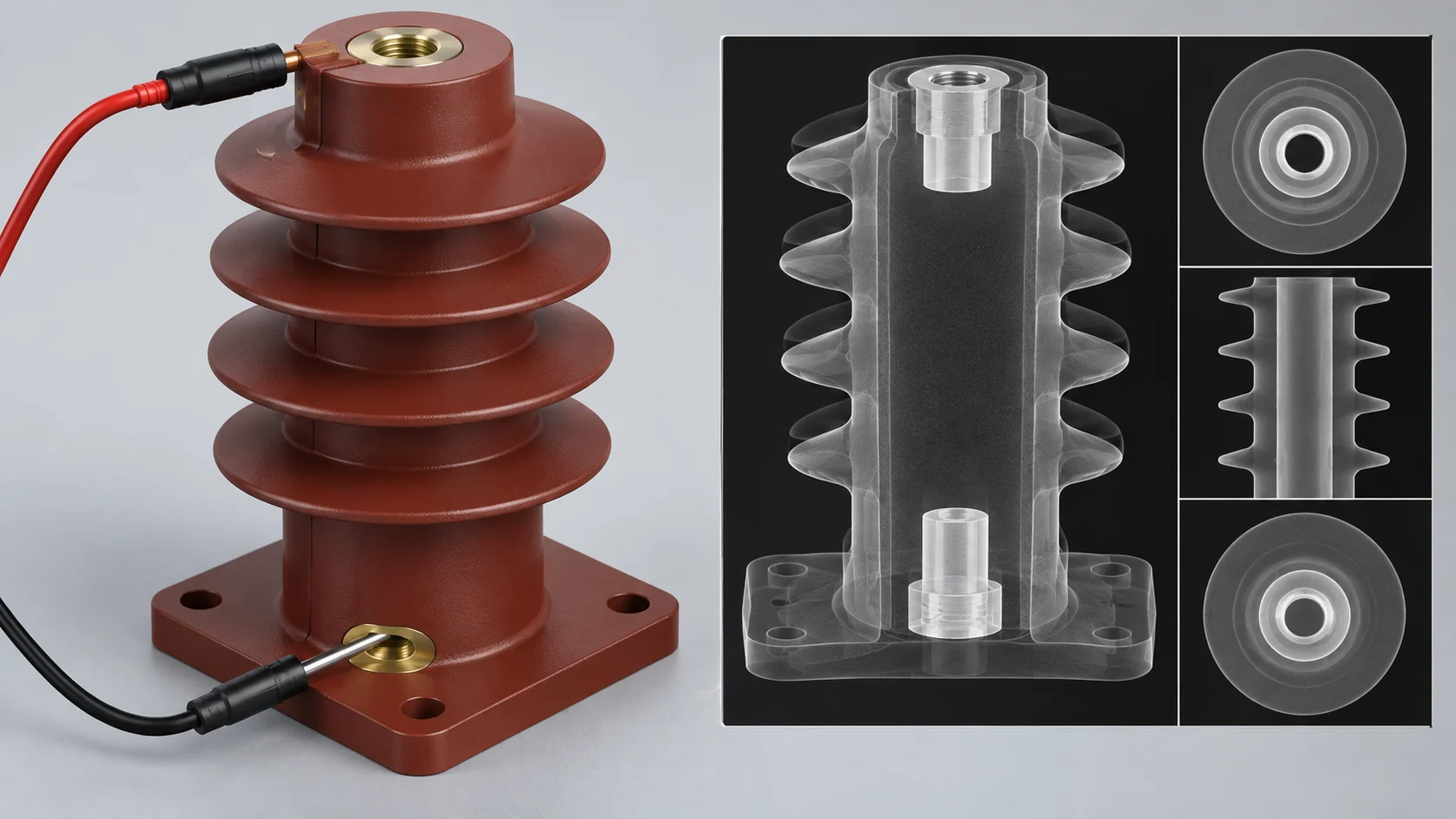
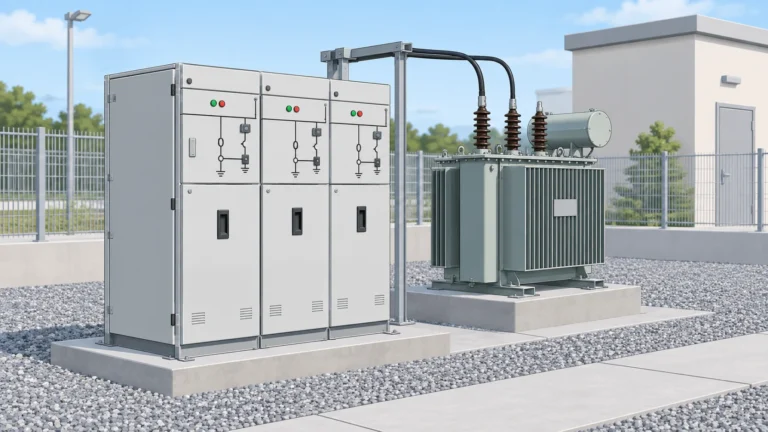
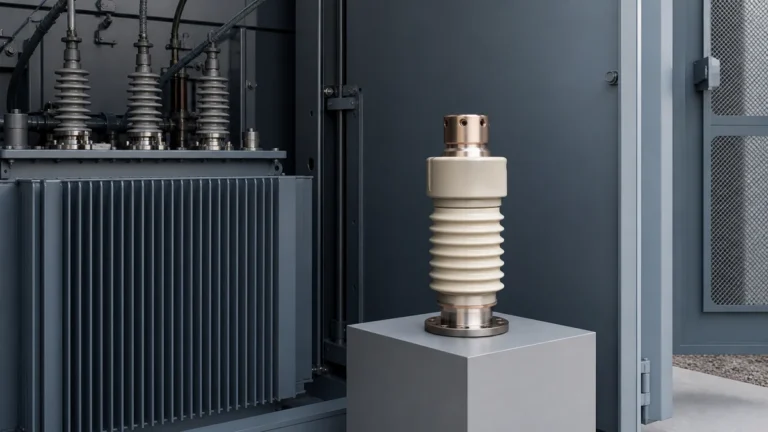
Conceptual engineering illustration; not a photograph of a named manufacturer product or factory.
Casting, monitoring and finishing are three stages, not one event
It is tempting to treat the cast as a single step that either works or does not. Manufacturers' published process chains separate it: GIPRO describes APG and vacuum molding, monitored resin production, in-process quality checks, and mechanical finishing for non-standard molded bushings and insulators. Monitoring during manufacture, not only inspection after it, is what makes the stage separable.
Finishing deserves particular caution because it is irreversible. Machining can remove flash, bring a mounting face to dimension, or produce a non-standard configuration — but not every surface is a permissible machining surface, and an insulation surface and a creepage path are the wrong places to discover that after the fact. Permitted finishing must follow the approved component drawing and process; a general article cannot authorise a cut on a specific part.
After demolding, the sequence typically moves through trimming, any drawing-permitted machining, and preparation of the interfaces that will be tested. Each of those operations either preserves the drawing-defined geometry or departs from it, and departures are engineering changes.
Inspection and testing: separate the first-article verdict from the routine checks
Published inspection capability lists read impressively but answer a different question than a buyer usually asks. GIPRO lists partial-discharge and electrical testing, X-ray examination of matrix homogeneity, helium leak testing, climatic testing, DSC analysis of glass transition, filler-content checks and dimensional inspection. Each of those methods supplies different evidence — electrical, material, sealing, dimensional — about the molded component. None of them is a complete quality verdict, and listing a method does not make it a mandatory routine test on every insulator or every lot.
The distinction that decides cost and scope is type/first-design validation versus routine production checks. First-design or type validation establishes that the design, material and process combination can meet the agreed requirements; it is performed once per design or upon significant change. Routine tests apply to individual production parts where the applicable product standard or agreed specification requires them. Additional sample or lot checks need a separate plan, limits and traceability. Buyers routinely assume a capability list is a routine test list, then discover at first delivery that the impressive methods were type-test activities.
Partial discharge illustrates the boundary precisely. IEC 60270:2025 defines charge-based partial-discharge measurement — measurement quantities, test circuits, calibration, instruments and interference discrimination for electrical apparatus and components under specified AC or DC testing. It is a measurement framework. It is not an acceptance limit for epoxy insulators, and it does not set mandatory routine-test frequencies or certify compliance. The applicable product standard and the agreed test plan determine what constitutes acceptance, and an article of this kind cannot supply clause numbers, thresholds or pass criteria that were not reviewed.
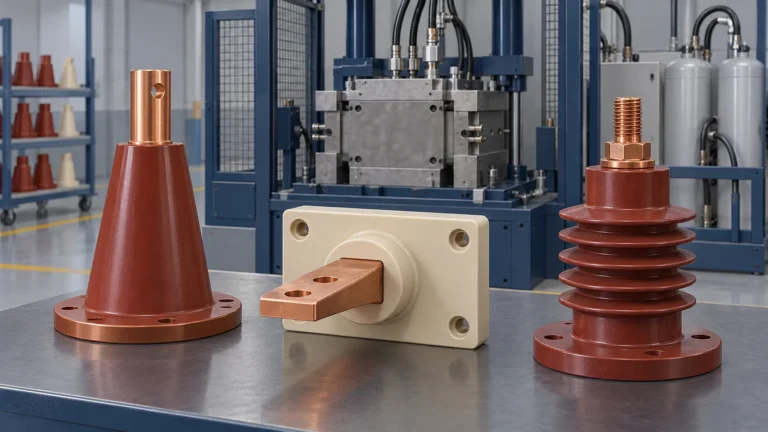
Conceptual engineering illustration; not a photograph of a named manufacturer product or factory.
Failure and installation risks at the evidence boundary
Possible failure causes in cast epoxy components include earlier specification or process decisions: an insert interface that was never leak-qualified because nobody asked whether the interface existed; a surface machined outside the drawing; a cure cycle transferred from a different geometry; a formulation chosen for indoor duty and installed outdoors. These examples concern process and specification risks; installation and assembly conditions need a separate assessment.
Where a specified part is already installed and a question arises about its condition — partial discharge, moisture ingress, thermal history — the evidence chain is what matters: the drawing revision, the qualified material, the validated cycle, and the agreed test plan that the part was produced against. Verifying that chain is a documentation exercise first.
Any work on an energised or de-energised assembly — isolation, switching, gas handling, adjustment, torque values, setpoints, or repair — is governed by the model-specific approved procedures and the operator's own site rules. Nothing here substitutes for them; the useful contribution at this level is knowing which documentary evidence to request before such work is scoped.
What to settle before an RFQ or replacement enquiry
For parts used in a switchgear assembly, the data that shortens a quotation cycle is the data the process needs anyway. At minimum: the approved component drawing and revision; the intended service environment, indoor or outdoor, with pollution and condensation exposure; the electrical duty and the applicable product standard; insert interface definition, including whether a sealed interface exists; permissible machining surfaces; whether a first-article or type validation is required and against what plan; and which per-unit routine tests and additional sample or lot checks are required, with their traceability. Where a replacement is being sourced against an existing part, that same list doubles as the basis for deciding whether the original qualification can be reused or whether a new validation is required.
Two boundaries are worth stating plainly. This process description is not a substitute for the approved component drawing, an incoming-material inspection specification, or a supplier qualification list — those are separate documents with separate owners. And any process claim made for a specific supplier has to rest on that supplier's own factory evidence: published development sequences, resin-system guidance and inspection lists describe generic stages and named examples, but they do not establish what a given plant actually does on a given part.
For a part-specific RFQ and drawing review, provide the approved drawing revision, intended environment, insert interfaces and required test plan.
FAQ
What is the epoxy resin insulator manufacturing process in outline?
It runs from drawing and mold approval, through resin preparation and insert placement, into metering, mixing and degassing, then casting by APG or vacuum, gelation and post-cure, finishing as permitted by the drawing, and finally testing — with the test scope split between first-article or type validation and agreed routine production checks.
What is the difference between APG and vacuum casting for epoxy insulators?
Both start from prepared, degassed, metered resin, as described in Huntsman's casting-system guidance. APG delivers the mix to a heated mold where gelation proceeds in the tool, which favours repeatable series cycles; vacuum casting charges the mold under vacuum, which favours void control and filling of larger or insert-heavy geometries. Which route suits a part depends on geometry, insert mass and volume, and it should be validated on that part rather than chosen from a general rule.
What is a glass transition measurement used for in a cast insulator?
It reports the state of the cured matrix. Gel and post-cure cycles can influence crosslinking and glass-transition behaviour, so a DSC measurement of glass transition can be compared with qualified reference values and production records. It is not an electrical test and not a dimensional check.
Which tests are routine tests and which are type tests?
This is agreed per product, not fixed by the list of a manufacturer's capabilities. Type or first-design validation establishes that the design, material and process combination meets requirements and is generally done once per design or after significant change. Routine checks are the agreed subset applied to production parts. A published capability list such as partial discharge, X-ray, helium leak, climatic, DSC, filler-content and dimensional inspection shows what a manufacturer can do — not what every lot receives.
What does IEC 60270:2025 cover?
It defines charge-based partial-discharge measurement: measurement quantities, test circuits, calibration, instruments and interference discrimination for electrical apparatus and components under specified AC or DC testing. It is a measurement framework only. Acceptance limits, test frequencies and compliance claims come from the applicable product standard and the agreed test plan.
Can a molded epoxy insulator be machined after casting?
Sometimes, but only where the approved component drawing and process permit it. Mechanical finishing is a real stage of the process chain, used for non-standard molded bushings and insulators, yet finishing on an insulation surface or a creepage path can compromise the part. The drawing, not the workshop, decides which surfaces are machinable.
What is the key risk in transferring parameters from a resin supplier's example?
Example ratios, temperatures, pressures, times and expected properties are specific to that resin system and that application, and they change with part thickness, insert mass and heating arrangement. Production settings should trace to a part-specific validated process supported by the applicable current technical data sheet — the supplier guidance explains the roles of preparation, metering, degassing, gelation and cure, not the numbers for your part.
LEO Chen
With more than 20 years of industry experience, LEO Chen has worked with major companies on switchgear, transformer components and medium-voltage equipment projects. He contributes practical guidance for engineers and sourcing teams, with a focus on clear selection criteria, application context and the information needed to prepare an informed RFQ. Connect with LEO on LinkedIn.