Send the request type, manufacturer, equipment model/year, part reference, ratings, quantity, destination, required date, and any drawing or photo notes. The SUVELL team will review the request.
Email: admin@suvell.com
Phone: +86 189 6871 1705
Factory: No.208 Wei 12 Rd, Yueqing Economic Development Zone, Wenzhou, Zhejiang, China
Catalogue bushings require interface and revision verification; custom OEM parts require approved drawings, agreed tooling terms and first-article evidence.
Specify conductor material, plating, mounting-sheet thickness, busbar geometry and connection dimensions before tooling or quotation.
Evaluate each supplier’s documented role and legal certificate holder separately; published examples establish no cross-brand interchangeability or current lead time.
Epoxy bushing sourcing at the decision stage splits into two routes: a catalogued product family with fixed, documented interfaces, and a project-specific molded part built on tooling that someone has to own and maintain. Which route applies is usually decided less by unit price than by whether the conductor insert geometry, the mounting interface, and the revision record already exist in an approved drawing. This article compares those two routes, the insert and interface options behind them, and the first-article evidence worth requiring before a purchase order is released.
Decision dimension
Catalogued product family
Project-specific molded part (OEM tooling)
Design basis
Published family with standard interfaces
Drawing-driven, developed against approved requirements
Tooling
Existing; supplier's
New or transferred; ownership terms to be confirmed
Project revision record; notification terms to be confirmed
Volume logic
Repeat-series supply
Development phase precedes series production
Main risk
Assuming drop-in equivalence across families
Under-specified interface data reaching tooling
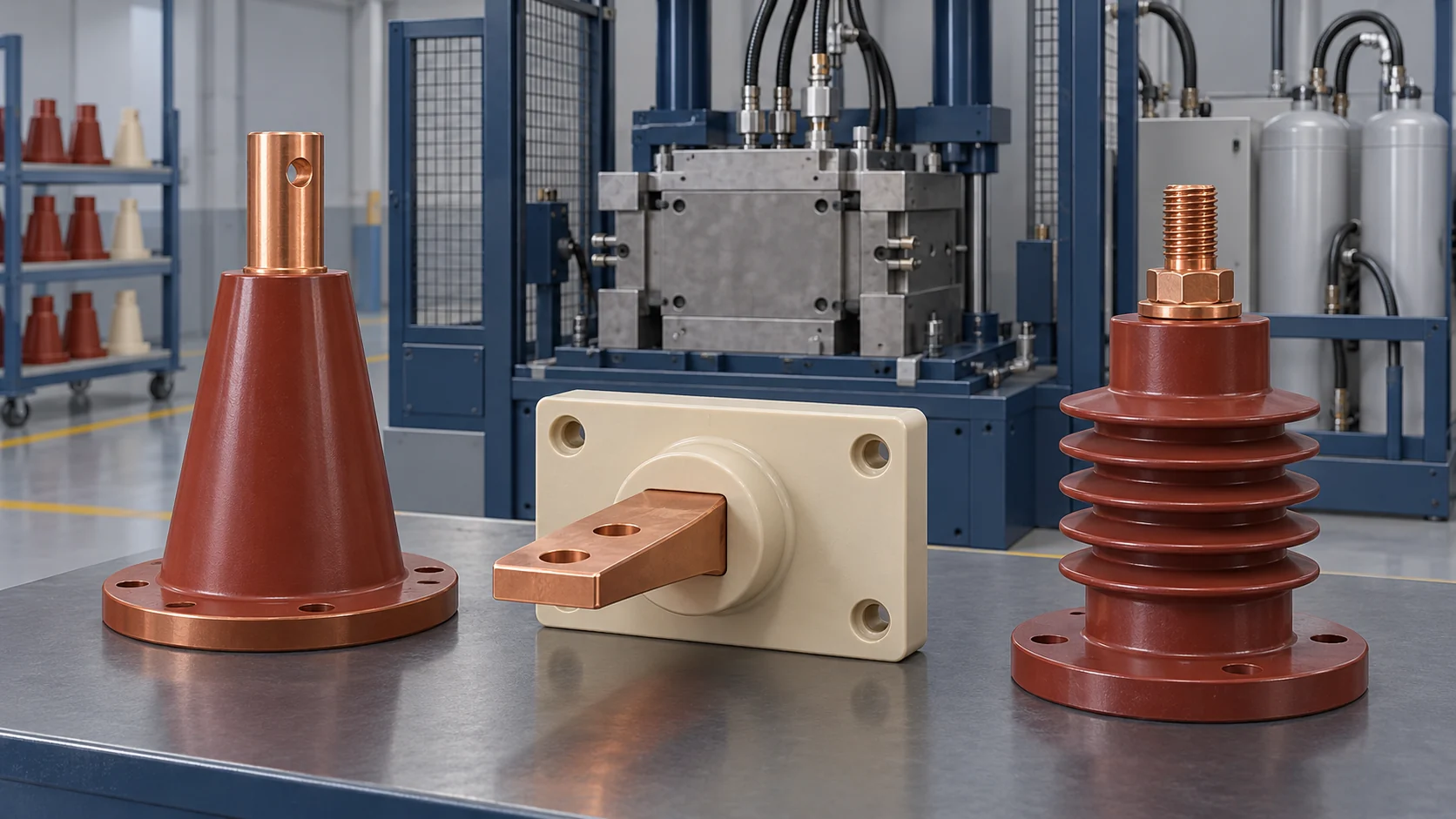
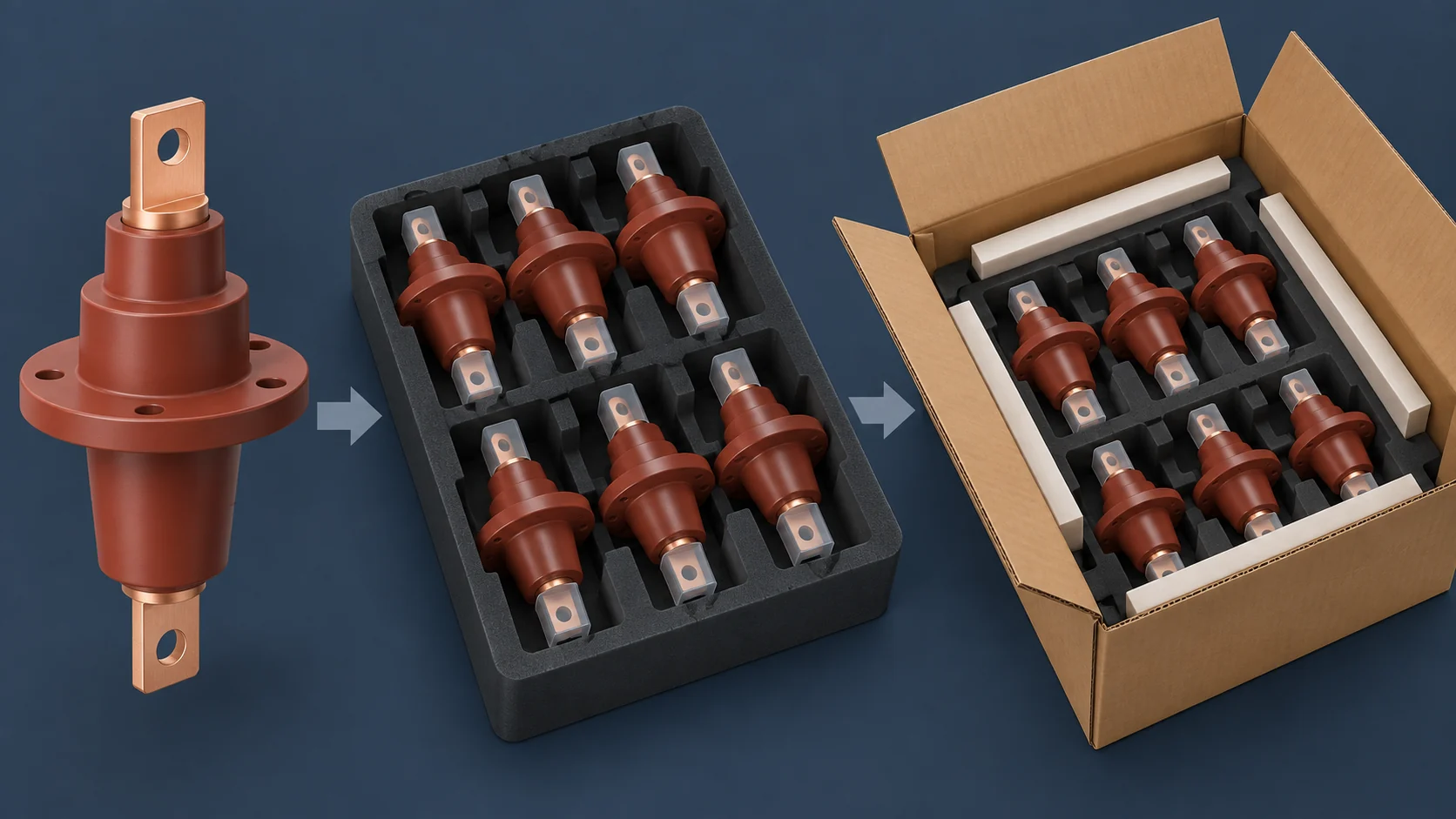
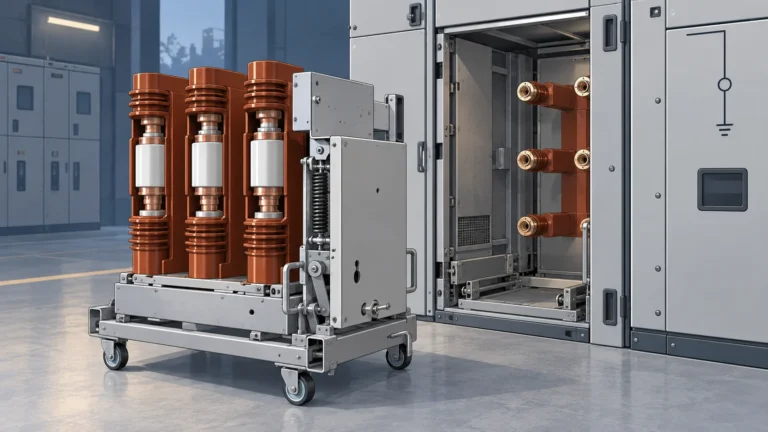
Conceptual engineering illustration; not a photograph of a named manufacturer product or factory.
Why the two routes are not interchangeable
A catalogued family and a custom-molded part solve different problems. The catalogued route assumes the surrounding assembly already conforms to that family's interface envelope, so the buyer's job is verification. The custom route assumes the interface does not exist yet or does not match anything published, so the buyer's job is definition.
Georg Jordan's indoor catalogue, in its January 2023 revision, illustrates the first route: aromatic-epoxy screw and clamp bushings for individual busbars or busbar packages, with metallized clamp variants and EPDM holders. That is a defined product family with defined options. GIPRO's published development route illustrates the second: resin selection, tool engineering, and production planning organised around required quantities, with approved requirements, a solution concept, and initial/type testing placed before series production.
The practical consequence is a different procurement question in each case. On the catalogue route you ask "does this family's documented interface match my assembly, and at which revision?" On the custom route you ask "who owns the tool, what defines acceptance, and how are revisions controlled after the first article passes?"
What "OEM tooling" actually covers
Tooling is often treated as a single line item. In practice it bundles several separable deliverables, and separating them is what keeps a quotation comparable. GIPRO's published scope places resin selection, tool engineering, and production planning together as development support around required quantities — useful as a structural example of what an OEM development route contains, not as a statement about any other supplier's capability.
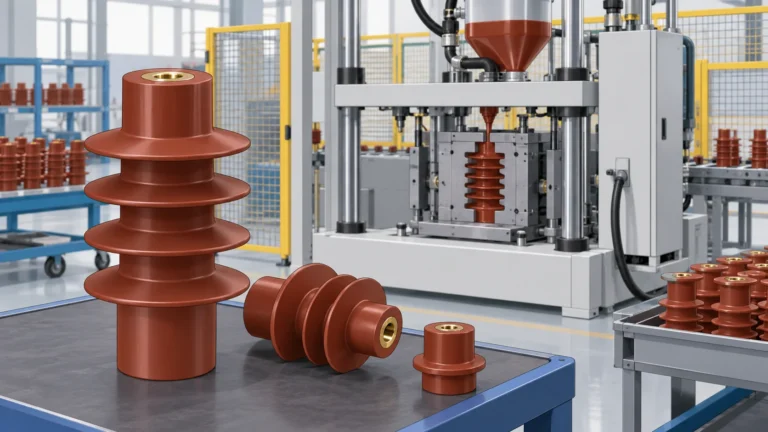
Process route sits alongside tooling and belongs in any capability comparison. GIPRO lists APG, vacuum molding, and open-channel molding, computer-controlled resin preparation, production checks, and mechanical finishing for non-standard insulators and bushings. Which of those processes a given geometry needs is a supplier engineering decision, and different processes carry different implications for void content, insert encapsulation, and surface finish. Those implications are the reason to ask which process is proposed for your part rather than to accept "we make epoxy bushings" as an answer.
Three tooling questions decide most of the commercial exposure. Who holds the tool, who may move it, and what happens to it if the relationship ends. None of those terms are established by a product page, so treat them as project-specific and confirm them in writing before tooling is cut.
Metal inserts: the joint that carries current and load
The insert is where the electrical and mechanical functions meet. A bushing has to pass a conductor through an insulating body, transfer mechanical load from the external connection to the mounting structure, and control the electric field where metal meets resin. Different insert styles solve that in different ways.
Georg Jordan's indoor family describes screw and clamp bushings for individual busbars or busbar packages, with metallized clamp variants and EPDM holders. Metallized clamp variants exist because the field distribution around a clamp connection differs from that around a plain metal surface, and the catalogue treats them as distinct family members rather than finishes on the same part. GIPRO's published examples similarly include silver-plated copper rods and three-bolt bushing plates, illustrating that conductor material, plating, and external plate geometry are separate specification decisions.
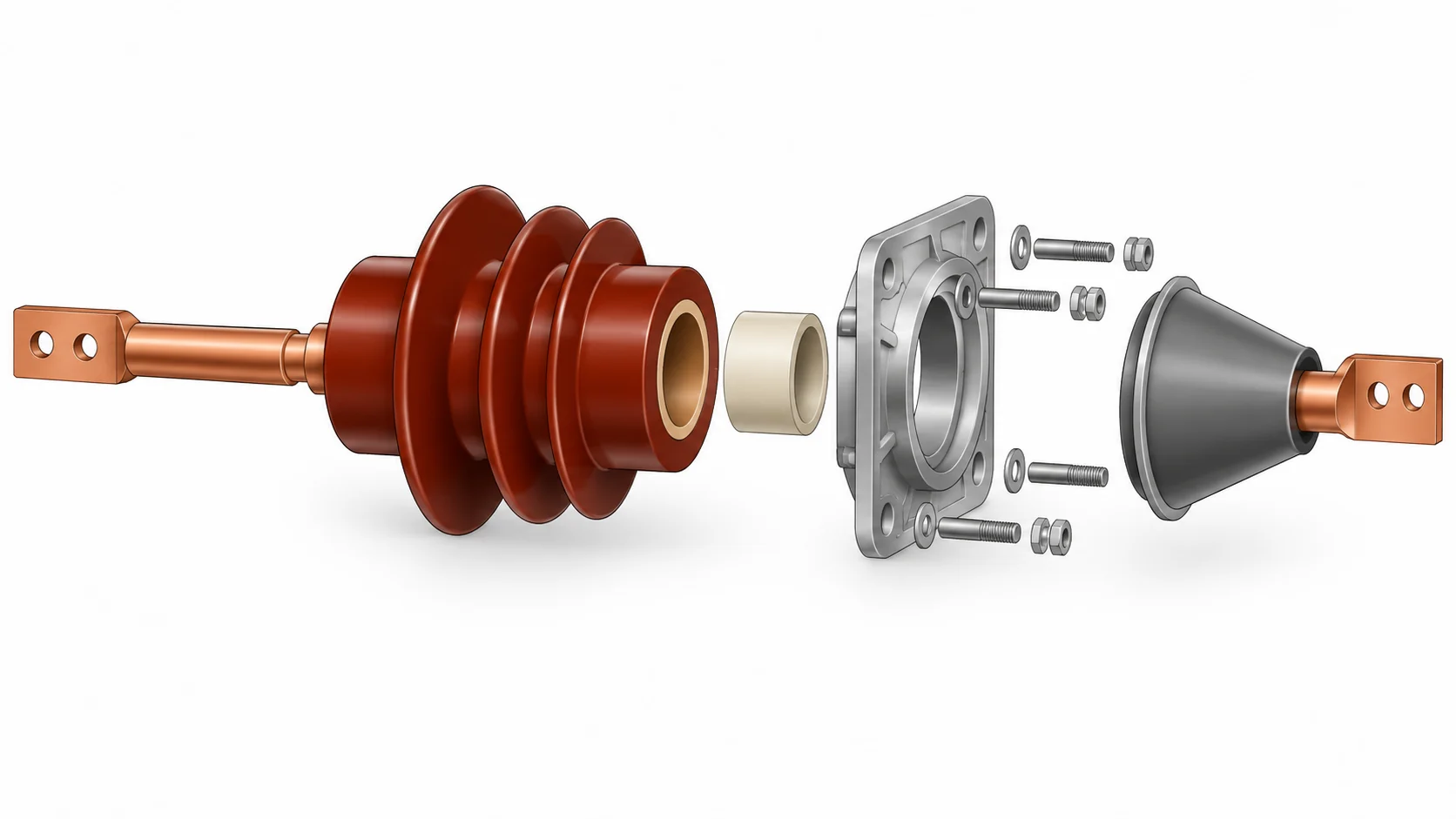
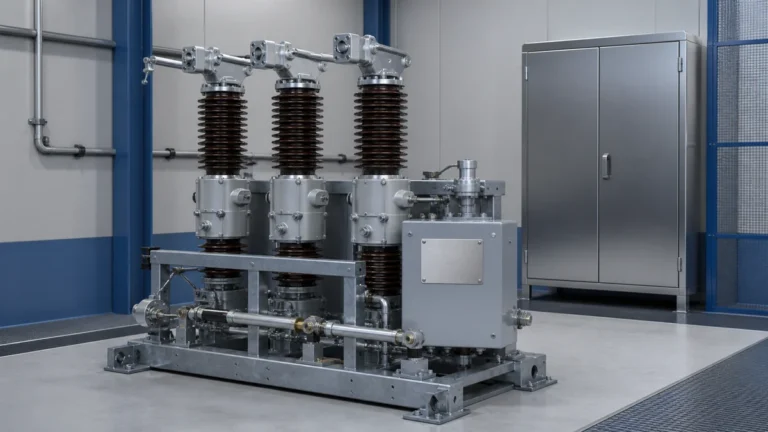
Conceptual engineering illustration; not a photograph of a named manufacturer product or factory.
Treat each of those as an interface dependency, not a cosmetic choice. Plating, plate bolt pattern, and conductor diameter all constrain what the bushing can connect to, and each one is normally fixed at tooling. Changing one after the first article typically means modifying the tool or the drawing, which is why they belong in the requirement set before development starts rather than in a later optimisation pass.
Embedded conductors also age differently from the surrounding resin. Thermal cycling, moisture ingress, and mechanical loading all concentrate at the metal-resin boundary, so that boundary is what dimensional and electrical acceptance testing should target. The specific acceptance criteria are family- and project-specific and are governed by the approved drawing and test plan.
Interface options and the interchangeability trap
Interface documentation is where most sourcing errors originate. A cone-interface bushing, an AIS spout, and a bolt-plate connection can all perform the same general function while fitting nothing the same way.
The catalogue evidence shows the dependency clearly. Georg Jordan states that screw-ring choice depends on mounting-sheet thickness, and that the specified busbar number and size affect holder selection. Those are selection dependencies internal to one family — within a single documented product line, the correct part number is a function of the surrounding assembly. That is a strong argument against treating any bushing as a generic drop-in for another.
The same caution applies to the interface families a developer may propose. GIPRO's published examples include AIS spouts, cone-interface bushings, silver-plated copper rods, and three-bolt bushing plates. These illustrate documented conductor and interface options; they do not establish that a given geometry is available for every application, that any of them is compatible with parts from another supplier, or that a common interface name implies common dimensions.
Ask for the interface definition, not the interface name. A cone interface is only meaningful alongside its angle, dimensions, and tolerances as drawn. Where a supplier's public material stops at naming the family, the dimensioned drawing is the missing evidence — record it as to be confirmed until an approved drawing is issued for your project.
Version management and revision evidence
A bushing that passed first-article approval is a specific revision, not a product family. Managing that distinction is the difference between a controlled supply and a recurring qualification problem.
Georg Jordan's indoor catalogue carries a January 2023 revision mark, which is itself the useful lesson: the catalogue is a document with a revision level, and ratings, dimensions, temperature range, cited standards, and material recognition belong to that revision and to that family. Quoting a replacement against an older or unspecified revision, or transferring those numbers to a different supplier's part, breaks the chain of evidence.
On the custom route the equivalent control is the development sequence. GIPRO describes placing approved requirements, a solution concept, and initial/type testing before series production, with later product changes supported through the component lifecycle. That structure is the right place to attach revision questions: what identifies the approved configuration, who approves a change, how a change is notified to the buyer, and what evidence accompanies it.
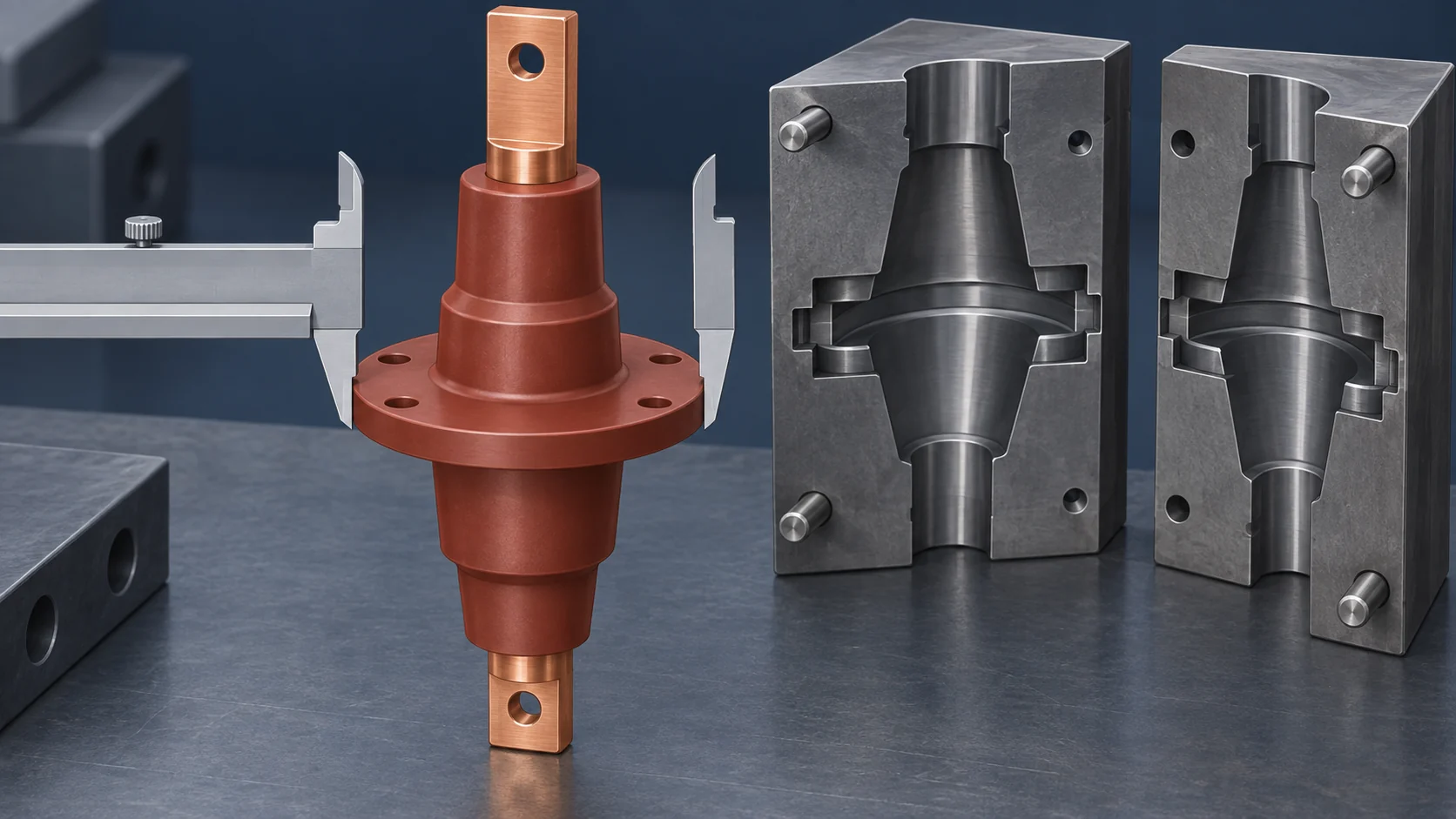
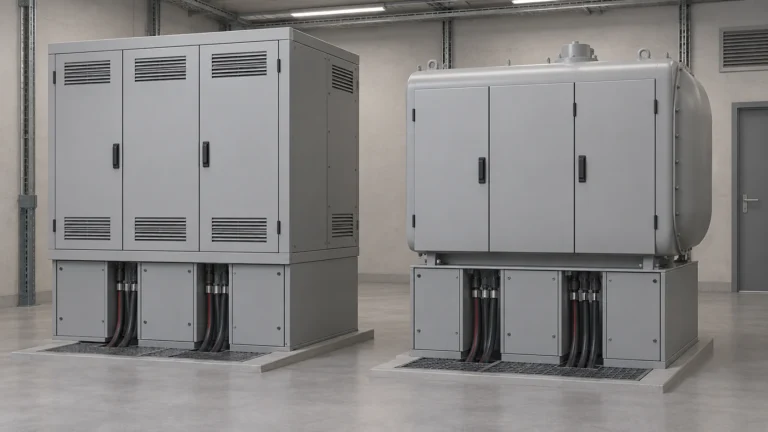
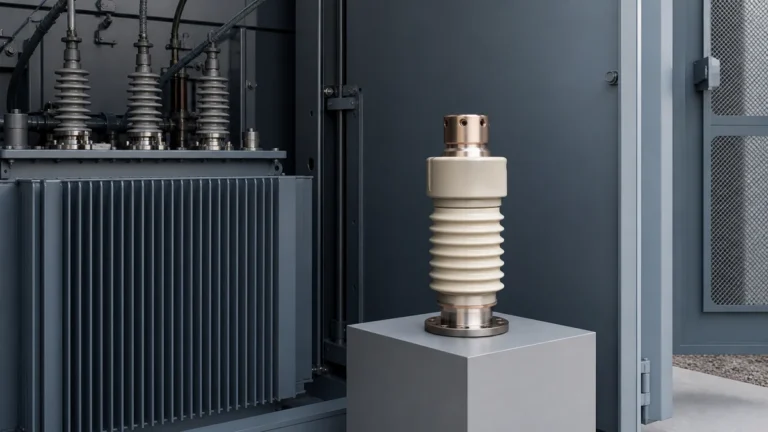
Conceptual engineering illustration; not a photograph of a named manufacturer product or factory.
Do not assume a specific engineering-change system, notification window, or tooling-ownership model. Those are contractual terms. The published descriptions establish that a lifecycle change process exists in GIPRO's route; they do not establish its mechanics, and the same is true of any other supplier until it is written into the order.
Separating supplier capability from supplier claims
At the decision stage, the useful exercise is mapping what each candidate has actually published, then marking everything else as open.
GIPRO identifies itself as a manufacturer of custom epoxy insulators and GIS bushings for switchgear and other applications, and publishes equipment and process scope for non-standard insulators and bushings. Its public examples establish an attributed supplier case for custom development and for embedded-conductor and interface options. They do not establish availability for every geometry, compatibility with any other supplier's parts, current pricing, manufacturing capacity, tooling ownership, or shared certification — and machine dimensions, raw-material certification, and supplier-audit statements on that page belong to GIPRO, not to anyone else.
MVSpare publicly describes itself as SUVELL's component platform operated by Wenzhou Shuowei Electric Co., Ltd., with APG and epoxy-resin production support, and its RFQ and production-coordination role should be read on that basis. Its displayed management-system certificates are explicitly attributed to manufacturing partner Zhejiang Anyi Electric Power Technology Co., Ltd., and must not be presented as held by the platform operator. That public self-description is not an independent factory audit, and it does not by itself establish plant ownership, capacity, product certification, tooling ownership, guaranteed tolerances, universal acceptance tests, or named resin brands. The epoxy resin bushing product page on the platform is the appropriate starting point for a project enquiry covering those items.
The RFQ data package before tooling or quotation
Development quotes and replacement quotes fail for the same reason: the buyer sends a function description instead of an interface definition. The following package resolves most ambiguity before a supplier prices anything.
Assembly interface: mounting-sheet thickness, bolt pattern, plate geometry, and the space envelope available around the bushing. Mounting-sheet thickness is a documented driver of screw-ring selection in the Georg Jordan indoor family, which makes it a required input rather than a nice-to-have.
Conductor definition: busbar number and size, conductor diameter, material, and plating requirement. Busbar number and size drive holder selection in the same family, and conductor material and plating are separate specification lines in the GIPRO examples.
Electrical requirements: system voltage, insulation and withstand requirements, and the applicable standard for the project. Confirm which edition and which national deviation applies instead of citing a standard number alone.
Environment and duty: indoor or outdoor, ambient and operating temperature range, pollution or condensation exposure, and mechanical loading. Ratings, temperature ranges, and material recognition are family- and revision-specific, so the supplier must confirm applicability rather than inherit numbers from a catalogue page.
Evidence and revision terms: required first-article documentation, test plan, drawing revision identifier, change-notification expectations, and lot traceability format. Lot traceability format is not confirmed by the public pages reviewed and should be stated as a project requirement to be agreed.
Commercial terms: tooling ownership and transfer, tool maintenance responsibility, minimum quantities, lead time, and spare-part availability. None of these are established by public product pages; all of them are project-specific and to be confirmed.
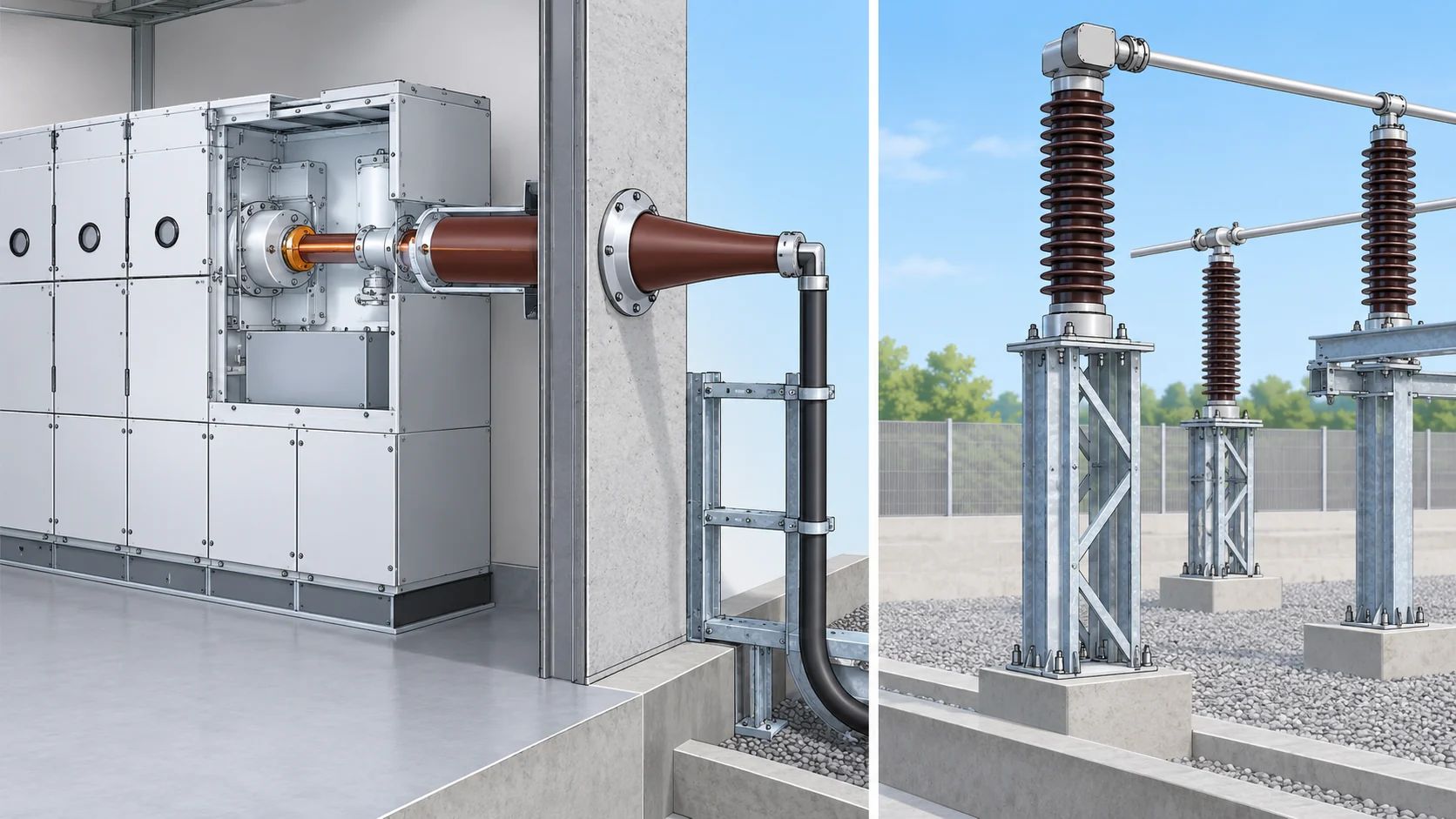
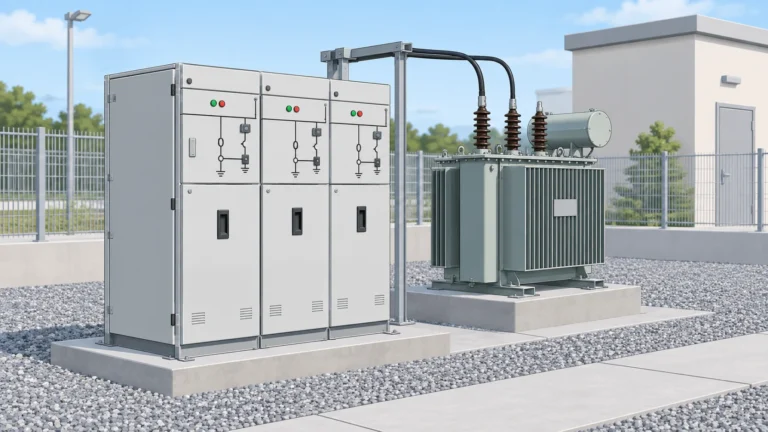
Conceptual engineering illustration; not a photograph of a named manufacturer product or factory.
Verification workflow and where to escalate
A workable sequence runs: define the interface from the assembly drawing, not from an existing part number; confirm which route applies and why; obtain a dimensioned interface drawing and a written statement of tooling ownership; agree the test plan and first-article evidence before tooling is cut; approve the first design against that plan; then release series supply against a named revision.
Two verification questions carry disproportionate weight. First, is the interface on the drawing the same interface the manufacturing tool was built for — a mismatch there is expensive and usually discovered late. Second, is the part you are buying the revision that was approved — a mismatch there is cheap to detect and cheap to prevent, but only if the revision identifier is on the documentation.
Escalate rather than improvise when a candidate cannot produce a dimensioned interface drawing, when tooling ownership is left verbal, or when a supplier quotes against a catalogue family while your assembly does not match that family's documented dependencies. Those are decision-stage gaps, and they get harder to close after tooling exists.
For installation, inspection, and commissioning, the boundary is the same throughout: acceptance criteria, sequence, and any physical adjustment are governed by the model-specific approved procedures and the project's approved drawings. Bushing interfaces are not a place for generic field guidance.
FAQ
What is the difference between standard moulding and custom moulding for epoxy resin bushings?
Standard moulding uses an existing tool and a documented product family with fixed interface options; the buyer verifies that the assembly matches the published family. Custom moulding develops tooling around an approved requirement set, with resin selection, tool engineering, and production planning preceding series supply. The custom route buys interface fit; the standard route buys documented repeatability within a defined envelope.
What is an embedded metal insert in an epoxy bushing?
It is the conductive element cast into or fixed through the insulating body that carries current and transfers mechanical load to the mounting structure. Examples in published supplier material include screw and clamp bushing arrangements for individual busbars or busbar packages, metallized clamp variants, silver-plated copper rods, and multi-bolt bushing plates. Material, plating, conductor diameter, and plate geometry are separate specification decisions, each normally fixed at tooling.
How do I confirm a bushing is a true drop-in replacement?
Usually you cannot confirm it from a product family name. Georg Jordan's indoor catalogue shows this within a single family: screw-ring choice depends on mounting-sheet thickness, and busbar number and size affect holder selection. Confirm the current catalogue revision and the approved project drawing before quoting a replacement, and do not transfer catalogue ratings or dimensions between suppliers.
What evidence should accompany an OEM bushing first article?
At minimum: a dimensioned interface drawing at a named revision, the conductor and insert configuration as built, the material and process route used, and the results of the agreed first-design and type testing. GIPRO's published route places approved requirements, a solution concept, and initial/type testing before series production, which gives a reasonable structure for that evidence package. Lot traceability format and document set are project-specific and to be agreed in the order.
What tooling terms should be settled before development starts?
Tooling ownership, who may hold and move the tool, maintenance responsibility, and what happens to the tool if the supply relationship ends. Also agree how design changes are notified and at what point a change requires re-qualification. None of these terms are established by public product pages, so treat them as to be confirmed until they are in writing.
Are certificates displayed by an epoxy bushing supplier held by that supplier?
Not necessarily. MVSpare's displayed management-system certificates are explicitly attributed to manufacturing partner Zhejiang Anyi Electric Power Technology Co., Ltd., and are not presented as held by the platform operator. When a certificate appears on a supplier or platform page, ask which legal entity holds it and what scope it covers.
Which manufacturing processes should I ask about for a non-standard bushing?
Ask which process is proposed for your geometry and why. GIPRO publishes APG, vacuum molding, and open-channel molding, computer-controlled resin preparation, production checks, and mechanical finishing in its scope for non-standard insulators and bushings. The proposed route affects void content, insert encapsulation, and surface finish, so it belongs in the technical comparison rather than in the commercial annex.
What should be marked as to be confirmed rather than assumed?
Current pricing, capacity, tooling ownership, lead times, minimum quantities, lot traceability format, certification held by which entity, engineering-change mechanics, and availability of any specific geometry. Public product pages establish documented capabilities and examples; they do not establish these commercial and project-specific terms.
LEO Chen
With more than 20 years of industry experience, LEO Chen has worked with major companies on switchgear, transformer components and medium-voltage equipment projects. He contributes practical guidance for engineers and sourcing teams, with a focus on clear selection criteria, application context and the information needed to prepare an informed RFQ. Connect with LEO on LinkedIn.