Send the request type, manufacturer, equipment model/year, part reference, ratings, quantity, destination, required date, and any drawing or photo notes. The SUVELL team will review the request.
Email: admin@suvell.com
Phone: +86 189 6871 1705
Factory: No.208 Wei 12 Rd, Yueqing Economic Development Zone, Wenzhou, Zhejiang, China
Top 10 Medium-Voltage Vacuum Circuit Breaker Manufacturers: Product Families Compared
Compare ten medium-voltage vacuum circuit breaker manufacturers by product scope, application, installation arrangement and evidence needed before an RFQ.
The ten manufacturers publish complete medium-voltage VCB families; alphabetical order identifies an editorial shortlist, not market share or quality rank.
Compare switching duty, fixed or drawout arrangement, control interfaces and configuration-specific test evidence before requesting like-for-like quotations.
Meidensha’s two-pole railway breaker requires separate application review; no listing establishes cross-brand cabinet interchangeability or current stock.
Ten manufacturers in this shortlist — ABB, CHINT, Eaton, LS ELECTRIC, Meidensha, Mitsubishi Electric, Schneider Electric, Siemens, Tavrida Electric and Toshiba International Corporation — each publish a complete medium-voltage vacuum circuit breaker family, not merely a vacuum interrupter. For a panel builder or procurement engineer, the decision hinges on four variables rather than brand familiarity: installation arrangement (fixed or drawout), operating mechanism and control interface, the switching duty the family was segmented for, and the standards edition named on the type-test evidence. This is an editorial shortlist built from manufacturer-published scope, and it is explicitly not a market-share or quality ranking.
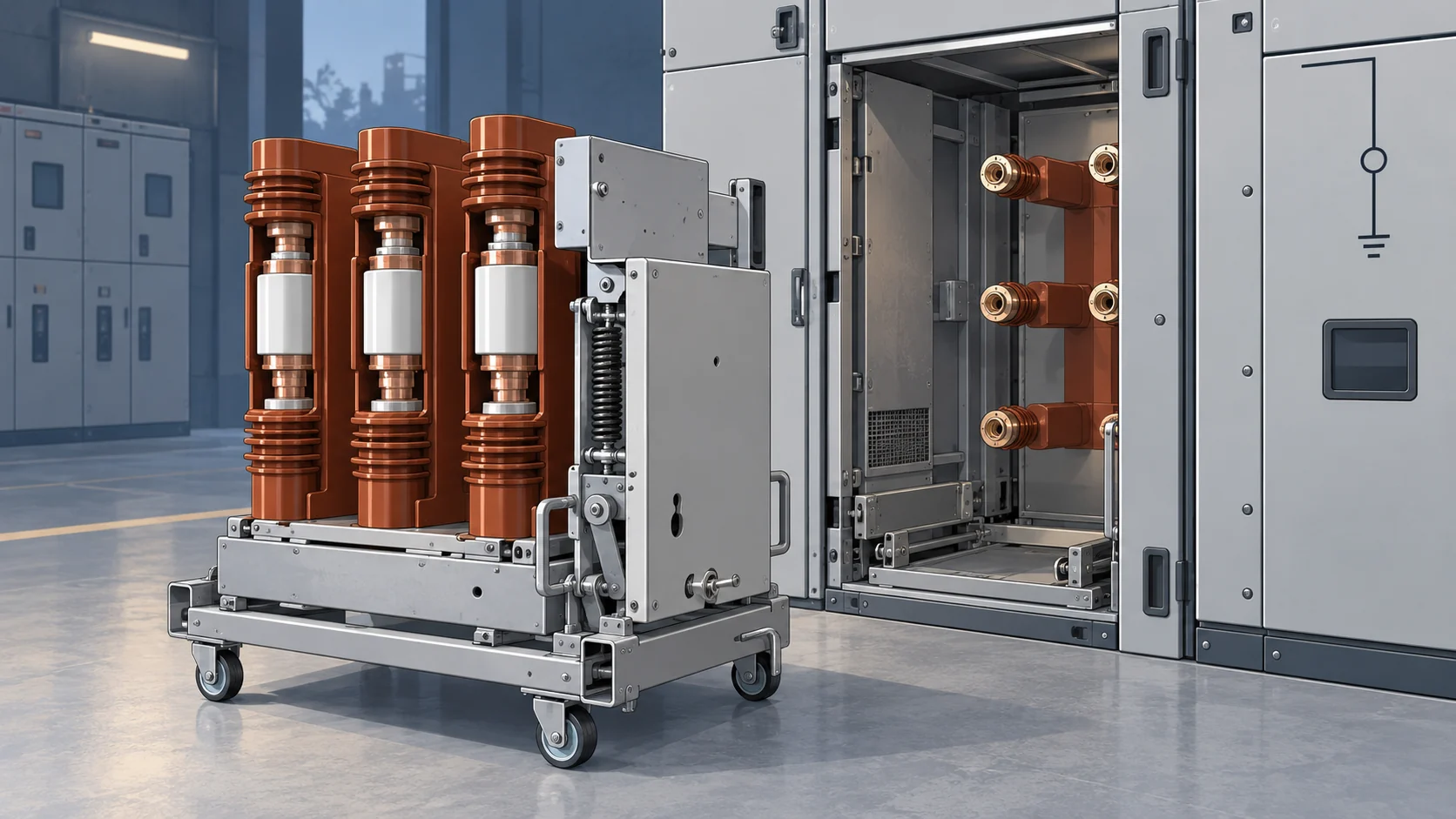
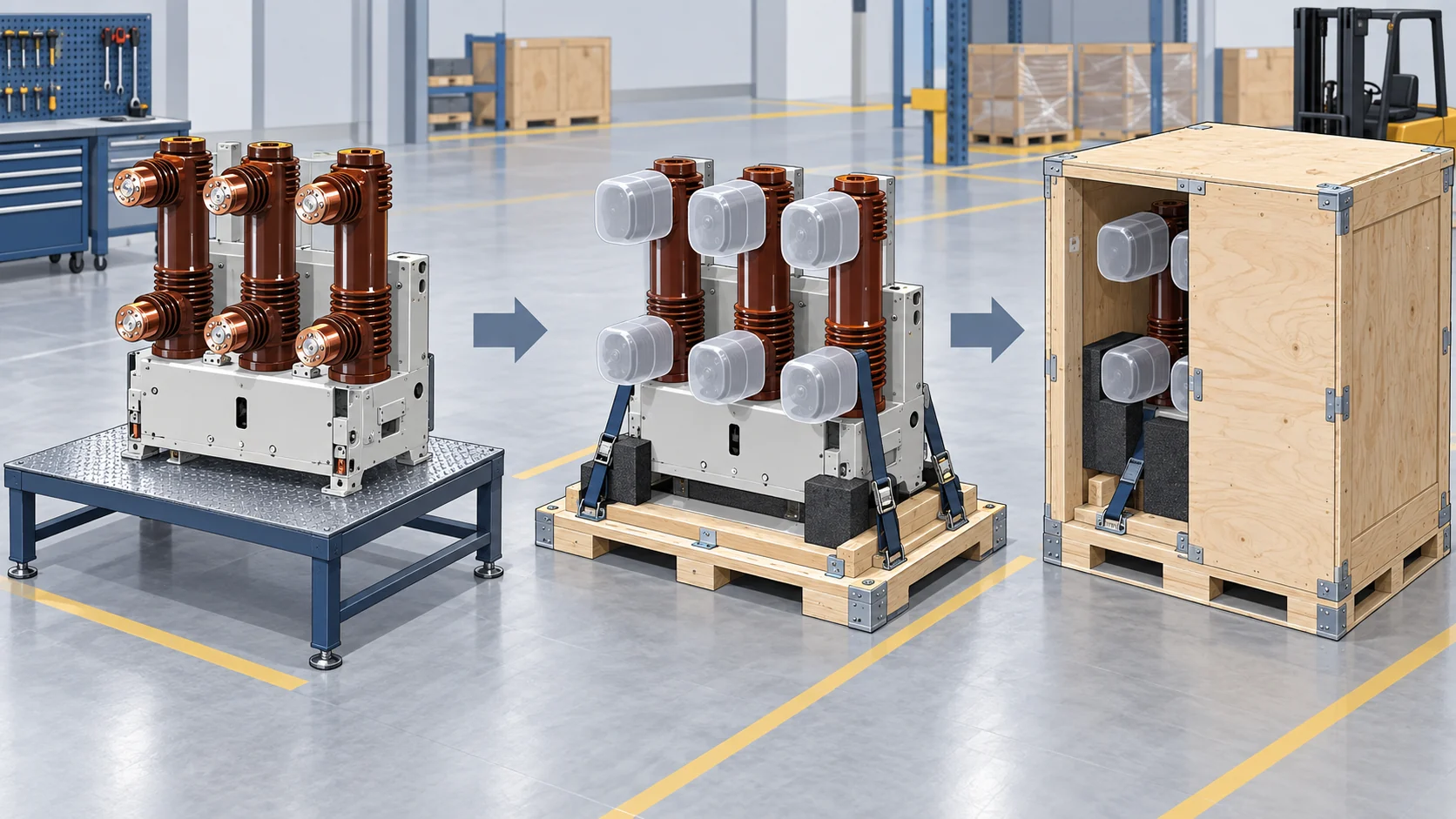
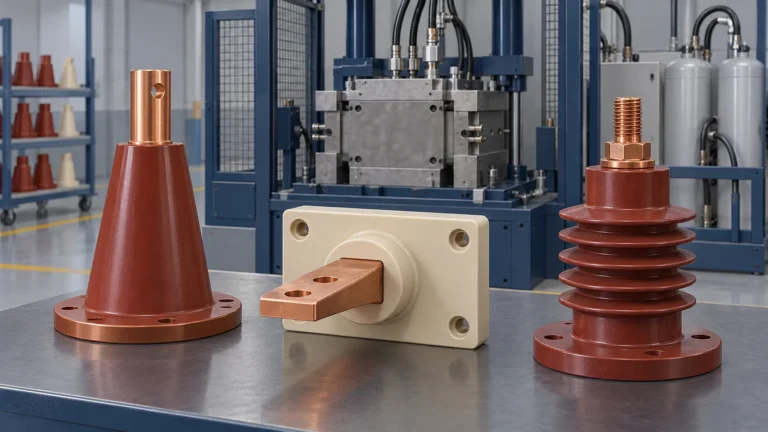
Conceptual engineering illustration; not a photograph of a named manufacturer’s product or factory.
Scope, Evidence Date, and What This Shortlist Does and Does Not Rank
Inclusion criterion: the manufacturer, or its named regional subsidiary, publishes a complete medium-voltage vacuum circuit breaker product page or catalogue covering indoor or outdoor installation above 1,000 V. Exclusion criterion: suppliers that publish only vacuum interrupters were excluded, because an interrupter is a component inside a breaker and not a substitute for one.
Two further boundaries matter. First, companies present only as corporate scope pages — ABB, CHINT, Eaton, LS ELECTRIC, Meidensha, Mitsubishi Electric, Schneider Electric, Siemens, Tavrida Electric and Toshiba International Corporation all supply one — establish manufacturer identity but do not by themselves prove product coverage; each entry below rests on a product page, not just a company page. Second, MVSpare is deliberately absent from the ten: the cited sources cover its VS1 withdrawable breaker page as a sourcing-context example and do not establish the independent manufacturer scope this article requires.
Official sources were reviewed on October 2, 2026. The cited IEC scope statement is for IEC 62271-100:2021. Manufacturer pages can change, so re-verify the selected catalogue, configuration and supply route at quotation. Alphabetical order is a reading aid, not a ranking signal.
Complete Breakers Versus Vacuum Interrupters: The Line That Determines Who You Quote
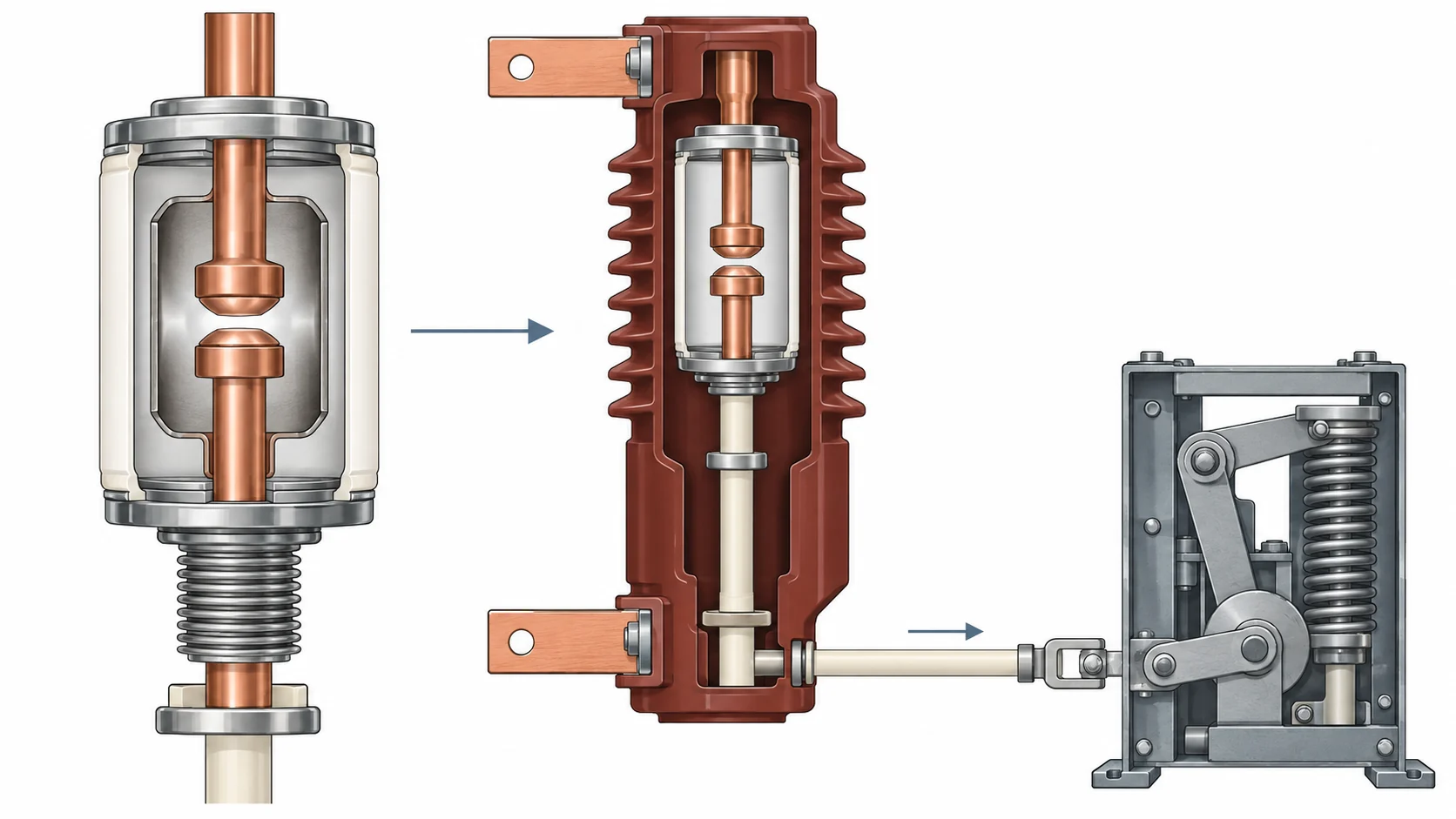
A vacuum interrupter is the sealed arc-quenching element. A complete vacuum circuit breaker is the interrupter plus pole assembly, operating mechanism, stored-energy and control subsystem, frame or handcart, and the interlocks that tie it to a cabinet. That difference decides which supplier can answer your enquiry at all, and it is why interrupter suppliers do not appear among the ten.
A second, less obvious line runs between a breaker and a vacuum contactor. Mitsubishi Electric's switchgear page presents complete medium-voltage vacuum circuit breakers separately from vacuum electromagnetic contactors, which is the correct editorial treatment: a contactor's duty cycle and fault-interruption role differ from a breaker's, and quoting one against the other is a configuration error, not a price comparison.
Nothing in the cited sources establishes cross-brand interchangeability between complete breakers, or between a breaker and another maker's interrupter. Applications that assume physical or electrical equivalence — retrofitting one maker's breaker into another's cabinet, for example — must be resolved against the specific cabinet and handcart interfaces, not against a brand-level family resemblance.
Standards Routes and Evidence Boundaries: IEC 62271-100 and Regional Practice
IEC's published scope for IEC 62271-100:2021 covers three-phase AC circuit breakers for indoor or outdoor installation above 1,000 V. Read that statement carefully: it identifies a standards family. It does not certify any manufacturer's product, and it does not establish equivalence between differently configured breakers. A drawout generator breaker and a fixed distribution breaker can both sit inside that scope while remaining non-interchangeable.
Regional practice adds a second layer. Eaton's OEM-facing portfolio, LS ELECTRIC America's North American product page and Toshiba International Corporation's catalogue are all oriented to North American markets, where the applicable route differs from the IEC family. The cited sources do not name a standards edition for any of these products. Confirm the applicable edition with each vendor, because the edition named on the type-test report — not the family name on a brochure — governs acceptance.
The railway case shows the boundary cleanly. Meidensha's 27.5 kV two-pole breaker is a complete medium-voltage breaker, but the IEC scope statement above describes three-phase units. A two-pole traction design therefore needs its own reference framework, which the cited sources do not provide — see the dedicated railway section below.
Comparison Table: The Ten at a Glance
Manufacturer
Published complete-breaker scope
Installation / configuration evidence
Application fit in evidence
Comparison boundary
ABB
Complete primary MV vacuum breakers for primary distribution, OEM panel integration, repair and retrofit
Primary distribution and panel integration
Utility and industrial primary distribution; special-duty switching
Segmented by switching duty (general vs furnace, capacitor, generator), not by panel type — filter by duty first
CHINT
Complete indoor AC vacuum circuit breaker
Indoor; spring operating mechanism; manual or electrical operation
Industrial, building and substation control and protection
Indoor spring-mechanism unit only; no outdoor or special-duty scope published in evidence
Eaton
Complete vacuum breakers for electrical OEMs; separate groups for general distribution, generators and wind
Fixed and drawout arrangements
OEM panel building; generator and wind applications
Separate product groups mean a generator enquiry cannot be answered from the general-distribution listing
LS ELECTRIC
Complete vacuum breakers for MV power systems (North American product page)
Not detailed in evidence
Utility, industrial and infrastructure
Regional page — confirm the edition and test basis applicable in your market
Meidensha
Complete 27.5 kV two-pole breaker for electric railways; 55 kV variant listed but out of scope
Two-pole, railway application
Electric railway
Specialist design; not a like-for-like substitute for three-phase distribution breakers
Mitsubishi Electric
Complete MV vacuum breakers, presented separately from vacuum electromagnetic contactors
Breaker installation and auxiliary option information published
Switchgear for energy systems and T&D equipment
Breaker/contactor distinction governs; contactors do not carry the same interruption role
Schneider Electric
EasyPact EXE complete vacuum circuit breaker
Not detailed in evidence
MV switchgear panel builders; building infrastructure and industrial facilities
Aimed at panel builders, so interface data must come from the panel design, not the range page
Siemens
SION complete vacuum circuit breaker family
Modular connection and installation choices for MV air-insulated switchgear
Primary and secondary distribution; generator applications
Modular options multiply configurations — fix the switchgear type before comparing families
Tavrida Electric
Complete MV fixed and drawout vacuum breakers plus associated control modules
Fixed and drawout, indoor and outdoor
New switchgear and retrofit work
Explicit retrofit scope; new-build specification sheets may not transfer directly
Toshiba International Corporation
Complete vacuum breakers, fixed and drawout, manual or motor-operated; separate compact family for MV receiving and transforming facilities
Fixed/drawout; manual or motor operation
Equipment and circuit protection; receiving and transforming facilities
Two families in one catalogue — decide which family applies before comparing
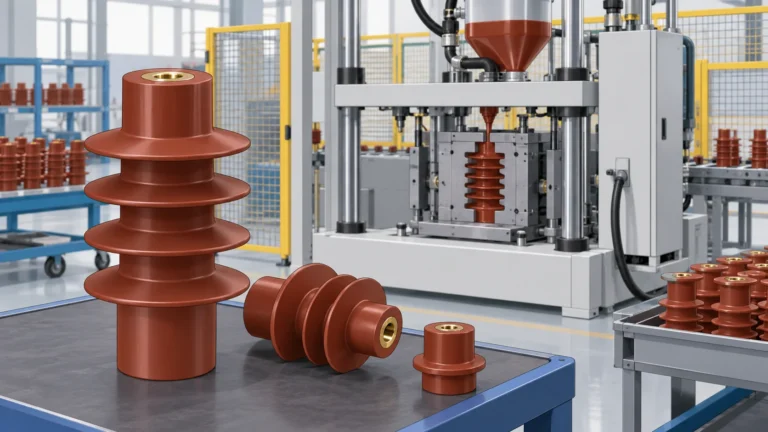
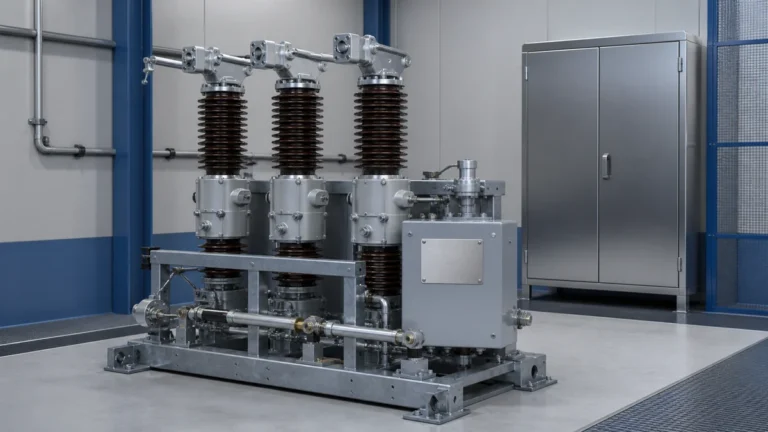
Conceptual engineering illustration; not a photograph of a named manufacturer’s product or factory.
ABB
Verified complete-product scope. ABB publicly lists complete medium-voltage vacuum circuit breakers for primary distribution, OEM panel integration, and repair and retrofit projects — three distinct entry paths into the same corporate range. Application fit. The portfolio separates general distribution from furnace, capacitor and generator switching applications, which means the family a panel builder needs depends on the switching duty, not on the panel type. Comparison boundary. Because the published segmentation is duty-based, an ABB shortlist must be filtered by application first and by arrangement second; a general-distribution listing is not evidence of furnace or capacitor capability. ABB's corporate identity as an electrification business supports the company-level context but adds no configuration detail.
CHINT
Verified complete-product scope. CHINT's official indoor breaker product page lists a complete vacuum circuit breaker for control and protection duties, with a spring operating mechanism and manual or electrical operation. Application fit. The published fit is industrial, building and substation applications — a conventional three-phase indoor distribution role. Comparison boundary. The evidence covers one indoor configuration; it publishes no outdoor scope and no abnormal-duty segmentation. A project requiring outdoor installation or capacitor/furnace duty cannot be resolved from this page. The spring mechanism and dual manual/electrical operation are useful data points because they define the control interface a panel builder must wire for, but they do not by themselves answer auxiliary-contact or interlocks questions.
Eaton
Verified complete-product scope. Eaton's official medium-voltage circuit-breaker portfolio lists complete vacuum breakers for electrical OEMs, with fixed and drawout arrangements and distinct product groups for general distribution, generators and wind applications. Application fit. OEM panel building plus generator and wind duty. Comparison boundary. The three product groups are separate for a reason: a generator-wind enquiry routed to the general-distribution listing produces a mismatched comparison. Eaton's corporate self-description as a power-management company with a manufacturing business underpins the company scope but does not extend the product evidence. Fixed versus drawout is explicitly available here, which makes Eaton one of the more configuration-transparent entries in this set.
LS ELECTRIC
Verified complete-product scope. LS ELECTRIC America's official product page lists complete vacuum circuit breakers for medium-voltage power systems and identifies utility, industrial and infrastructure applications. Application fit. Broad utility-to-infrastructure coverage. Comparison boundary. This is a regional subsidiary page, and the evidence does not detail arrangement, mechanism or standards edition. The corporate scope — LS ELECTRIC America as the North American subsidiary of LS ELECTRIC, with low- and medium-voltage power-distribution business and regional manufacturing — supports manufacturer identity but stops short of configuration detail. Treat this entry as a confirmed complete-breaker source requiring a configuration datasheet before it can be compared on equal terms with Eaton or Siemens.
Meidensha
Verified complete-product scope. Meidensha's current official catalogue lists a complete 27.5 kV two-pole vacuum circuit breaker developed for electric railway applications. Application fit. Traction and railway infrastructure — a specialist niche, not general distribution. Comparison boundary. This is a two-pole railway design rather than a conventional three-phase indoor distribution breaker, so it should not be placed in a like-for-like table row against the other nine without qualification. The same page also lists a 55 kV variant, which is outside the selected comparison range here. Its vacuum interruption does not mean the complete railway assembly is SF6-free: the official product page specifies SF6 external insulation. Meidensha's corporate scope — power-infrastructure and electric-railway businesses, with a history of developing and manufacturing vacuum circuit breakers — is what supports the manufacturer identity behind the product. See the railway section below for the separate treatment this product warrants.
Mitsubishi Electric
Verified complete-product scope. Mitsubishi Electric's official switchgear page presents complete medium-voltage vacuum circuit breakers separately from vacuum electromagnetic contactors, and publishes breaker installation and auxiliary option information. Application fit. Switchgear within energy systems, supported at corporate level by transmission and distribution equipment and medium- and low-voltage switchgear scope. Comparison boundary. The published separation between breakers and contactors is the most decision-relevant fact on the page: a project comparing a contactor against a breaker is comparing two different functions. Because auxiliary options are published, this entry supports a more detailed panel-integration discussion than entries that publish only a family name.
Schneider Electric
Verified complete-product scope. Schneider Electric's official EasyPact EXE range page identifies a complete vacuum circuit breaker for medium-voltage switchgear panel builders serving building infrastructure and industrial facilities. Application fit. Explicitly the panel-builder channel, plus building infrastructure and industrial facilities. Comparison boundary. The range is framed for people who already have a cabinet design, so the range page supplies the breaker vocabulary — not the interface. Interface data has to come from the panel design itself. Schneider's corporate profile in electrical energy, automation and digital business establishes the identity behind the range without adding breaker-level configuration detail.
Siemens
Verified complete-product scope. Siemens' official SION page lists a complete vacuum circuit-breaker family spanning primary and secondary distribution and generator applications, and describes modular connection and installation choices for medium-voltage air-insulated switchgear integration. Application fit. Primary and secondary distribution plus generator duty — a published application span that must still be matched to the selected configuration. Comparison boundary. Modular connection and installation choices are a strength and a trap: configuration count rises quickly, so a comparison must fix the switchgear type and connection scheme before families are judged against each other. Siemens' Smart Infrastructure business scope supplies corporate context only.
Tavrida Electric
Verified complete-product scope. Tavrida Electric's official breaker page describes manufacturing complete medium-voltage fixed and drawout vacuum circuit breakers and associated control modules. Application fit. New switchgear and retrofit work, indoor and outdoor, per the company's solutions scope for vacuum switching equipment and switchgear. Comparison boundary. The explicit retrofit scope is relevant to a replacement inquiry, but retrofit capability does not imply that a new-build specification sheet transfers directly to an existing cabinet. Where a control module is supplied as part of the breaker scope, the module's interface becomes part of the RFQ boundary rather than an accessory.
Toshiba International Corporation
Verified complete-product scope. Toshiba International Corporation's official catalogue lists complete vacuum circuit breakers in fixed and drawout arrangements with manual or motor operation, for equipment and circuit protection, and separately describes a compact family for medium-voltage receiving and transforming facilities. Application fit. Equipment protection plus receiving-and-transforming installations. Comparison boundary. Two families in one catalogue means the first decision is which family applies, before any cross-brand comparison. The published manual-or-motor operation choice and fixed-or-drawout choice both feed directly into panel wiring and handcart design. Corporate scope — part of Toshiba America, a wholly owned Toshiba subsidiary with manufacturing, product engineering and transmission-and-distribution activities — supports manufacturer identity.
Specialty Railway and Two-Pole Breakers: A Separate Track
Meidensha is the only entry in this set whose published complete-breaker product is built for electric railway application rather than three-phase distribution. That distinction should survive into every comparison document you write, for three reasons.
First, pole count. A two-pole 27.5 kV traction breaker does not map onto the three-phase framing of the IEC 62271-100 scope statement cited earlier, so the standards question has to be answered from the railway application's own reference framework — which the cited sources do not name. Second, duty profile. Railway traction switching differs from distribution switching in ways the evidence does not quantify; treat generic breaker selection logic as inapplicable until the manufacturer supplies the specific datasheet. Third, scope discipline. Meidensha's catalogue also lists a 55 kV variant, which is outside the selected range of this comparison.
Practically, the railway product should sit in its own comparison block with its own acceptance criteria. The evidence establishes that Meidensha manufactures a complete breaker for this duty and has a corporate history of doing so; it does not supply pole spacing, control scheme, auxiliary supply arrangements or test basis. Those must come from the manufacturer's catalogue before the product enters any shortlist at all.
Retrofit Versus New Switchgear: Which Scope Answers Which Question
Retrofit and new-build enquiries look similar on a specification sheet and diverge sharply in what the vendor must prove. ABB's published scope includes repair and retrofit projects alongside OEM panel integration; Tavrida Electric manufactures for both new switchgear and retrofit; Siemens documents modular connection for air-insulated switchgear integration; Schneider Electric addresses the panel-builder channel directly; Eaton and Toshiba International both publish fixed and drawout arrangements, which is the configuration switch that most retrofit projects turn on.
The pattern to draw from this: a manufacturer's retrofit evidence is not the same asset as its new-build evidence. For a new panel, the panel design constrains the breaker. For a retrofit, the existing cabinet, handcart and primary contact geometry constrain what can be installed at all. An entry that publishes only a family name and an application list — LS ELECTRIC's regional page, for instance — is sufficient for a new-build longlist but insufficient for a retrofit decision until the cabinet interface is resolved.
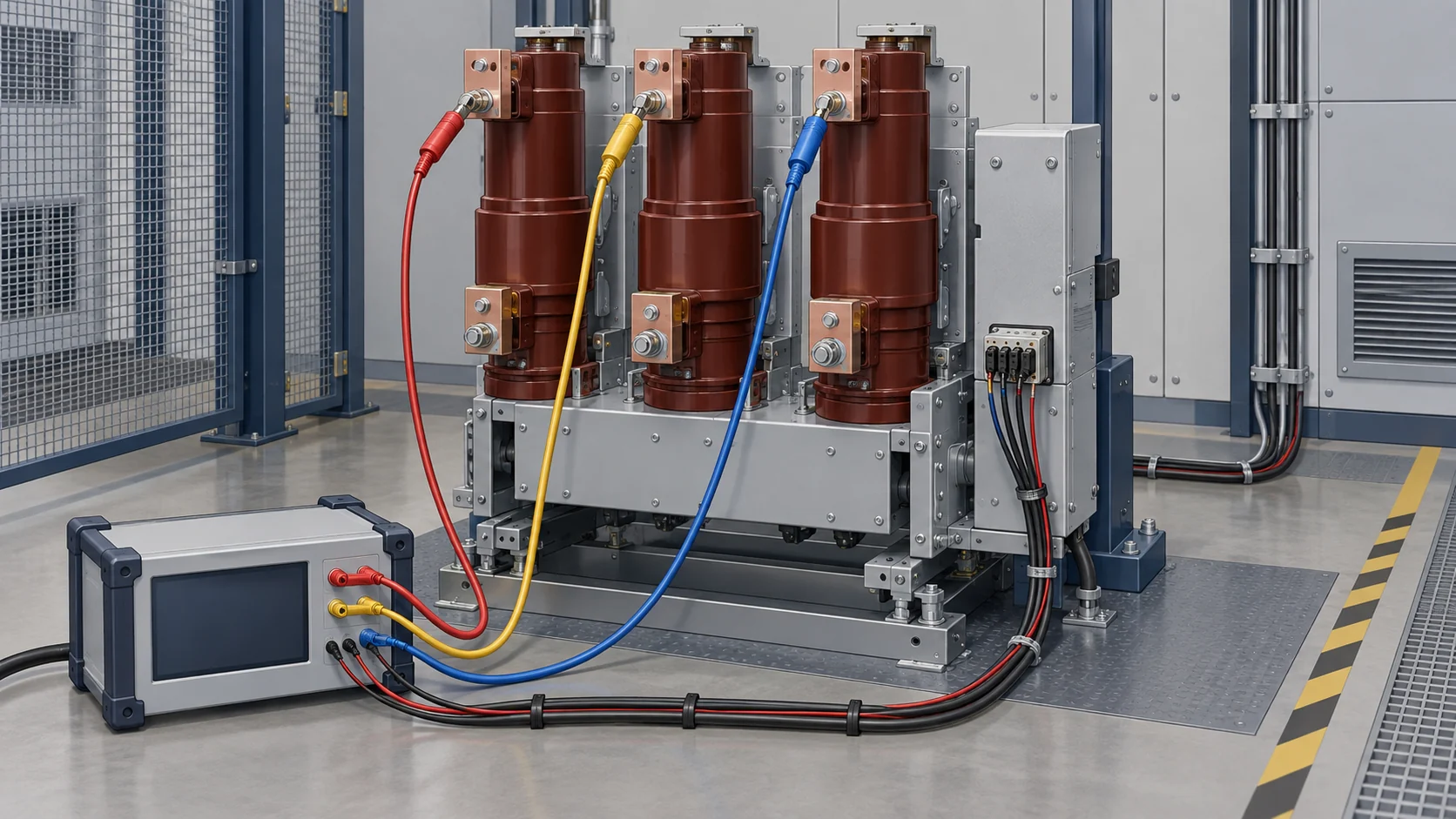
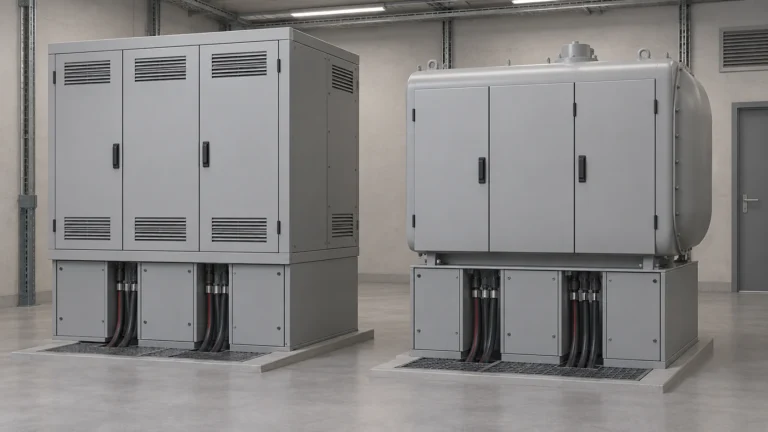
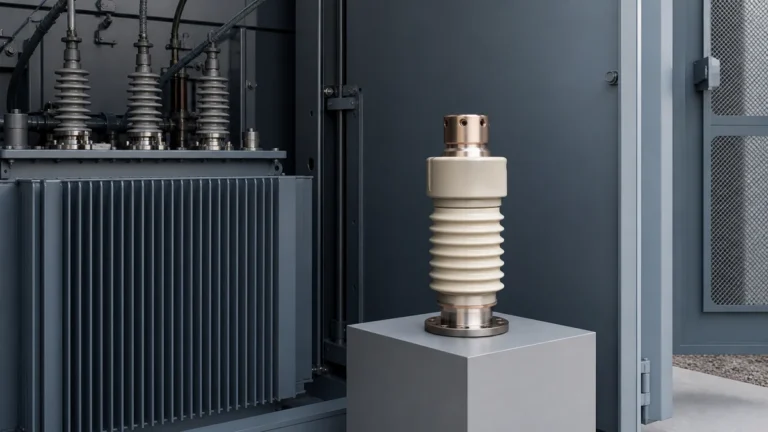
Conceptual engineering illustration; not a photograph of a named manufacturer’s product or factory.
Operating Mechanism and Configuration Dependencies Across the Ten
Mechanism detail is published unevenly, and that asymmetry is itself a procurement finding. CHINT publishes a spring operating mechanism with manual or electrical operation. Toshiba International publishes manual or motor operation. Eaton, Toshiba and Tavrida publish fixed and drawout arrangements. Siemens publishes modular connection and installation choices. Mitsubishi publishes auxiliary option information. Tavrida publishes associated control modules.
For the remaining entries, the cited sources confirm complete-breaker scope without detailing mechanism or arrangement. Do not fill that gap by inference from another manufacturer's practice or from a related product line. The mechanism determines the stored-energy subsystem and the control-circuit interface the panel must provide; the arrangement determines whether the installation needs a handcart, guide rails and a compatible compartment. Both are RFQ inputs, not catalogue assumptions.
Application Fit Map: Distribution, Generator, Furnace, Capacitor, Wind and Railway
Published duty segmentation is narrower than most shortlists assume. ABB explicitly separates general distribution from furnace, capacitor and generator switching. Eaton separates general distribution from generator and wind groups. Siemens spans primary and secondary distribution plus generator applications. That accounts for all the explicit abnormal-duty segmentation in this evidence set.
Everything else is general-purpose framing: LS ELECTRIC's utility, industrial and infrastructure coverage; Schneider Electric's building and industrial facilities; CHINT's industrial, building and substation scope; Toshiba's receiving-and-transforming family; Tavrida's indoor and outdoor new-build and retrofit scope; Mitsubishi's switchgear-oriented range; and Meidensha's railway niche.
The decision consequence is direct. A furnace, capacitor bank or wind application should be matched only against a manufacturer that publishes that segment; a general-distribution listing is not evidence of special-duty capability, and a comparison table that mixes the two would mislead the reader.
Selection and Verification Workflow: From Application Match to RFQ Data Package
Step one — fix the application duty. General distribution, generator, furnace, capacitor, wind or railway. Only after this is settled does a manufacturer list become meaningful.
Step two — fix the installation arrangement and environment. Fixed or drawout, indoor or outdoor. This eliminates entries whose published scope does not reach the environment you need.
Step three — fix the standards route. Determine which edition your end user's acceptance process requires, then ask each shortlisted vendor which edition their type-test evidence names. The family name from the IEC scope statement is not an answer to this question.
Step four — request evidence, not brochures. For each candidate, obtain the configuration datasheet and the type-test report for the exact configuration quoted.
Step five — resolve interfaces before pricing. Cabinet and handcart interfaces, primary contact geometry, control circuits and interlocks are where retrofit and panel-integration projects fail. MVSpare's published VS1 page requests precisely this class of inputs — rated duty, cabinet and handcart interfaces, primary contacts, control circuits and interlocks — which is a sound template for the data package to assemble regardless of which manufacturer you approach.
Step six — interpret brand scope correctly. Corporate pages confirm who the manufacturer is; product pages confirm what they publish; only the datasheet and test report confirm what you can actually buy.
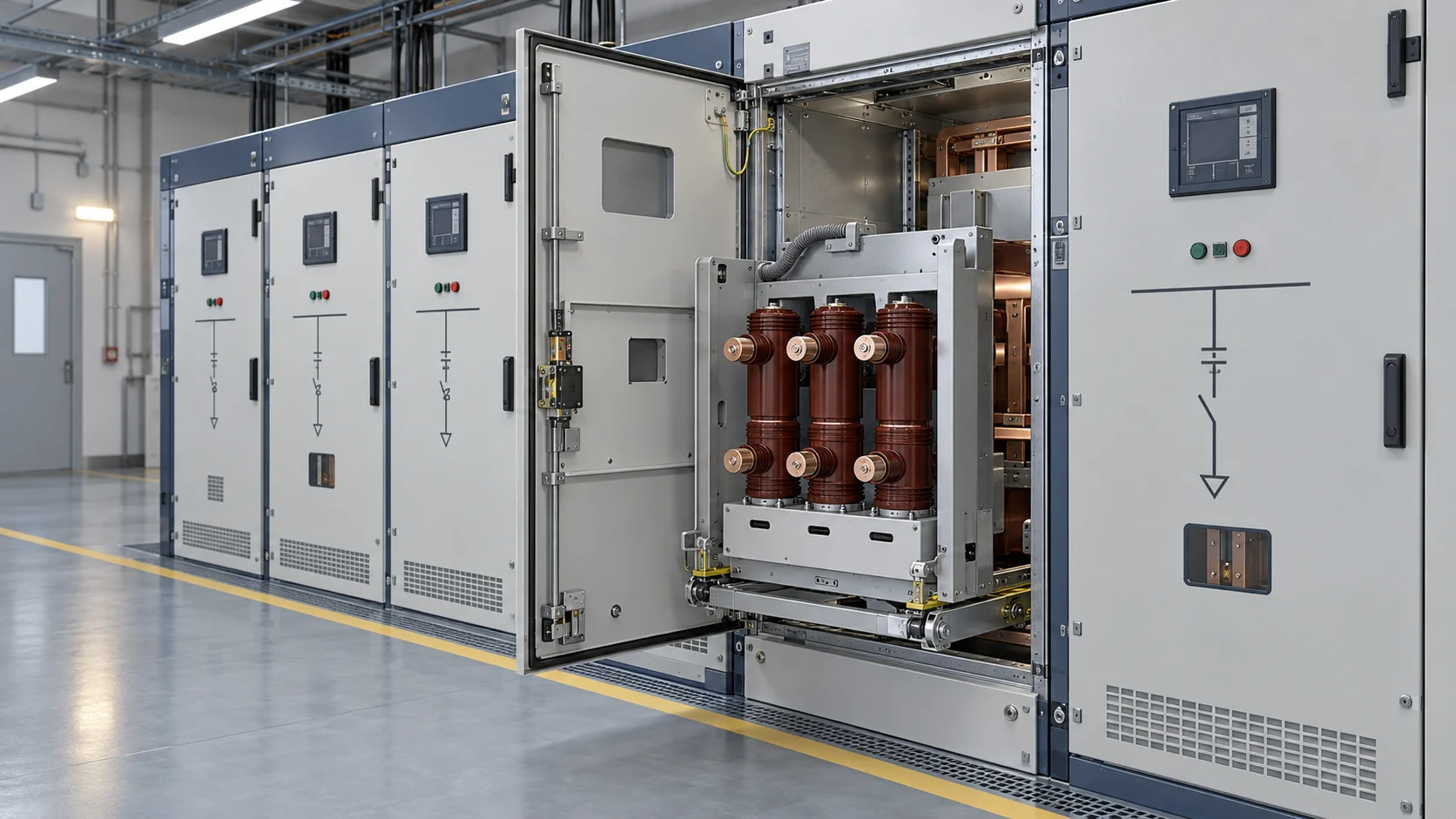
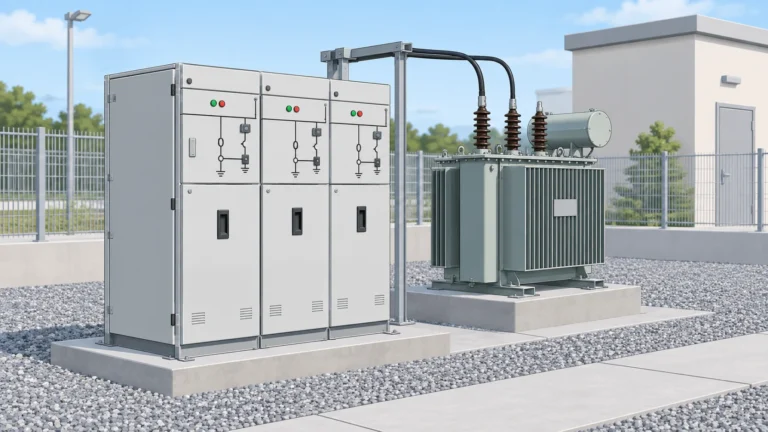
Conceptual engineering illustration; not a photograph of a named manufacturer’s product or factory.
Installation, Commissioning and Failure-Risk Boundaries
This section states the boundary, not the procedure. Live operation, switching, lubrication, adjustment, torque values, setpoints, electrical test sequences and gas handling are governed by model-specific approved procedures issued by the manufacturer and by your own switching authority. Nothing here substitutes for them.
What belongs in a decision document at the evidence level is the risk taxonomy. Interface mismatch — handcart dimensions, primary contact alignment, compartment clearances — is a retrofit risk and is resolved from drawings, not from a family brochure. Control-circuit incompatibility arises where auxiliary supply, trip/close coil arrangements or interlock wiring differ from the panel design. Configuration ambiguity arises where a catalogue lists a family without pinning down the exact variant quoted, which is a live risk for modular ranges. Documentation gaps — a missing test report for the quoted configuration, or an unnamed standards edition — are acceptance risks that surface late and expensively.
Escalation rule: where the datasheet is silent, go to the manufacturer rather than to a comparable product; where the standard appears ambiguous, the type-test report for the specific configuration governs.
FAQ
What is the difference between a vacuum circuit breaker and a vacuum interrupter?
A vacuum interrupter is the sealed arc-quenching element inside a breaker. A complete vacuum circuit breaker adds the pole assembly, operating mechanism, stored-energy and control subsystem, frame or handcart, and interlocks. This is why interrupter-only suppliers were excluded from the ten and why an interrupter cannot be quoted as a breaker substitute.
What is covered by IEC 62271-100 in this comparison?
The published scope covers three-phase AC circuit breakers for indoor or outdoor installation above 1,000 V. It identifies a standards family; it does not certify a product and does not establish equivalence between differently configured breakers. The cited portfolio-level sources do not establish the exact standards edition of a configuration quoted by any of the ten manufacturers, which is why the edition on the type-test report has to be confirmed per quotation.
What is the right way to compare a fixed and a drawout vacuum circuit breaker?
Compare them on what the installation requires rather than on the mechanism alone. A drawout arrangement needs a compatible compartment, handcart and primary contact interface; a fixed arrangement is bolted into the panel. Eaton, Toshiba International Corporation and Tavrida Electric publish both arrangements; for the other entries in this set, the cited sources confirm complete-breaker scope without specifying arrangement, so arrangement must be confirmed before a like-for-like comparison is possible.
What is the significance of a railway two-pole vacuum circuit breaker in this shortlist?
Meidensha's 27.5 kV two-pole design is a complete medium-voltage breaker built for electric railway application, and it is the only railway-specific entry here. It should not be compared directly against three-phase distribution breakers: pole count, duty profile and applicable reference framework all differ, and the cited sources do not name the railway standard. The 55 kV variant listed on the same page falls outside this article's medium-voltage scope.
What is needed from a panel builder before requesting a complete-breaker quotation?
At minimum: rated voltage and frequency, rated current, short-circuit breaking duty, switching application class, indoor or outdoor installation, fixed or drawout arrangement, operating mechanism type, control voltage, auxiliary contact requirements, cabinet and handcart interfaces, primary contact geometry, interlock requirements, the standards edition your acceptance process demands, and quantity with lead time. Assembling this before contacting vendors avoids the common failure where two manufacturers quote against two different assumed configurations.
What is the limit of the evidence behind this shortlist?
The evidence consists of manufacturer and regional-subsidiary product and company pages plus the published IEC 62271-100:2021 scope statement. The official sources were reviewed on October 2, 2026; the cited IEC edition is 2021. It confirms complete-breaker product scope and application fit, but for most entries it does not supply mechanism detail, arrangement detail, standards editions, ratings or test data. Treat this as a manufacturer-discovery document and verify every specification against a current datasheet and type-test report before specifying.
LEO Chen
With more than 20 years of industry experience, LEO Chen has worked with major companies on switchgear, transformer components and medium-voltage equipment projects. He contributes practical guidance for engineers and sourcing teams, with a focus on clear selection criteria, application context and the information needed to prepare an informed RFQ. Connect with LEO on LinkedIn.