Send the request type, manufacturer, equipment model/year, part reference, ratings, quantity, destination, required date, and any drawing or photo notes. The SUVELL team will review the request.
Email: admin@suvell.com
Phone: +86 189 6871 1705
Factory: No.208 Wei 12 Rd, Yueqing Economic Development Zone, Wenzhou, Zhejiang, China
AIS and GIS describe insulation architecture; the breaker or switch-disconnector’s interruption medium is a separate specification.
Compare installed footprint, ambient exposure, accessible maintenance, extension options and compartment boundaries against the quoted configuration.
GIS can use dry air instead of SF6; existing gas compartments and cross-brand interfaces require written OEM review before any proposed conversion or substitution.
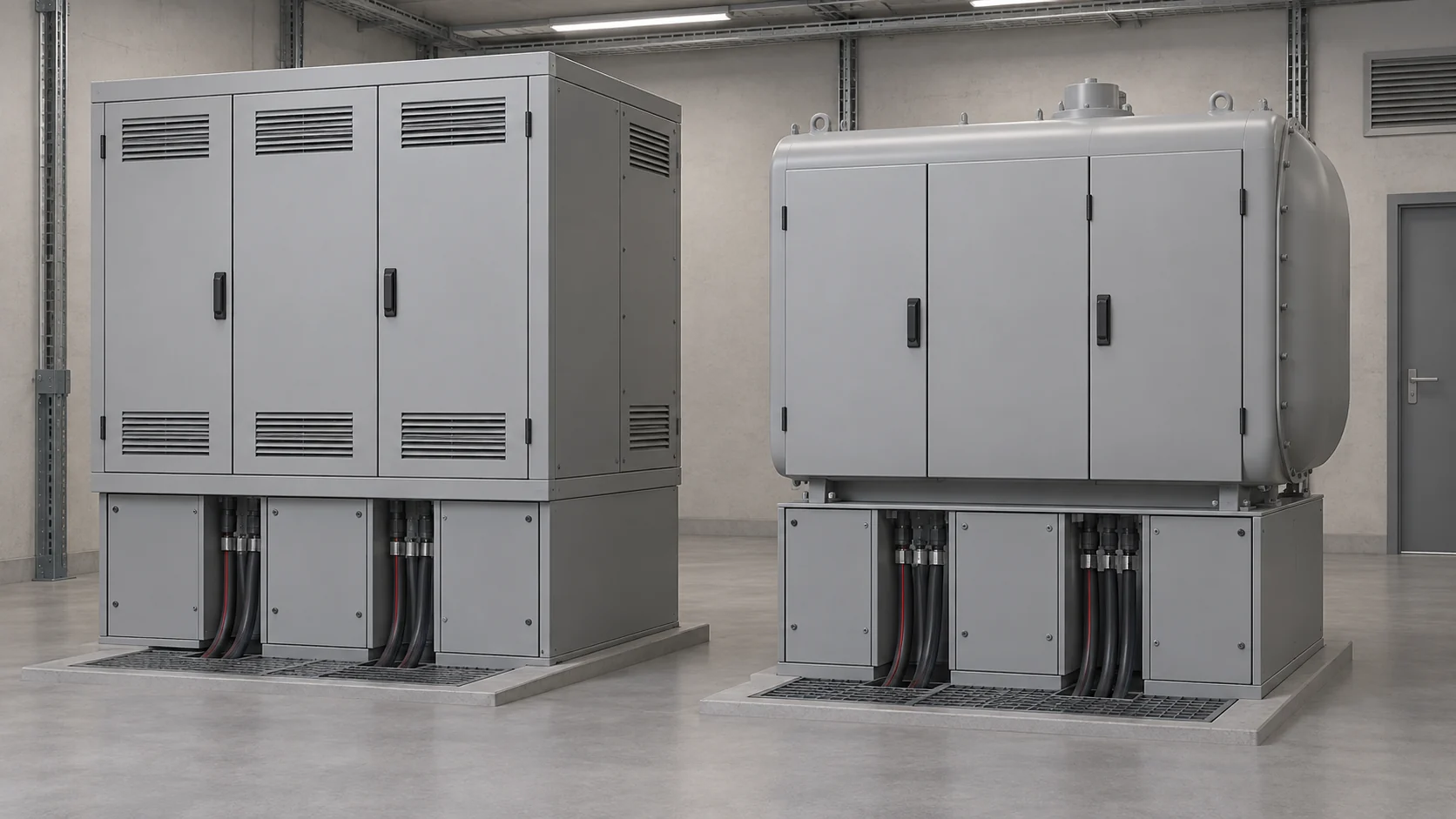
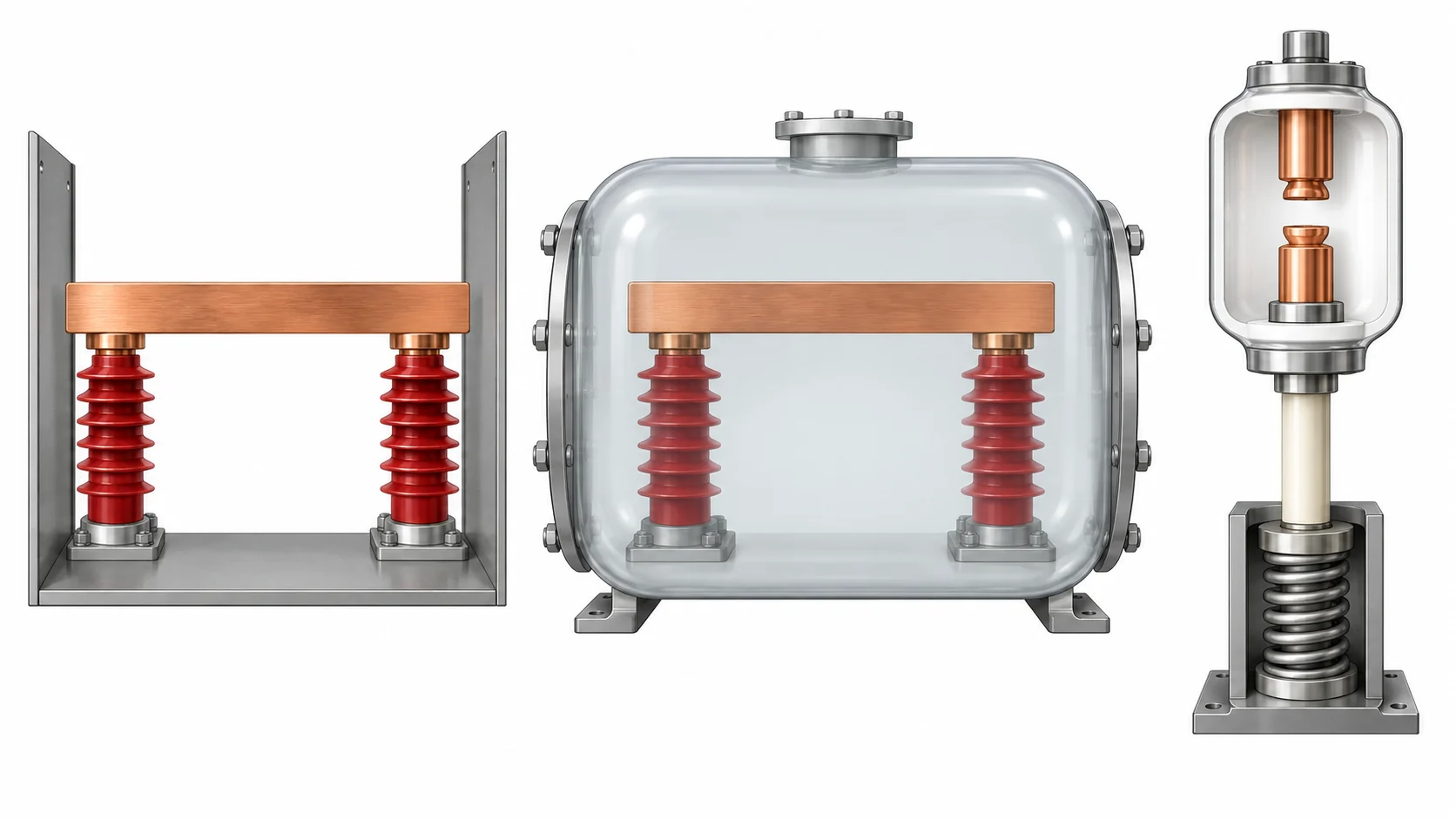
The practical difference between AIS and GIS switchgear is the insulation architecture: whether the primary dielectric is ambient air inside a compartmentalized enclosure, or a sealed compartment holding a gas or fluid at a defined pressure. Space, environmental tolerance, and maintenance reachability all follow from that architecture — not from which device interrupts the fault current. Neither architecture is universally better; the decision turns on site conditions, rating, extension plans, and what your maintenance team can actually reach.
Decision dimension
Ambient-air insulated (AIS)
Sealed gas-insulated (GIS)
Primary dielectric
Ambient air at atmospheric pressure, sized by air clearance
Sealed gas or fluid compartment at a defined filling pressure
Enclosure role
Metal-clad compartment; enclosure is mechanical, not dielectric
Enclosure is part of the dielectric system
Footprint for comparable ratings
Generally larger, because clearances scale with voltage and impulse withstand
Generally more compact, because clearances are set inside a controlled medium
Live parts vs ambient conditions
Exposed to humidity, dust, pollution, altitude effects, vermin
Isolated from ambient conditions by the sealed boundary
Routine access to primary parts
Direct access is typically more straightforward
Access is bounded by the sealed compartment; work concentrates on external interfaces
Breaker arrangement as commonly documented
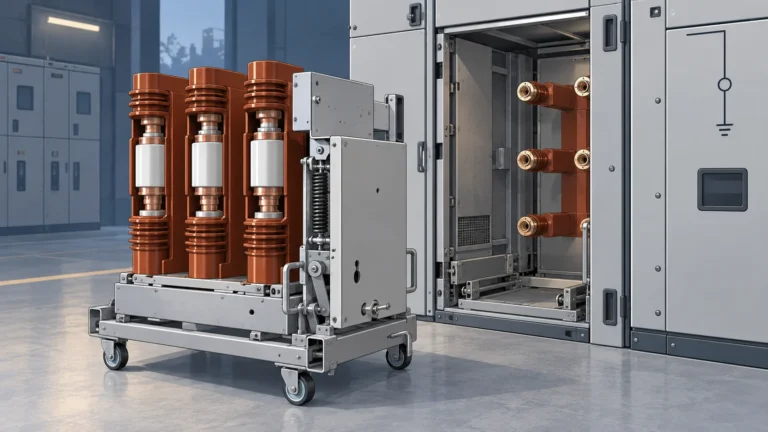
Drawout vacuum breakers in Eaton's described ANSI/IEEE metal-clad assemblies
Fixed breakers with disconnect switches in Eaton's described sealed designs
Extension
More often added bay by bay in situ
Depends on the sealed design and the manufacturer's extension scope
Gas medium assumption
Not necessarily gas-free at component level
Not necessarily SF6; dry-air and pressurized-air GIS designs exist
The breaker-arrangement row describes what Eaton's AIS/GIS application comparison documents for its own equipment, not a definition. AIS assemblies with fixed devices and GIS assemblies with other switching arrangements exist, and the insulation medium and the interruption medium are separate variables.
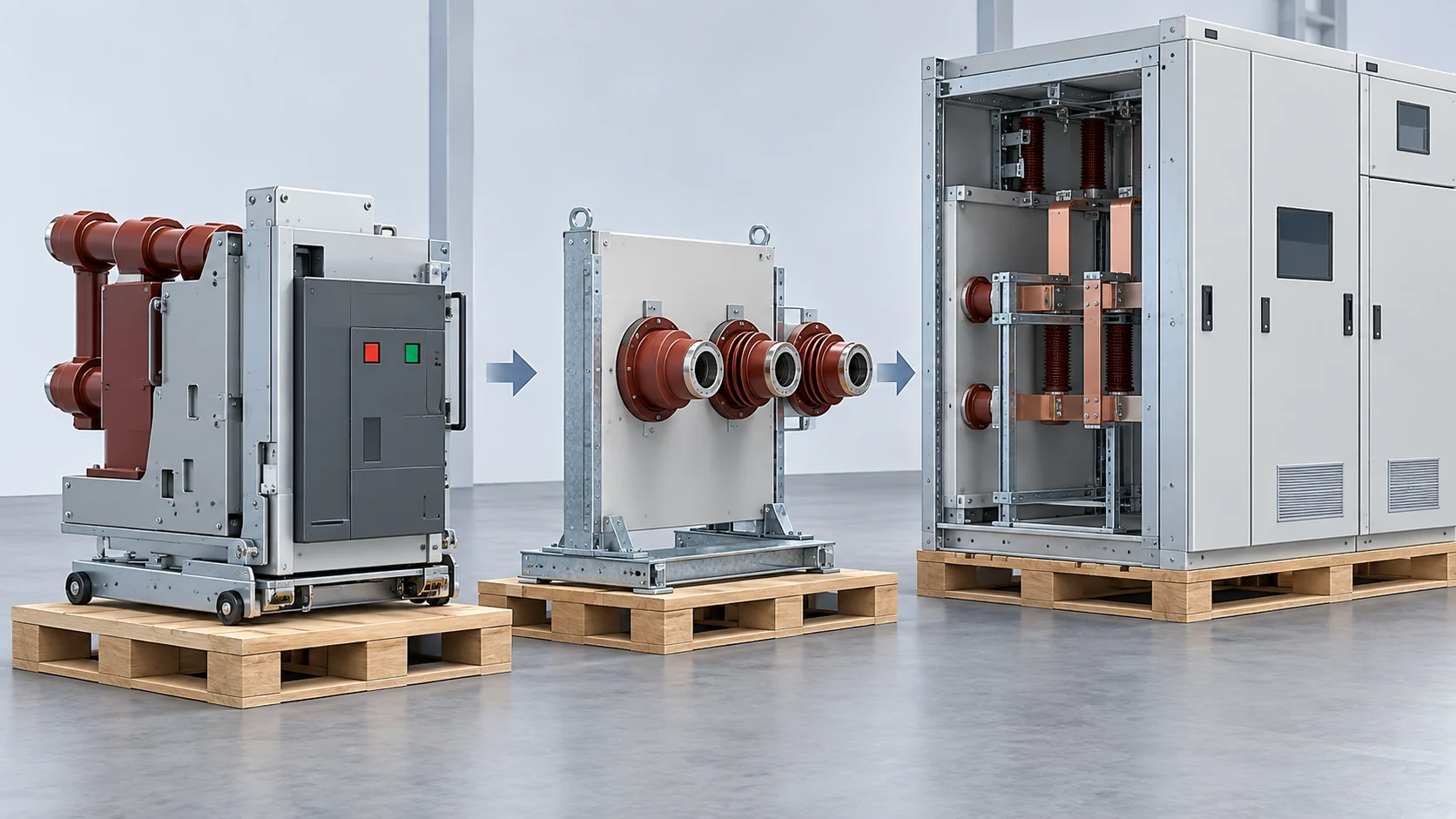
Conceptual engineering illustration; not a photograph of a named manufacturer product or factory.
Insulation Architecture Is the Variable — Switching Duty Is Not
Both architectures interrupt fault current, carry load, and provide isolation. That function belongs to the switching device, and it is separable from the medium that holds the voltage off. Treating "AIS" and "GIS" as descriptions of switching duty produces the wrong comparison.
ABB's product structure makes the separation visible. ABB identifies UniSec as air-insulated switchgear, yet the conventional GSec switch-disconnector used in that family is SF6-filled. UniSec Air instead pairs a dry-air-insulated switch-disconnector with a dedicated vacuum interrupter. Same broad family name, same switching role, two different insulating media — and in the second case, two media inside the same functional unit.
The consequence for a specification is direct. An insulation-medium question and an interruption-medium question are different questions, and a datasheet that answers one does not answer the other. Ask both, per compartment.
Why the Footprint Difference Is Real but Not Portable
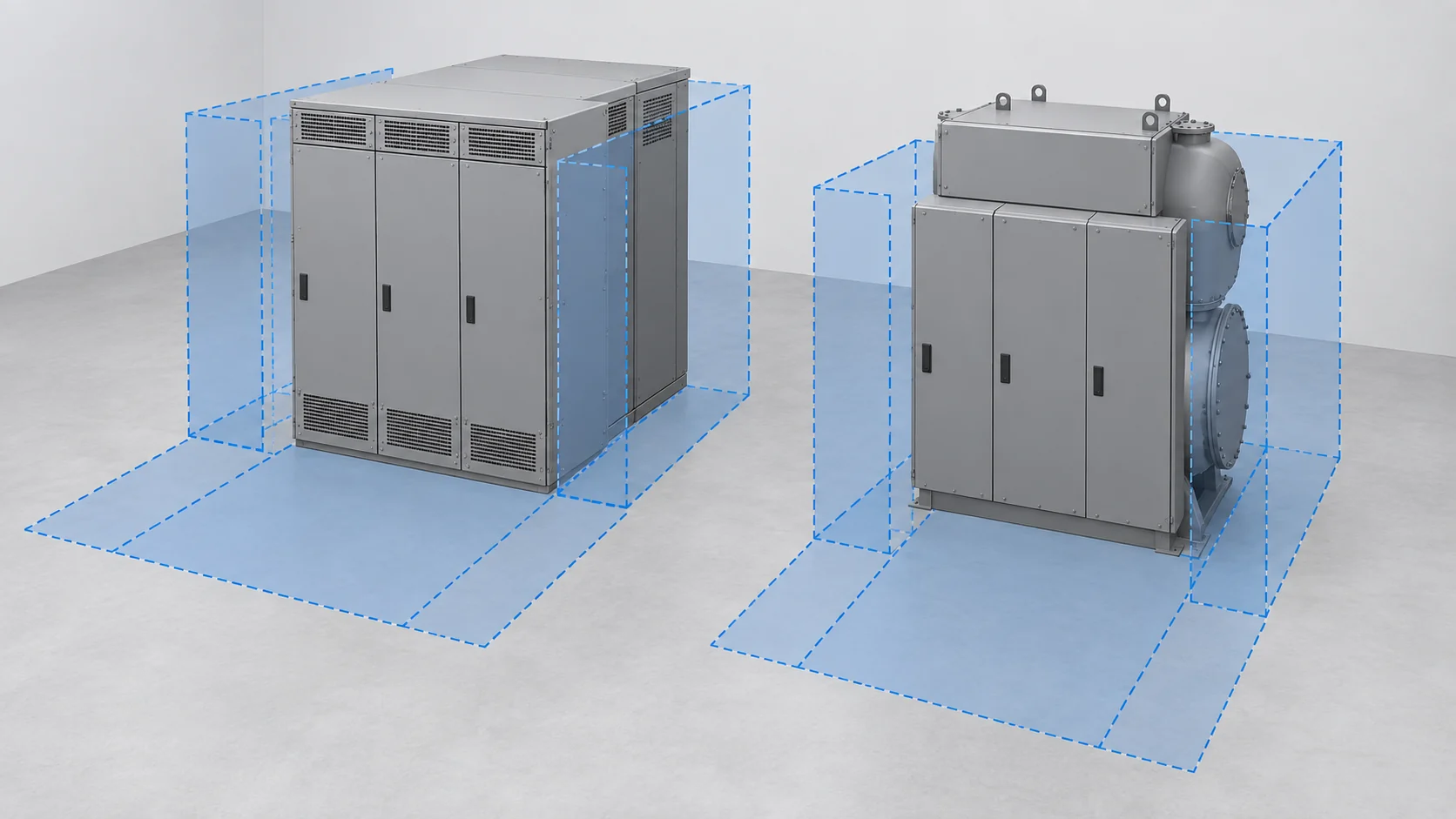
Air clearance grows with rated voltage and impulse withstand level. That is why an AIS bay's width and depth scale with rating rather than staying roughly constant, and why switchgear rooms for higher ratings tend to grow.
GIS inverts the mechanism. Putting the dielectric inside a sealed, controlled medium lets the designer set clearances against the properties of that medium rather than against ambient air at the site's worst humidity and pollution. Eaton's AIS/GIS application comparison presents footprint as a selection factor and reports space savings for its gas-insulated designs — but the size of that saving depends on which designs and which ratings are being compared. It does not transfer to another manufacturer's bay or another rating class.
Installed footprint is also larger than bay dimensions. Cable termination space, busbar routing, front and rear access aisles, pressure-relief or arc-vent zones, and withdrawal space for drawout devices all consume room. A bay-by-bay dimensional comparison that ignores the aisles will understate the AIS room and can overstate the GIS advantage at low ratings, where the ancillary space dominates.
Extension belongs in the same analysis. Eaton lists future extension among the selection factors, and extension behaviour differs between architectures: adding bays in situ, matching an existing sealed design, or replacing a section can each carry different outage and interface consequences. Decide the extension strategy before comparing footprints, because the two interact.
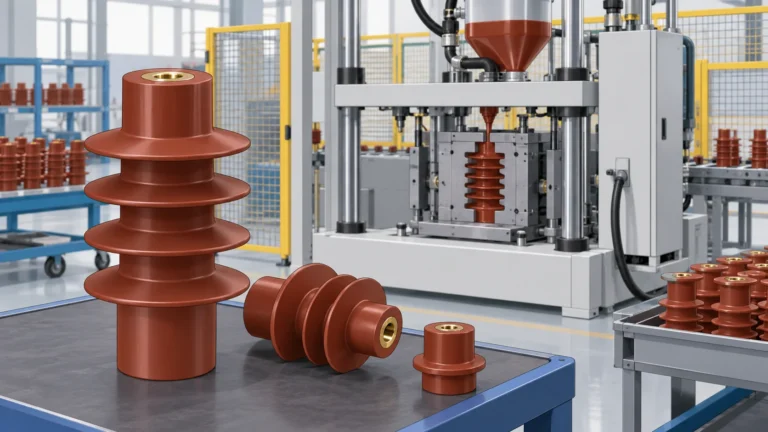
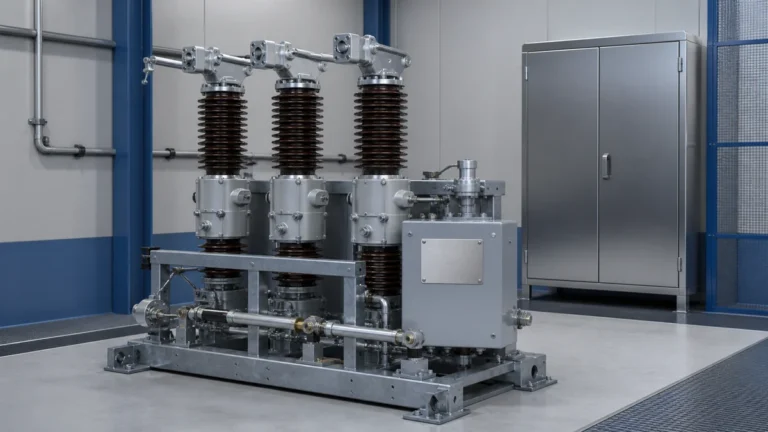
Conceptual engineering illustration; not a photograph of a named manufacturer product or factory.
Environmental Exposure and Enclosure Philosophy
Ambient-air insulation means live parts experience the site. Humidity, condensation cycles, airborne dust, salt, industrial pollution, altitude, and small animals all act on the dielectric and on surfaces that must stay clean to hold their withstand level.
A sealed compartment limits direct ambient exposure of its internal primary parts. External cable terminations, mechanisms and auxiliary equipment remain subject to their own site and enclosure conditions. Eaton's architecture overview separates conventional ambient-air AIS, pressurized-air GIS, solid-insulated switchgear and non-pressurized dry-air switchgear as distinct approaches — a reminder that "air versus gas" collapses several real options, each with its own pressure system and insulation materials.
That distinction matters because sealed construction relocates risk rather than deleting it. Sealed compartments introduce their own verification set: filling medium and declared pressure, whether pressure is monitored, how compartment boundaries are drawn, and how the enclosure is qualified for the site's environmental class. Those items are settled by the manufacturer's design data, not by the architecture label.
Identify the architecture, the pressure system, and the insulation materials before comparing environmental exposure or maintenance needs. A comparison that skips this step is comparing labels.
Maintenance Reachability: What Shifts, Not What Disappears
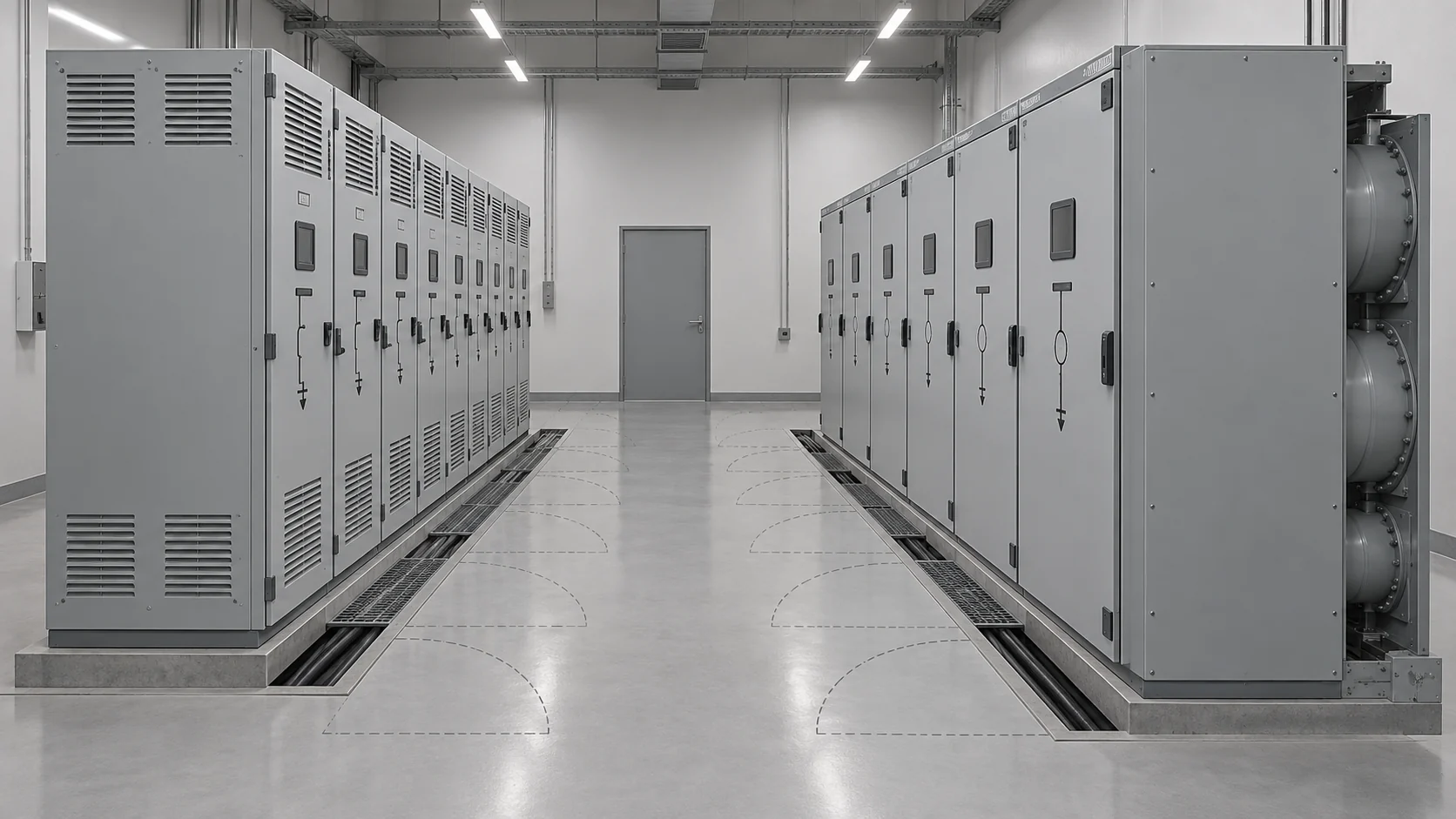
AIS maintenance planning starts from direct access. Primary components can typically be reached in the compartment, but the same exposure that makes them reachable also drives the inspection and cleaning cycle — contamination on insulating surfaces is a condition-monitoring problem specific to ambient-air designs.
GIS maintenance planning starts from the sealed boundary. Ambient-driven degradation of live parts is largely removed from the routine cycle, and the accessible work concentrates on external and interface items: operating mechanisms, interlocks, auxiliary and control circuits, cable terminations, monitoring devices, and the compartment-pressure indication where fitted. Opening a sealed compartment is not a routine field activity, and whether it is a field or factory activity is a per-design answer.
Do not convert this into a general maintenance-interval rule. Eaton's comparison discusses maintenance intervals as a lifecycle-cost factor, but the intervals depend on the compared design and rating. ABB's same-interface and same-footprint statements apply to the ABB families being compared, not to sealed switchgear in general. In distribution-level ring main units, sealed-for-life construction is common, so the maintenance question often becomes a monitoring-and-replacement-strategy question rather than an in-situ service question.
The honest test is your own organisation: who can work on the equipment, with what tools and competence, and how quickly can they reach the compartment that fails.
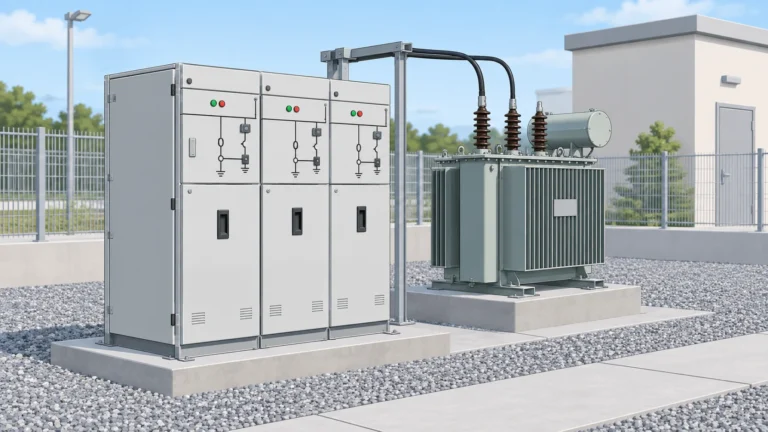
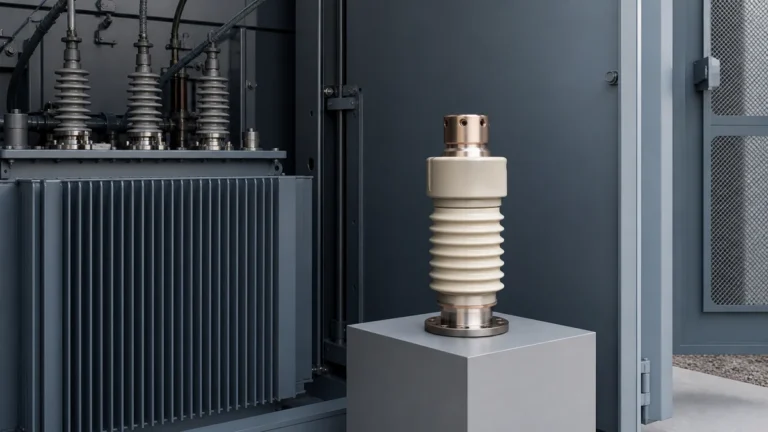
Conceptual engineering illustration; not a photograph of a named manufacturer product or factory.
Component Interfaces: Where the AIS/GIS Binary Breaks Down
The label describes the assembly. Replacement and spare-part decisions are made at the interface, and interfaces cross the label.
The interfaces that decide compatibility are: the busbar joint or bushing between adjacent bays; the cable compartment and termination arrangement; voltage and current transformer mounting; the breaker or switch-disconnector interface; earthing switch and interlock arrangements; protection and control wiring; and the sealed boundary itself — which components sit inside a gas or fluid envelope and which do not.
That last item is where most comparisons fail. ABB's UniSec and UniSec Air families show an air-insulated assembly whose conventional GSec switch-disconnector is SF6-filled, alongside a variant that combines dry-air insulation in the switch-disconnector with a vacuum interrupter. A single AIS assembly can therefore contain gas compartments.
Two statements do not follow from this and should not be made. It is not accurate to describe every air-insulated assembly as free of all gas compartments. And a retrofit onto an existing assembly is not approved by any of the cited material — approval is a written, product-specific determination from the original equipment manufacturer.
Schneider Electric makes the same architectural point from the terminology side. Its discussion of pressurized-air GIS distinguishes sealed, gas- or fluid-filled compartments from ambient-air insulated compartments, and treats enclosure philosophy, environmental exposure, footprint and maintainability as the useful comparison criteria. Schneider also proposes additional terminology for its SF6-free context — that proposal is a manufacturer's terminology suggestion, not a new IEC standard, and should be read as such. Pure-air insulation is also distinct from the vacuum interruption function.
Three assumptions should be dropped. Existing SF6 tanks do not accept dry-air filling; that is a design change, not a service activity. Every SF6-free GIS does not share the same filling pressure, switching method, or maintenance needs. And a dry-air GIS is not an AIS assembly with a different label.
Evidence Boundaries: What the Cited Material Can and Cannot Settle
Each source here answers a narrower question than the topic suggests.
Eaton's application comparison describes Eaton's own equipment architectures — drawout vacuum breakers in air-insulated metal-clad assemblies, fixed breakers with disconnect switches in sealed gas-insulated designs — largely within an ANSI/IEEE metal-clad context. It discusses footprint, location, accessibility, future extension, ratings and lifecycle costs. Its percentage space savings, costs and maintenance intervals depend on the designs and ratings compared and should not be generalised.
Schneider Electric's material is a current manufacturer's technical explanation, written for its own SF6-free context, and includes a terminology proposal. ABB's statements are product-family specific to the named UniSec, UniSec Air, GSec, GSec Air, SafeRing Air and SafePlus Air families. Where catalogue scope differs between manufacturers, the difference is scope, not disclosure quality, and should not be ranked.
Two things remain outside this material entirely: the specific electrical and mechanical requirements of a given project, and the primary evidence behind them. Rating and testing frameworks and manufacturer type-test certificates are the primary evidence for a given assembly, and design details such as arc classification, ingress protection, seismic qualification and altitude derating need product-specific documentation.
The manufacturer material used here was checked in October 2026. That is a source-review date, not a statement about current inventory or future availability.
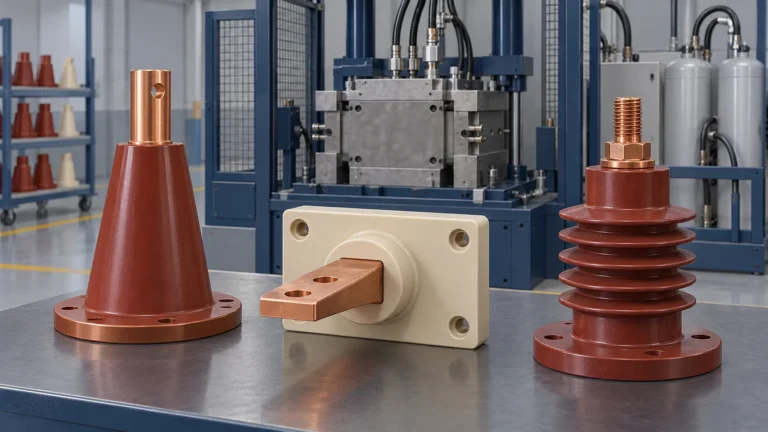
Conceptual engineering illustration; not a photograph of a named manufacturer product or factory.
Verification Workflow and the Data Set an RFQ Needs
Selection, verification and procurement collapse into one activity: establishing, before commercial evaluation, what is actually being quoted. Work in this order.
Classify each compartment, not each assembly. Record, per compartment, the insulation medium, whether it is sealed, the nominal filling pressure if sealed, and whether pressure is monitored. This single step prevents most of the confusion in this topic.
Confirm the switching and interruption principle separately. Record whether the breaker or switch-disconnector is drawout or fixed, and what interrupts the fault current. Do not infer this from the insulation label.
Map the installed footprint, not the bay. Include cable termination space, busbar routing, access aisles, relief zones, and withdrawal space. Confirm dimensional data for the specific configuration, not for the family.
Compare maintenance reachability against your own capability. Which components are field-replaceable, which require factory service, what competence and equipment the work needs, and how long the outage would run. Sealed-for-life assemblies and withdrawable assemblies have very different answers, and the answer is organisational as much as technical.
Compare lifecycle cost on evidence. Ask for the cost drivers specific to the quoted design: maintenance intervals for that rating, spare-part availability, and the intervention model. Reject transferred numbers from other designs.
Assemble the documentation set before pricing. Ask for the single-line diagram, general arrangement drawing, type-test certificates for the offered assembly, the compartment-by-compartment insulation and pressure declaration, environmental design conditions, O&M documentation, and a spare-parts list with part identification. Confirm ratings as a set — rated voltage, impulse withstand, rated current, short-time withstand and peak.
State the extension and spare strategy in the enquiry. Say whether the room will be extended, and whether components will be sourced as like-for-like replacements or as form-fit-function alternatives. Component-level sourcing for MV switchgear and ring main units depends on the interface data above, so supply it rather than asking a supplier to reconstruct it.
Escalate anything the datasheet does not settle. Interface compatibility, retrofit feasibility onto existing assemblies, and approval of any substitution fall to the original equipment manufacturer in writing. No general architecture comparison substitutes for that.
Installation and Failure Risks at the Architecture Level
The risks worth planning for are evidence and interface risks, not operating risks.
One risk is an assumption of portability: treating interfaces as interchangeable across families because both are described as GIS or both as AIS. Busbar and cable interfaces are design-specific.
The second is a pressure-medium assumption — expecting that an existing sealed assembly can be re-filled with a different medium, or that a dry-air GIS behaves like an SF6 GIS in monitoring and intervention terms. Neither follows from the published material.
The third is an extension mismatch discovered late, when a new bay's interface, dimensions or rating class does not match the installed section. Settling extension compatibility during the enquiry costs far less than settling it during commissioning.
The fourth is a documentation gap. If the sealed boundary is not drawn on a compartment-level diagram, nobody can plan work, order the right component, or confirm that a substitute sits on the correct side of that boundary.
The fifth is ventilation and condensation management in AIS rooms and monitoring strategy in sealed designs — different problems with different owners, neither of which is resolved by the insulation label.
Actual energisation, switching, gas handling, pressure adjustment, mechanical settings, torque values and repair work are governed by model-specific approved procedures from the original equipment manufacturer, together with site rules. Nothing in an architecture comparison substitutes for those procedures, and any deviation belongs with the manufacturer and the responsible site engineer.
FAQ
What is the main difference between AIS and GIS switchgear?
The insulation architecture. In AIS, ambient air at atmospheric pressure is the primary dielectric and the enclosure is mechanical. In GIS, a sealed compartment holds a gas or fluid at a defined pressure, and the enclosure is part of the dielectric system. Space, environmental exposure and maintenance reachability follow from that difference; switching duty does not.
Does GIS switchgear always use SF6?
No. ABB's SafeRing Air and SafePlus Air are gas-insulated secondary-distribution assemblies that use dry air rather than SF6, in a gas enclosure modified for the filling pressure, so the sealed insulating environment remains. Schneider Electric also discusses GIS containing pressurized pure air instead of SF6. The sealing philosophy, not the specific medium, is what makes a design gas-insulated.
Is GIS always smaller than AIS?
Not as a general rule. Eaton's comparison reports space savings for its gas-insulated designs, but the magnitude depends on the compared design and rating and should not be generalised. Temperature, dimension and ancillary factors also affect the comparison, and installed footprint includes cable termination space, busbar routing, access aisles, relief zones and withdrawal space — not just bay dimensions.
Does AIS need more maintenance than GIS?
The type of maintenance changes more than a simple count. Ambient-air insulation means live parts see humidity, dust and pollution, which drives inspection and cleaning. Sealed insulation removes ambient exposure but concentrates work on external and interface items, and sealed compartments are not opened as routine field activity. Published intervals depend on the compared design and rating, so they should not be transferred between designs.
Can an AIS switchgear assembly contain SF6?
Yes. ABB identifies UniSec as air-insulated switchgear while the conventional GSec switch-disconnector used in it is SF6-filled. UniSec Air pairs a dry-air-insulated switch-disconnector with a dedicated vacuum interrupter. The insulation medium of the assembly and the medium inside a component are separate facts, and both need to be recorded.
Can an existing SF6 compartment be filled with dry air?
No conclusion to that effect follows from the published material. Dry-air GIS designs use an enclosure modified for the filling pressure, so the change is a design difference rather than a service activity. Any conversion question is a product-specific determination for the original equipment manufacturer.
What documentation should I request before comparing AIS and GIS quotes?
A compartment-level declaration of insulation medium and sealing, with filling pressure where applicable; the single-line diagram and general arrangement drawing; type-test certificates for the offered assembly; the rating set including rated voltage, impulse withstand, rated current and short-time withstand; environmental design conditions; O&M documentation; and a spare-parts list with part identification. Add written OEM confirmation for any retrofit or substitution.
Why does the term RMU matter in this comparison?
Ring main units sit at the distribution end of the same decision, and sealed secondary-distribution assemblies such as ABB's SafeRing Air and SafePlus Air are gas-insulated. At that level, sealed construction is often a design premise rather than a variable, which shifts the maintenance question toward monitoring and replacement strategy. The comparison criteria stay the same: insulation architecture, footprint, environmental exposure and interface data.
Does the breaker type determine whether switchgear is AIS or GIS?
No. Eaton's comparison documents drawout vacuum breakers in its air-insulated metal-clad assemblies and fixed breakers with disconnect switches in its sealed designs, but that is a description of the equipment compared, not a definition. Insulation medium and interruption medium are independent variables, and each should be confirmed from the datasheet for the specific assembly.
LEO Chen
With more than 20 years of industry experience, LEO Chen has worked with major companies on switchgear, transformer components and medium-voltage equipment projects. He contributes practical guidance for engineers and sourcing teams, with a focus on clear selection criteria, application context and the information needed to prepare an informed RFQ. Connect with LEO on LinkedIn.