Send the request type, manufacturer, equipment model/year, part reference, ratings, quantity, destination, required date, and any drawing or photo notes. The SUVELL team will review the request.
Email: admin@suvell.com
Phone: +86 189 6871 1705
Factory: No.208 Wei 12 Rd, Yueqing Economic Development Zone, Wenzhou, Zhejiang, China
Off-Load Tap Changer Replacement: Data Needed for Model Matching
An off-load tap changer replacement must match both the electrical configuration and the installed tank interfaces. This guide organizes position count, drive, deck construction, winding leads, connectors, and external operation into an RFQ record that makes compatibility questions and missing evidence visible.
Identify the installed unit as an off-load or de-energized tap changer and record connection type, phase count, current, insulation class, positions, and drive separately.
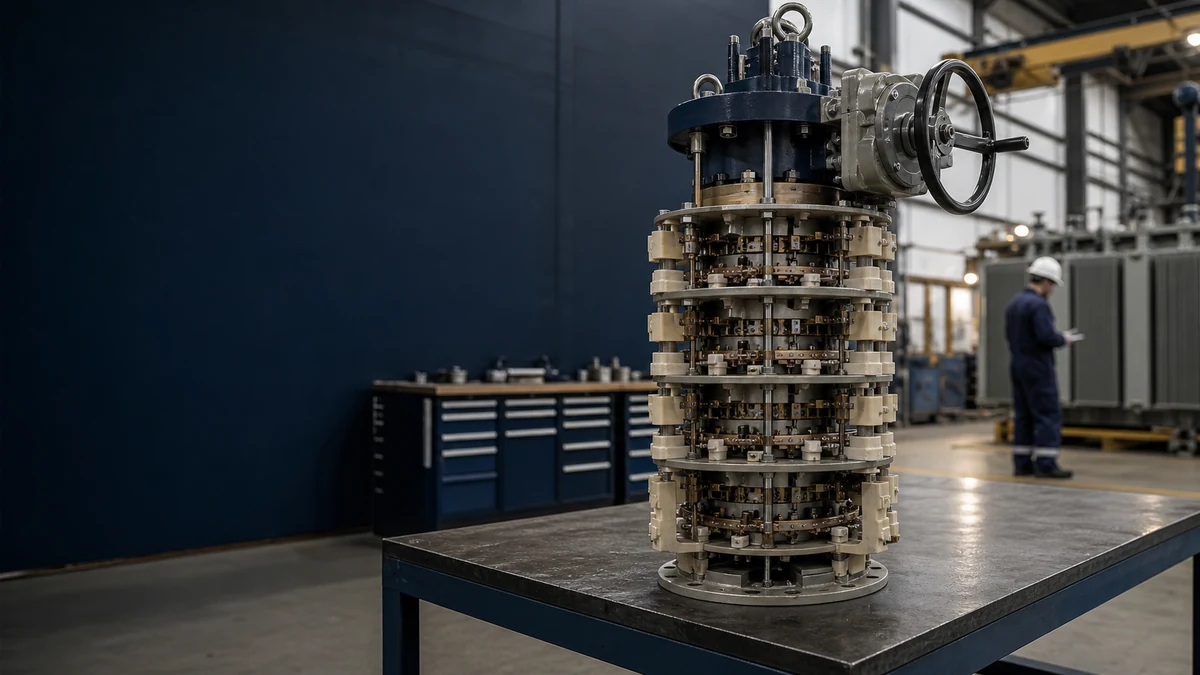
Match the in-tank or tank-wall mounting, deck arrangement, tapped-winding leads, and coil-lead connectors as well as the external gearbox or handle.
Label internal and external evidence by the matching question it answers, and require supplier confirmation of any missing dimensions or interface assumptions.
This is an identification and quotation-data workflow. It is not an instruction to operate the transformer, change tap positions, enter a tank, alter wiring, set protection, or perform commissioning. Those activities need the asset owner's approved procedures, competent personnel, and the applicable safety controls. The practical objective here is simpler: give the manufacturer or replacement supplier a record that lets them state whether a candidate is technically compatible, what remains unconfirmed, and what drawing or dimensional information they need before acceptance.
Open one replacement record before requesting a quote
Start with one traceable record for the installed unit. Avoid a request made from a transformer rating alone or from an incomplete photo. A clear record reduces back-and-forth and prevents an apparently similar item from being treated as a confirmed replacement.
Record area
What to record
Why it matters
Evidence reference
Installed identity
Manufacturer, model/reference, serial or marking, readable nameplate photos
Preserves the starting point for model comparison
Nameplate photo and equipment record
Transformer context
Transformer designation, application, phase arrangement, available rating documentation
Places the changer in the correct installed application
Transformer nameplate or approved data sheet
Electrical selection
Connection type, phase count, current, insulation class, number of positions
Separates model-defining fields from a general description
Nameplate, wiring record, OEM document
Mechanical arrangement
In-tank or tank-wall mounting, deck count, mounting references, shaft/drive arrangement
Establishes the physical interface to be matched
Internal and external photos; drawing if available
Lead arrangement
Lead structure, tapped-winding lead routing, coil-lead connector style
Identifies interfaces that may not be visible in a catalogue photo
Keeps assumptions visible instead of silently filling gaps
RFQ clarification list
Use the original file naming in the RFQ: for example, transformer reference plus `external-operation-photo` or `deck-arrangement-drawing`. That makes it easier for both project engineering and the supplier to point to the same evidence. If a photo does not prove a dimension, label it as contextual evidence rather than converting it into a measured value.
Build the replacement record around the installed arrangement
– [ ] Confirm the unit is de-energized/off-circuit.
– [ ] Identify whether the tap-changer is in-tank mounted or tank-wall mounted.
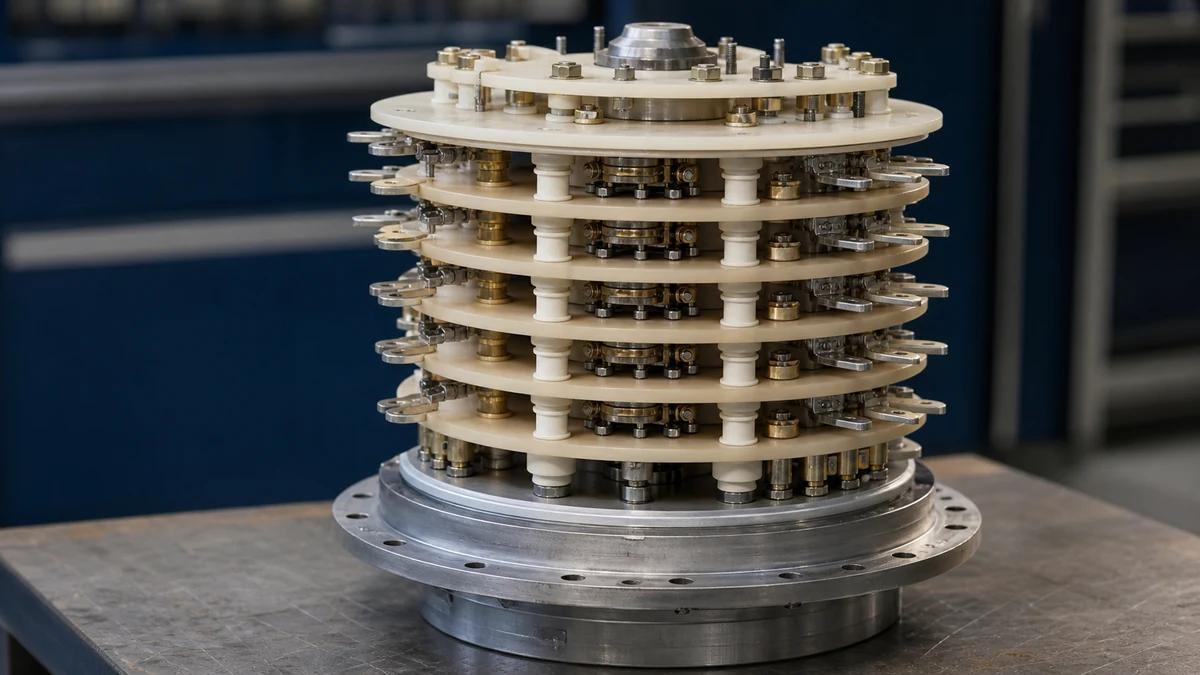
– [ ] Note whether the unit is single-deck or multi-deck.
– [ ] Capture the lead structure and tapped-winding lead routing.
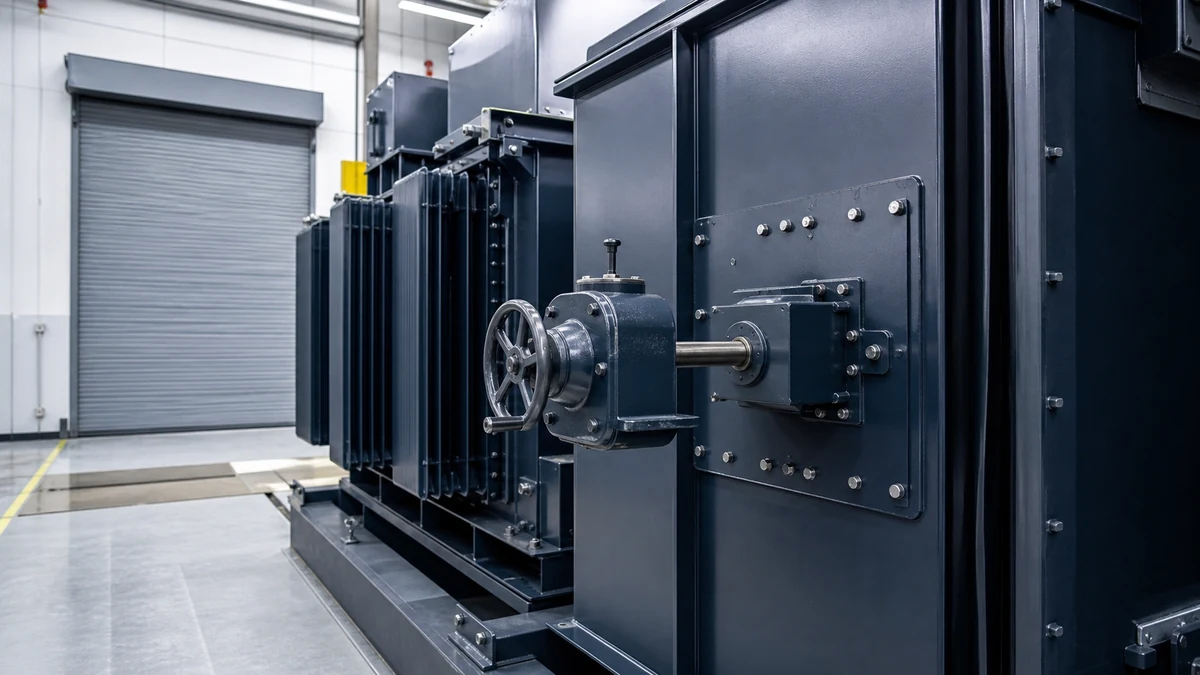
– [ ] Record any external manual gearbox or other external operation.
– [ ] State the winding application.
Checklist: the model-matching fields that are not optional
– [ ] Connection type
– [ ] Phase count
– [ ] Current
– [ ] Insulation class
– [ ] Number of positions
– [ ] Drive
Broad configuration variation limits generic technical data, so these fields should be treated as separate selection items rather than folded into one general description.
Separate electrical selection from physical matching
An electrical-looking value and a physical interface are related, but they are not interchangeable. First capture the fields that define the required changer configuration: connection type, phase count, current, insulation class, number of positions, and drive. Then document the installed arrangement that the replacement must fit: deck configuration, mounting method, lead routing, connector style, shaft or gearbox detail, and external operating position.
This two-part approach helps an RFQ remain clear when information is incomplete. A supplier can respond in a disciplined way: identify fields that appear to match, identify fields requiring confirmation, and request the drawing or measurement that closes each gap. Do not treat a matching current value, a similar number of positions, or a visually similar drive as proof that the complete assembly is interchangeable.
For a useful comparison, keep the following questions separate:
Does the candidate correspond to the stated connection, phase, current, insulation, position, and drive data?
Does it correspond to the installed in-tank or tank-wall arrangement?
Is the deck arrangement compatible with the available lead structure and tapped-winding routing?
Does its connector style correspond to the evidence supplied for the installed unit?
Can the external manual gearbox or other external operating arrangement be accommodated without unverified modification?
If the answer to any of those questions is unknown, carry that item forward as an open technical point. A request that says “confirmation required from drawing” is more valuable than an RFQ that guesses.
Checklist: interface evidence to attach to the RFQ
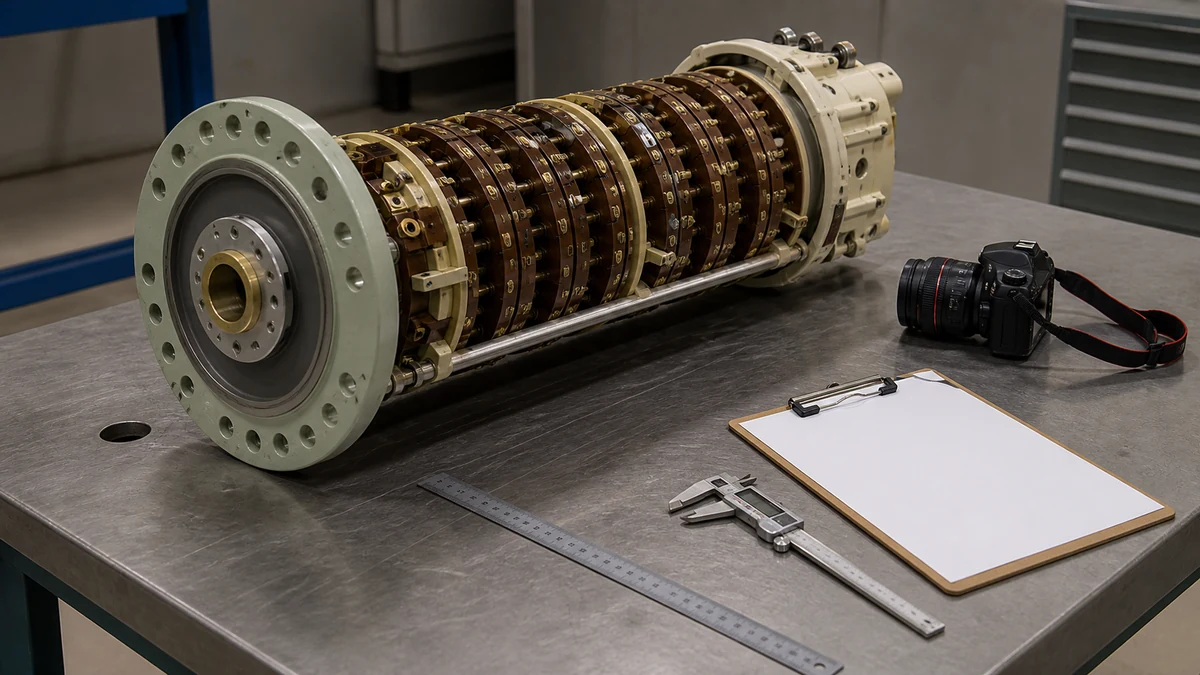
– [ ] Internal photos or drawings showing in-tank mounting
– [ ] External photos showing tank-wall mounting or external operation
– [ ] Deck arrangement evidence for single or multi-deck units
– [ ] Coil-lead connector style
– [ ] Lead routing at the tapped winding
– [ ] Evidence of the external manual gearbox, if fitted
For model matching, the point is not to describe the tap-changer in general terms. The goal is to document the exact arrangement already installed so the replacement can be matched to it.
Give every photo or drawing a comparison purpose
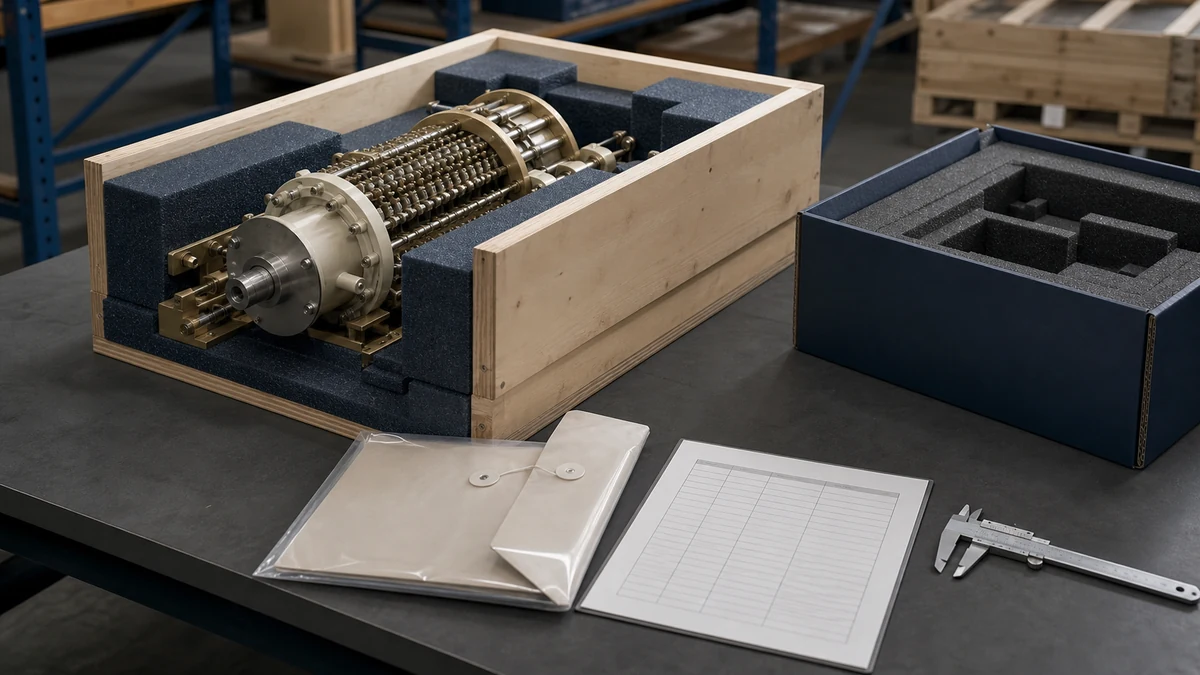
Evidence is most useful when it answers a specific matching question. An internal image can show the deck construction, lead structure, connector style, and relative routing. An external image can show where a tank-wall feature or manual gearbox is located. A drawing can provide the controlled reference for interfaces or dimensions that a photo cannot establish. Keep the original image alongside a short caption explaining what it is intended to prove.
Before sharing material, check that the record distinguishes observed facts from inference. For example, “external hand-operated gearbox visible on the tank wall” is an observation; “candidate gearbox will fit” is a conclusion that needs supplier confirmation. This distinction is especially useful where the installed device is old, labels are incomplete, or a previous repair may have changed the visible arrangement.
Comparison point
Installed evidence
Candidate response required
Status
De-energized/off-circuit duty
Site record or OEM identification
Confirm the candidate is proposed for the same stated duty
Pending supplier confirmation
Connection and phase data
Nameplate or approved documentation
State the offered configuration and any unresolved field
Pending supplier confirmation
Position count and drive
Marking, record, or controlled drawing
State the offered position and drive arrangement
Pending supplier confirmation
Deck and lead arrangement
Internal photo/drawing
Confirm whether the evidence is sufficient for model matching
Pending supplier confirmation
Tank interface and external operation
External photo/drawing
Identify any needed dimensions or interface drawing
Pending supplier confirmation
The supplier's technical response should identify its assumptions. A quotation may be commercially useful before every detail is available, but the acceptance path should clearly show which conditions must be closed. That record protects the project team from treating a preliminary offer as a final engineering release.
How to prepare a supplier-ready RFQ package
Keep the package small enough to review, but complete enough to support a technical answer. A practical package can contain the current equipment record, a concise data table, labelled photos, relevant controlled drawings, and a one-page list of questions. The request should identify the installed component as an off-load or de-energized tap changer and explicitly exclude advice intended for an on-load tap changer unless the asset documentation identifies that arrangement.
State the required response format. Ask the supplier to list: the proposed model or configuration; the fields matched from the supplied record; every assumption; missing data; drawings or dimensions requested; and any interface condition that must be confirmed before order release. This supports an auditable review without telling the supplier how to design, install, or commission the device.
Use the following final review before issuing the RFQ:
The request names the specific transformer asset and installed changer reference where available.
De-energized/off-circuit status is recorded as evidence, not assumed from a generic product family.
Electrical selection fields are present individually rather than embedded in free text.
Every photograph has a source, date if known, and short purpose caption.
Unknown data is labelled “to be confirmed”; no placeholder is presented as a fact.
The supplier is asked to respond to compatibility conditions and missing evidence in writing.
Review the answer before releasing an order
When quotations arrive, compare each response against the same record. Do not compare one candidate against a broad product description while comparing another against site photos. Create a row for every selection and interface field, then mark it as confirmed, not confirmed, not applicable, or requiring further evidence. This is also a useful handover record for the eventual project file.
The review is complete only when the project team has its required approvals and the open technical points have a controlled resolution. The supplier's statement can support the decision, but it does not replace the asset owner's procedures, design authority, maintenance requirements, or site safety process. Keeping that boundary explicit makes this content appropriate for pre-quotation identification while avoiding unsupported operational advice.
FAQ
What is the minimum data set for off load tap changer replacement?
The minimum data set is the de-energized arrangement plus the separate selection fields that define the model: connection type, phase count, current, insulation class, number of positions, and drive. If available, add mounting, deck count, lead structure, connector style, and external operating details.
What is the difference between de-energized and on-load tap-changer data?
De-energized, off-circuit replacement data is tied to the installed tank arrangement and tapped-winding lead routing. The RFQ should identify that de-energized configuration directly and should not borrow on-load tap-changer assumptions.
What is the most useful evidence for model matching?
The most useful evidence is the combination of internal and external interface proof: in-tank or tank-wall mounting, deck configuration, coil-lead connector style, lead structure, winding application, and any external manual gearbox or other external operation.
What is the safest way to compare two replacement candidates?
Compare them field by field against the installed unit. Match the selection fields first, then confirm the physical interfaces and operating arrangement. Cosmetic similarity is not enough when configuration variation is broad.
LEO Chen
With more than 20 years of industry experience, LEO Chen has worked with major companies on switchgear, transformer components and medium-voltage equipment projects. He contributes practical guidance for engineers and sourcing teams, with a focus on clear selection criteria, application context and the information needed to prepare an informed RFQ. Connect with LEO on LinkedIn.