Send the request type, manufacturer, equipment model/year, part reference, ratings, quantity, destination, required date, and any drawing or photo notes. The SUVELL team will review the request.
Email: admin@suvell.com
Phone: +86 189 6871 1705
Factory: No.208 Wei 12 Rd, Yueqing Economic Development Zone, Wenzhou, Zhejiang, China
IEC 62271 Documents for MV Switchgear Components: What Buyers Should Request
The value of an IEC 62271 document depends on the product and configuration it covers. This buyer's guide separates assembly and circuit-breaker evidence, outlines report and delivery-record checks, and identifies interface questions that still need resolution when replacing a component in existing switchgear.
Define whether the purchase covers a complete switchgear assembly, a circuit breaker, or an integration task before specifying IEC 62271 documents.
Review type-test scope, ratings, model applicability, and configuration deviations alongside routine records for the delivered equipment.
Match nameplates to test records and manuals, and request separate evidence for mechanical interfaces, auxiliary wiring, and any agreed FAT requirements.
Requesting a supplier's IEC 62271 certificate is not enough. The standard family spans distinct product scopes, and a document that covers a metal-enclosed assembly tells you nothing about the individual circuit-breaker inside it. This guide defines which documents belong to which scope, what to verify before you sign a purchase order, and where evidence gaps most often appear.
Why One IEC 62271 Reference Covers Less Than You Think
IEC 62271 is a family of standards, not a single certification. Each part addresses a defined product class with its own test regime and evidence requirements.
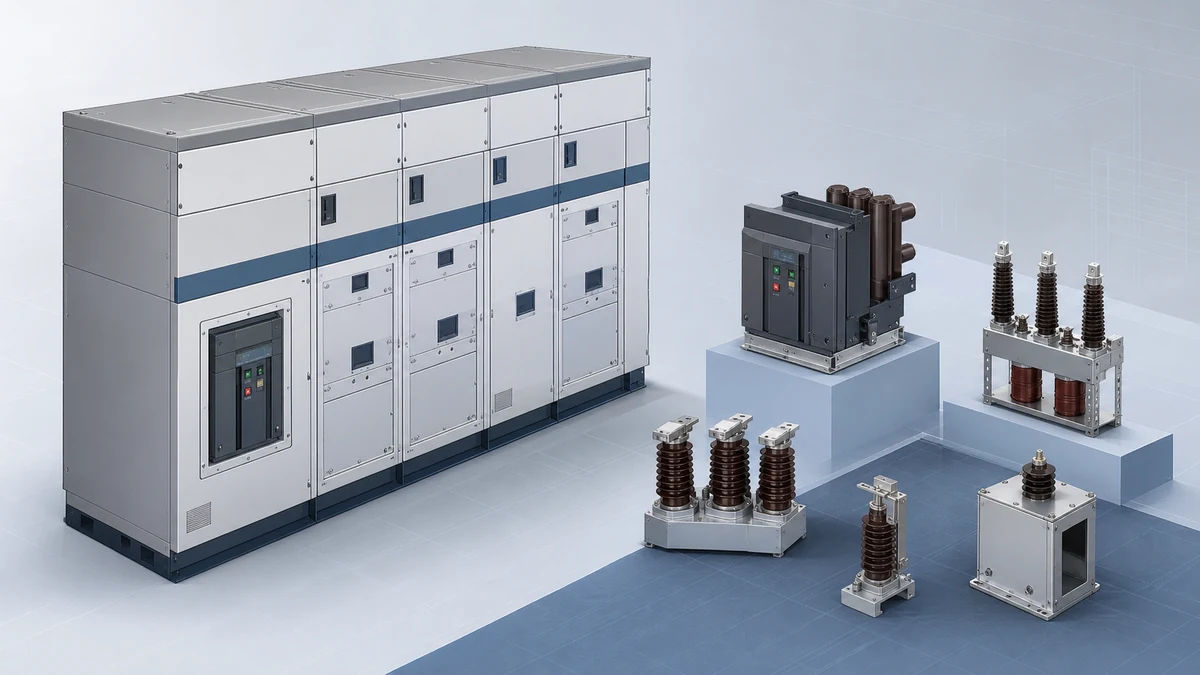
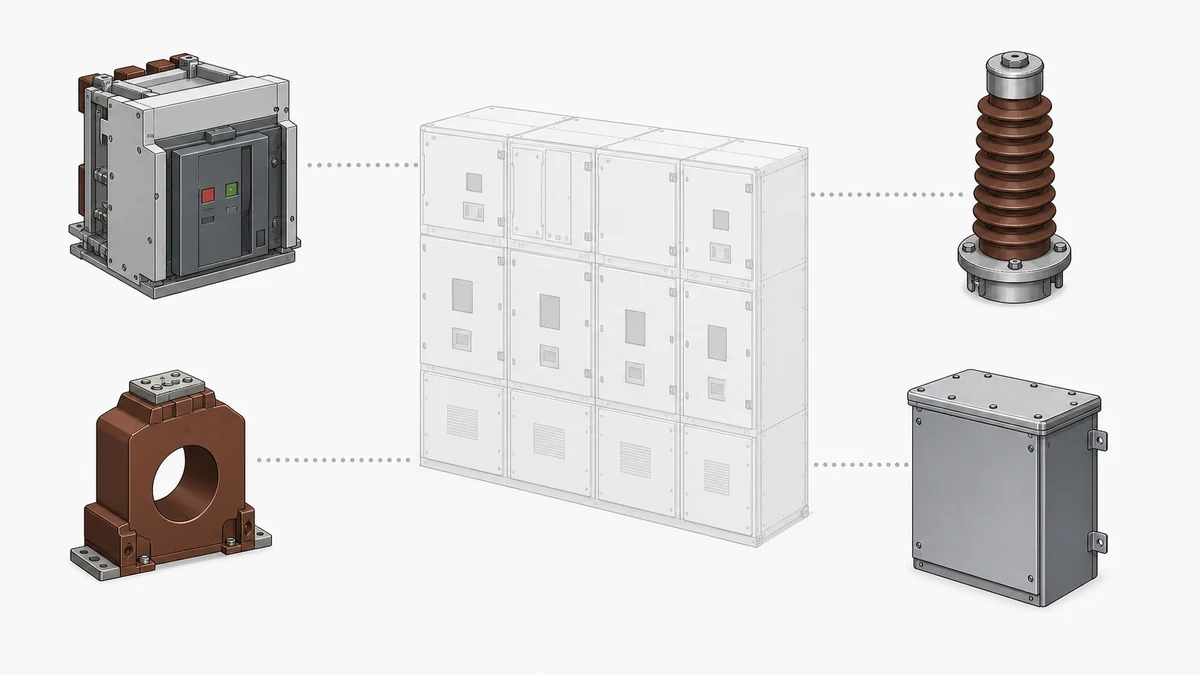
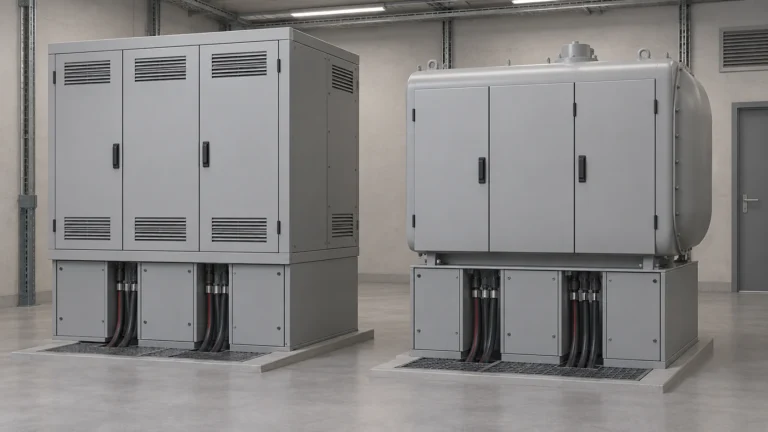
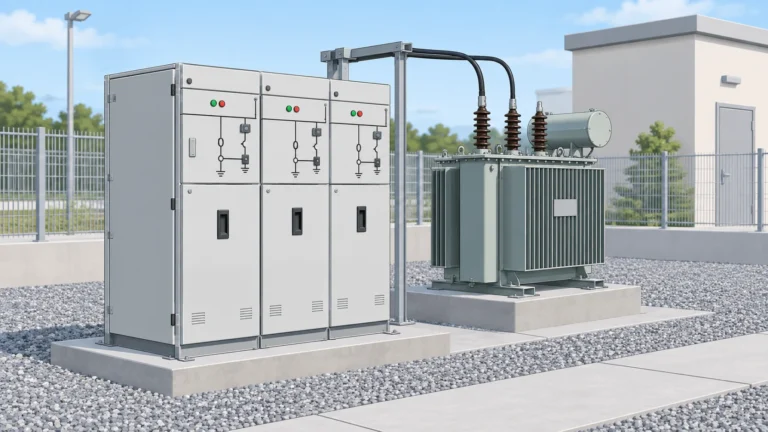
IEC 62271-200:2021 applies to prefabricated AC metal-enclosed switchgear and controlgear assemblies rated above 1 kV and up to 52 kV, for indoor or outdoor installation. It is an assembly-level standard. A type-test report under IEC 62271-200 confirms that a particular panel or cubicle configuration met its requirements as a complete assembly — it does not certify the individual components installed inside that assembly, and it does not travel with those components when they are sold separately.
IEC 62271-100:2021 applies to three-phase AC circuit-breakers above 1 kV. It is a component-level standard covering a distinct product class with different test sequences, including mechanical endurance, short-circuit making and breaking, and capacitive current switching. A supplier who quotes IEC 62271-100 compliance for a circuit-breaker is making a claim about that specific device, not the panel it may be installed in.
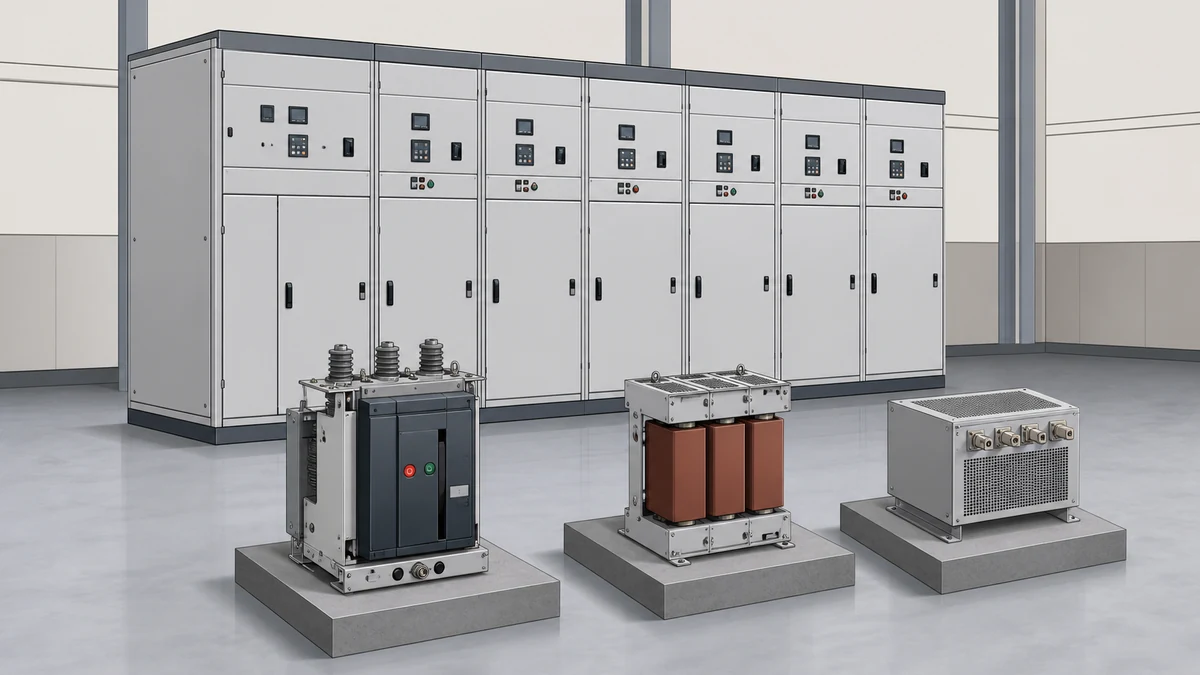
The practical implication: if you are buying a replacement vacuum circuit-breaker for an existing MV panel, you need IEC 62271-100 evidence for the breaker and, where relevant, evidence that the breaker-panel interface meets the assembly requirements of IEC 62271-200. Neither document substitutes for the other.
Standard
Scope
Product Class
Evidence Follows
IEC 62271-200:2021
Metal-enclosed assemblies, 1–52 kV
Complete switchgear panels / cubicles
The assembly configuration
IEC 62271-100:2021
AC circuit-breakers, above 1 kV
Individual CB units
The circuit-breaker unit
Establishing the Correct Document Scope Before Issuing an RFQ
The most common procurement error is requesting "IEC 62271 compliance" without specifying which part applies to the actual product being purchased. Correct this upstream, in the RFQ specification.
Start by defining the product boundary. If you are buying a complete switchgear panel, the primary evidence standard is IEC 62271-200. If you are buying a replacement or standalone circuit-breaker, the primary standard is IEC 62271-100. If the circuit-breaker will be integrated into a panel, both are relevant to different aspects of the procurement — the breaker's own type test and the assembly's type test are separate evidence chains.
Define the rated characteristics precisely in the RFQ: rated voltage (Ur), rated normal current (Ir), rated short-circuit breaking current (Isc), rated frequency, and, for circuit-breakers, rated operating sequence (O–t–CO–t'–CO). These parameters determine which test rows in the relevant standard apply to your product. A type-test report that covers a different current rating or a different operating sequence is not evidence for your application, even if the document number matches.
Ask for the original type-test report, not a summary certificate. A certificate issued by a third-party body is useful for initial qualification, but the underlying test report contains the actual test values, the test circuit configuration, and any deviations or special conditions applied during testing. Deviations matter: a type test conducted with a specific auxiliary circuit or a specific interlock configuration may not represent the product as it will be delivered to you.
The Document Checklist: What to Request for Each Product Class
Merge your selection and verification requirements into the purchase specification. The documents below represent the minimum evidence set for a technically defensible procurement decision.
**For a metal-enclosed switchgear assembly (IEC 62271-200 scope):**
Request the type-test report for the assembly, identifying the panel type, busbar configuration, and rated characteristics that match the order. Request the routine test records for the specific units being delivered — routine tests are performed on every unit and cover dielectric withstand, measurement of main-circuit resistance, and mechanical operation checks. Request the factory acceptance test (FAT) protocol if one is specified in the purchase agreement. Request the installation and maintenance manual that corresponds to the exact product revision being delivered, not a generic catalogue manual.
**For an AC circuit-breaker (IEC 62271-100 scope):**
Request the type-test report identifying the breaking test duties (T10, T30, T60, T100, and capacitive switching as applicable) and confirming the rated short-circuit breaking current and rated voltage match your specification. Request the routine test records for the delivered units, which at minimum cover the mechanical operation, contact resistance, and dielectric tests specified in the standard. Request the dielectric test certificate if withstand voltages have been verified at the factory on the delivered batch. Request the mechanism adjustment records if these are available, since the operating time and contact travel characteristics affect protection coordination.
**For both product classes, add these to every RFQ:**
Certificates of conformity are not substitutes for test reports but are useful for supply-chain traceability. Request the manufacturing site declaration so you know where the type-tested product was built versus where the delivered product was built — type tests are typically conducted on production samples, and manufacturing location changes can affect whether the type test remains representative. Request the deviation list for any known open deviations between the type-tested configuration and the as-delivered configuration.
Reading a Type-Test Report: What to Verify Before Accepting It as Evidence
A type-test report is only valid evidence if it covers the rated characteristics of the product you are actually buying. Verify these points before accepting a report as satisfactory.
Check that the rated voltage, rated current, and rated short-circuit current in the report match or exceed the values in your specification. For a circuit-breaker, check that the rated operating sequence used in the short-circuit tests matches the duty cycle your protection scheme requires. Check the test date against the current edition of the standard — tests conducted under a superseded edition may not cover all requirements of the current edition, and you should confirm with the supplier whether a full re-qualification has been carried out or whether a partial update test was performed.
Identify the testing laboratory. IEC 62271 type tests should be conducted at an accredited high-power laboratory. The report should identify the laboratory, reference the accreditation body, and state the test circuit configuration used. A report that lacks laboratory accreditation details or that was conducted at the manufacturer's own facility without independent witness should be treated as lower-confidence evidence and escalated to your technical authority for review.
Check whether the report is for the exact model variant you are ordering. Manufacturers often use family type tests to cover multiple current ratings under a single report, with a table showing which tests apply to which ratings. Verify that your specific rating is explicitly listed in the applicability table, not merely implied by the family name.
For assemblies, verify that the internal arc classification (IAC) test results, if quoted, match the accessibility class relevant to your installation. IEC 62271-200 defines accessibility classes (A, B, and C), and arc test results for one class do not apply to another.
Interface and Configuration Dependencies That Change the Evidence You Need
Neither IEC 62271-200 nor IEC 62271-100 covers every aspect of how a component will perform in your specific installation. Several interface dependencies require separate verification.
Secondary and auxiliary circuit compatibility is not covered by the main-circuit type tests. When replacing a circuit-breaker in an existing panel, the auxiliary switch configuration, the coil voltage ratings, the motor-charge circuit, and the trip/close circuit wiring must match the existing secondary schematic. A circuit-breaker that is IEC 62271-100 compliant but wired to a different auxiliary circuit standard can fail to trip on command — a protection failure, not a standards failure.
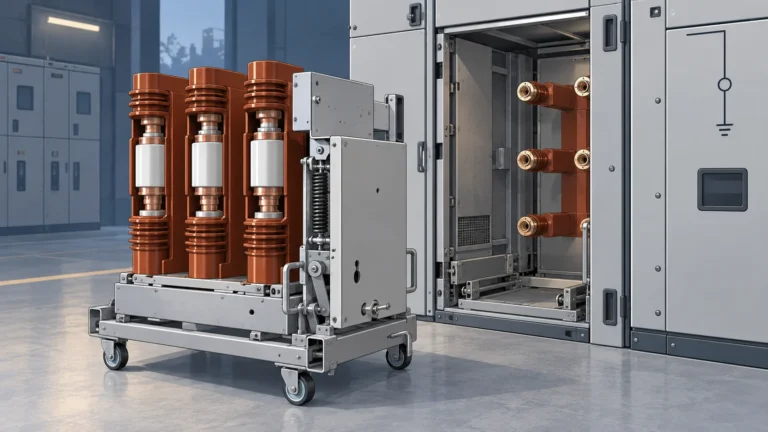
Mechanical interchangeability for withdrawable circuit-breakers requires dimensional and interface verification beyond the standard. IEC 62271-200 defines functional requirements for the withdrawable feature but does not standardize the physical interface between breaker and panel across manufacturers. Buyers replacing a breaker from one manufacturer with a unit from another should request a dimensional compatibility declaration and, where possible, a witness test of the withdrawal and engagement cycle before accepting delivery.
Protection relay coordination depends on the circuit-breaker's actual trip time characteristics. The type-test report confirms that the breaker meets its rated operating sequence at rated current and rated fault current. Relay coordination calculations, however, depend on the minimum trip time and the operating time tolerance at intermediate fault levels. Request the manufacturer's time–current characteristic curves for the specific model, not a family brochure.
Inspection and Delivery Verification
On receipt of a switchgear delivery, the documents should be matched against the physical equipment before the equipment is moved to its installation site. Model-specific approved procedures govern all subsequent commissioning, adjustment, and live operation steps — those actions are outside the scope of a document review guide.
Verify the nameplate data on each delivered unit against the routine test records and the purchase order. The nameplate is the primary traceability link between the physical unit and its factory test records. Discrepancies between nameplate ratings and purchase-order ratings — even minor ones such as a different auxiliary voltage — should be resolved with the supplier before installation proceeds.
Check that the routine test records accompany the delivery and cover every unit in the shipment. Routine tests are per-unit, not per-batch; a single routine test record for a batch of ten circuit-breakers is not compliant evidence. If routine test records are missing, do not accept the delivery as fully documented until they are provided.
Confirm the revision level of the installation and maintenance manual against the unit's manufacturing date and software version (where applicable). Switchgear and circuit-breaker designs are revised over product lifetimes, and an earlier edition of the manual may reference different setting ranges, different lubricants, or different inspection intervals than the version you have received.
If the delivery includes a factory acceptance test (FAT) protocol, verify that all test items have a recorded result and that any non-conformances are closed. Open non-conformances at delivery are a contractual and technical risk; they should be resolved before the equipment enters an energized system.
FAQ
What is the difference between IEC 62271-200 and IEC 62271-100?
IEC 62271-200 is an assembly standard covering complete metal-enclosed switchgear panels rated 1–52 kV. IEC 62271-100 is a component standard covering individual AC circuit-breakers above 1 kV. The two standards address different product classes with different test requirements. Compliance evidence under one does not satisfy the requirements of the other.
What is a type-test report and why does it matter more than a certificate?
A type-test report is the primary technical record of the tests performed on a representative sample of a product design. It contains the actual test values, test circuit configuration, test sequence, and any conditions or deviations applied during testing. A conformity certificate summarizes the outcome but omits the technical detail needed to confirm that the tested configuration matches the product being procured. For procurement decisions, the underlying report is the definitive document.
What is the IAC classification under IEC 62271-200?
IAC stands for Internal Arc Classified, an optional designation under IEC 62271-200 indicating that the assembly has been type-tested for internal arc resistance. The classification includes an accessibility class (A for restricted access, B for accessible front only, or C for accessible on all sides) and a fault current and duration for which the test was conducted. IAC classification evidence is specific to the tested configuration and accessibility class; it does not generalize across panel variants or access conditions.
What is routine testing and how does it differ from type testing?
Type testing is performed once on a representative design sample to prove that the design meets the standard's requirements. Routine testing is performed on every unit manufactured to verify that production quality is consistent with the type-tested design. For buyers, routine test records are proof that the specific unit delivered to them was tested at the factory; type-test records prove the design is sound. Both are necessary for a complete evidence set.
What is the significance of the rated operating sequence for a circuit-breaker?
The rated operating sequence defines the duty cycle the circuit-breaker must withstand during short-circuit type testing — typically expressed as a sequence of open and close operations separated by defined intervals (for example, O–0.3s–CO–3min–CO). Different protection applications impose different duty cycles, and the type test is valid only for the operating sequence under which it was conducted. Buyers should confirm that the type-tested operating sequence matches the protection philosophy of the installation before accepting a circuit-breaker as suitable for the application.
What is the correct action when a type-test report does not cover the exact product variant ordered?
Request a written clarification from the supplier identifying which aspects of the variant fall within the type-tested family and which, if any, are covered by partial update tests or engineering assessments. If the supplier cannot demonstrate traceability between the delivered variant and a compliant type-test configuration, escalate to your technical authority. Accepting undocumented deviations transfers technical risk to the buyer and may affect the validity of the installation's overall type-test basis.
LEO Chen
With more than 20 years of industry experience, LEO Chen has worked with major companies on switchgear, transformer components and medium-voltage equipment projects. He contributes practical guidance for engineers and sourcing teams, with a focus on clear selection criteria, application context and the information needed to prepare an informed RFQ. Connect with LEO on LinkedIn.