Send the request type, manufacturer, equipment model/year, part reference, ratings, quantity, destination, required date, and any drawing or photo notes. The SUVELL team will review the request.
Email: admin@suvell.com
Phone: +86 189 6871 1705
Factory: No.208 Wei 12 Rd, Yueqing Economic Development Zone, Wenzhou, Zhejiang, China
Bay-O-Net Fuse Replacement: Fuse Holder, Link, and Coordination Data
Bay-O-Net replacement requires identifying the complete installed assembly even when only one part is needed. This checklist covers mounting style, holders, links, cartridges, and associated hardware, while keeping fuse-family changes and protection coordination tied to the approved engineering basis before purchase release.
Identify the Bay-O-Net assembly reference and whether it is sidewall- or cover-mounted before selecting a replacement component.
State whether the order covers a link, holder, cartridge, end plug, arc follower, gasket, locknut, or complete assembly to avoid an incomplete supply.
Retain the approved fuse family, rating, and coordination basis; alternatives need review by the responsible project engineer rather than an ampere-rating match alone.
A **Bay O Net fuse replacement** decision should be based on confirmed transformer fuse data, not on a visual match or a fuse-link reference alone. Bay-O-Net systems include assembly hardware, holders, links, cartridges, end plugs, gaskets, locknuts, and coordination requirements that must be checked against the installed transformer and the approved protection design.
This checklist is intended for replacement-data collection and purchasing decisions for transformer fuses. It does not assign protection coordination responsibility; final coordination decisions remain under the responsible project engineer.
Decision Checklist for a Bay O Net Fuse Replacement
Use this checklist before requesting or approving a replacement:
Confirm whether the installed Bay-O-Net assembly is sidewall-mounted or cover-mounted.
Record the installed assembly reference from the transformer documentation, purchase records, or existing component markings.
Identify whether the request is for a complete assembly, inner holder, fuse holder, fuse link, fuse cartridge, end plug, gasket, arc follower, locknut, or another part.
Capture the voltage class, fuse family, rating, and assembly context only from approved documentation or verified markings.
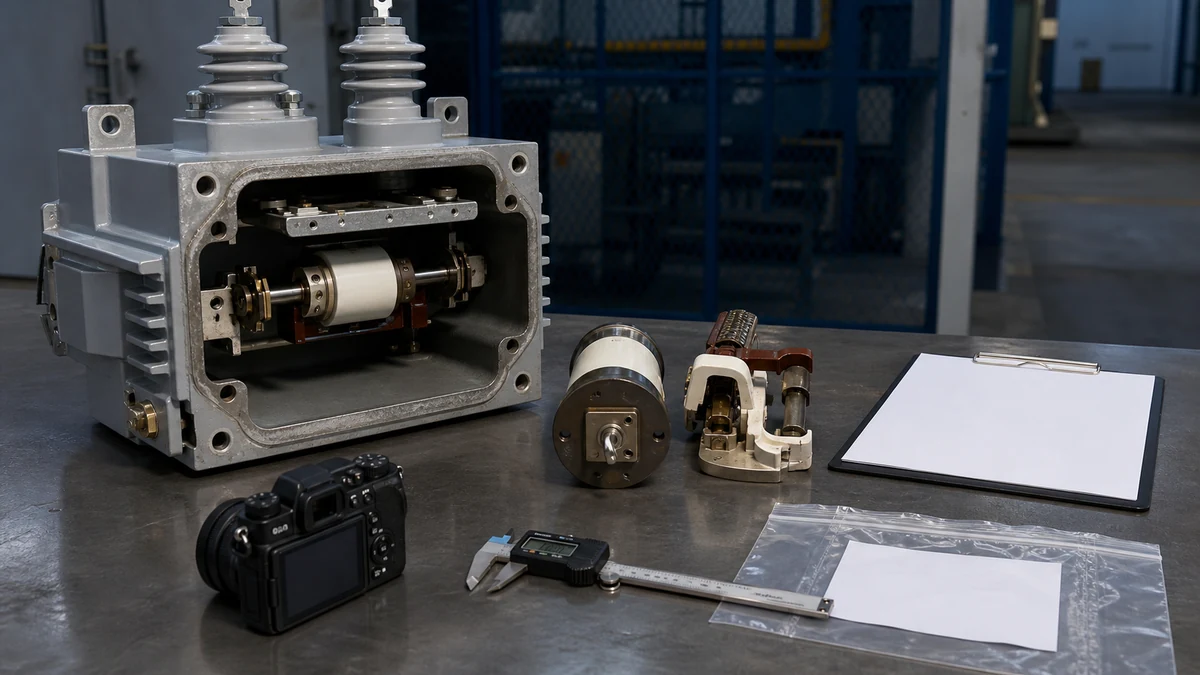
Provide photographs of the installed assembly, holder, handle area, tank interface, and removed fuse component if available.
Confirm whether the existing unit uses a current-limiting arrangement or another Bay-O-Net fuse configuration.
Request the approved coordination basis from the project engineer before changing fuse family or rating.
Do not assume that two Bay-O-Net items are interchangeable because they look similar or share a partial link description.
Confirm the Installed Bay-O-Net Assembly
Bay-O-Net catalogs distinguish between **sidewall-mounted** and **cover-mounted** assemblies. This matters because the mounting arrangement, assembly interface, and included parts may differ. A replacement request should identify the installed assembly as a system, not only as a fuse link.
Before asking for a replacement, collect:
Data to confirm
Why it matters
Sidewall-mounted or cover-mounted arrangement
Confirms the physical assembly context
Installed assembly reference
Links the request to the correct catalog family or replacement path
Transformer manufacturer and model records
Helps validate original configuration
Existing markings on holder, link, cartridge, or end plug
Reduces risk of selecting a non-compatible component
Photographs of the installed fuse pocket and removed parts
Supports comparison of interface and component set
Whether the request is for one part or the complete assembly
Prevents missing gaskets, locknuts, arc followers, or holders
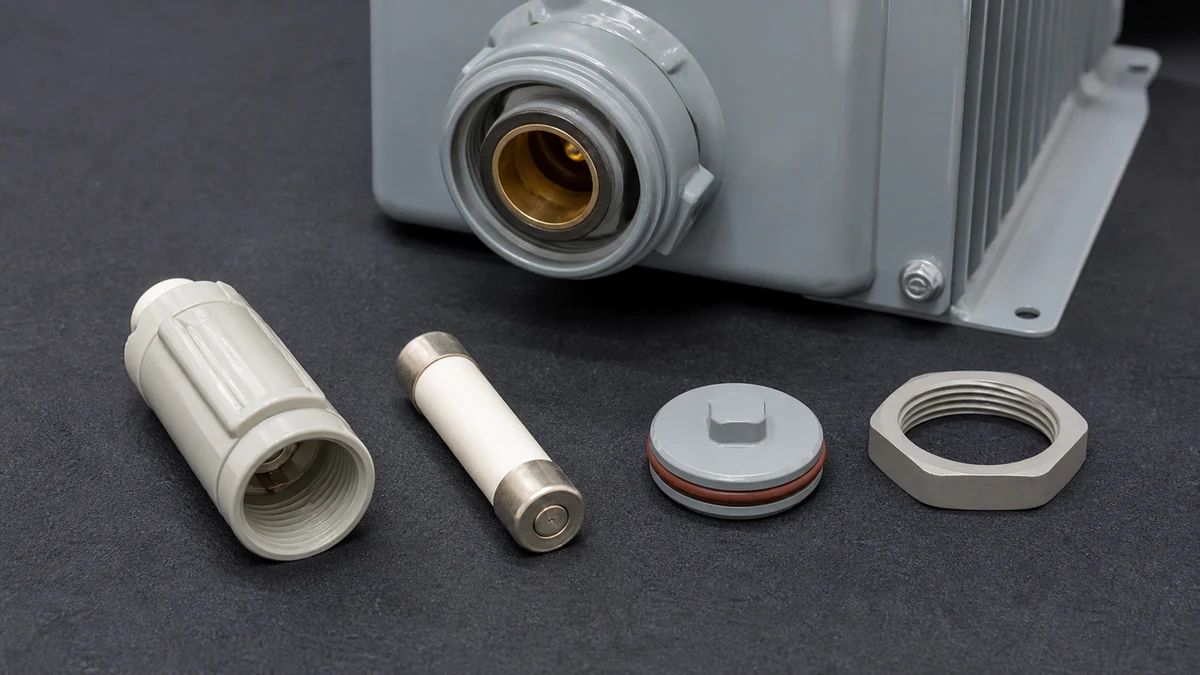
Bay-O-Net catalogs separately identify items such as inner holders, fuse cartridges, end plugs, fuse holders, arc followers, gaskets, and locknuts. A correct request should state exactly which components are required.
Common replacement scopes include:
Fuse link only
Fuse holder only
Inner holder or cartridge
End plug
Arc follower
Gasket and locknut
Complete Bay-O-Net assembly
Current-limiting Bay-O-Net assembly components
If the replacement is driven by a failure event, do not assume that replacing only the link is sufficient. The holder, end plug, gasket, arc follower, or mounting interface may also require inspection or replacement according to the transformer owner’s maintenance procedure.
Capture Holder, Link, and Interface Data
The fuse link reference is important, but it does not establish full assembly compatibility by itself. Bay-O-Net link catalog data is presented by electrical characteristics, voltage context, and assembly context, while dimensional information may be provided as reference information. Therefore, the replacement request should combine link data with assembly and interface data.
Include the following in the data pack:
Required data
Notes for replacement control
Installed Bay-O-Net assembly reference
Primary compatibility anchor
Mounting arrangement
Sidewall or cover mounted
Fuse holder or inner holder reference
Confirms the physical holder family
Fuse link or cartridge reference
Supports electrical replacement identification
End plug details
Needed where the catalog separates end plug components
Arc follower details
Important when the part is separately listed
Gasket and locknut requirements
Needed for assembly completeness
Transformer voltage and application context
Use only verified project or equipment documentation
Existing coordination documents
Required before changing rating or family
This approach helps avoid a common purchasing error: ordering a link that appears correct while the holder, assembly, or interface is not confirmed.
Keep Protection Coordination Under Project Engineering Control
Protection coordination for Bay-O-Net fuses depends on the identified fuse family, rating, and comparison basis. Published coordination tables are conditional: they apply to specific fuse families and ratings and must be interpreted in the context of the project’s protection design.
For replacement purchasing, the correct action is to request the approved coordination basis, not to create a new coordination decision at the procurement stage.
The replacement file should identify:
Existing fuse family
Existing rating
Matching replacement family and rating, if already approved
Upstream and downstream protective device context, if provided by engineering
Approved coordination table or study reference
Name or role of the responsible project engineer
Whether the replacement is like-for-like or requires engineering review
Do not change the Bay-O-Net fuse family, rating, or current-sensing/dual-sensing selection solely because a part is available faster. Any such change should be released through the responsible project engineer.
Prepare the RFQ Data Pack
A decision-stage RFQ should be specific enough for the supplier to identify the correct transformer fuse component set and flag missing data before quotation.
Recommended RFQ checklist:
RFQ item
Include before quotation
Transformer nameplate photo
Yes
Bay-O-Net assembly photo
Yes
Removed fuse component photo
If available
Existing assembly reference
Required where available
Holder or inner holder reference
Required where available
Fuse link or cartridge reference
Required where available
Mounting style
Sidewall-mounted or cover-mounted
Required scope
Link, holder, end plug, gasket, locknut, arc follower, or complete assembly
Quantity
State installed quantity and spare quantity separately
Coordination basis
Approved study, table reference, or engineer confirmation
Replacement urgency
Planned outage, emergency spare, or stock replenishment
Acceptance requirement
Like-for-like replacement or engineer-approved alternative
A complete RFQ reduces the chance of receiving a quote for only the visible fuse link when the actual requirement includes holder or assembly hardware.
Review the Quote Before Purchase Release
Before issuing a purchase order, compare the quotation against the replacement checklist.
Confirm that the quote clearly states:
The exact component scope being supplied
Whether the item is a fuse link, holder, cartridge, end plug, or complete assembly
Whether gaskets, locknuts, or arc followers are included or excluded
The referenced assembly or compatible assembly context
The fuse family and rating, if included in the scope
Any assumptions made by the supplier
Any items requiring engineering confirmation before use
If the quote does not identify the installed assembly context, request clarification before purchase release. A Bay-O-Net part should not be accepted only because its description includes a familiar fuse-link name.
FAQ
What is a complete Bay O Net fuse replacement request?
A complete Bay O Net fuse replacement request identifies the installed assembly, mounting arrangement, fuse holder or inner holder, fuse link or cartridge, end plug, gasket, locknut, arc follower, and approved coordination basis where applicable. It should also include photos and transformer documentation so the replacement is not treated as an interchangeable generic fuse item.
What is the difference between a Bay-O-Net fuse holder and a fuse link?
The fuse holder is part of the physical assembly interface, while the fuse link is the replaceable protective element used within the Bay-O-Net system. Catalogs may list holders, links, cartridges, end plugs, and other parts separately, so a fuse link reference alone does not confirm that the holder or assembly hardware is compatible.
What is the role of coordination data in Bay-O-Net fuse replacement?
Coordination data confirms that the selected fuse family and rating fit the approved protection scheme. Coordination tables depend on specific fuse families and ratings, so the replacement process should request the approved coordination basis and leave coordination decisions with the responsible project engineer.
What is the risk of ordering by visual match only?
A visual match can miss differences in assembly type, holder design, mounting arrangement, end plug, gasket, locknut, arc follower, or fuse family. Bay-O-Net components may look similar while belonging to different assembly contexts. Ordering by verified assembly and component data is safer than ordering by appearance.
What is needed before approving an alternative Bay-O-Net fuse?
An alternative Bay-O-Net fuse should not be approved by purchasing alone. Before approval, the project engineer should confirm the fuse family, rating, coordination basis, and assembly compatibility. The supplier can support identification and replacement data, but protection coordination remains engineering-controlled.
LEO Chen
With more than 20 years of industry experience, LEO Chen has worked with major companies on switchgear, transformer components and medium-voltage equipment projects. He contributes practical guidance for engineers and sourcing teams, with a focus on clear selection criteria, application context and the information needed to prepare an informed RFQ. Connect with LEO on LinkedIn.