Send the request type, manufacturer, equipment model/year, part reference, ratings, quantity, destination, required date, and any drawing or photo notes. The SUVELL team will review the request.
Email: admin@suvell.com
Phone: +86 189 6871 1705
Factory: No.208 Wei 12 Rd, Yueqing Economic Development Zone, Wenzhou, Zhejiang, China
Incoming Inspection Checklist for MV Switchgear and Transformer Spare Parts
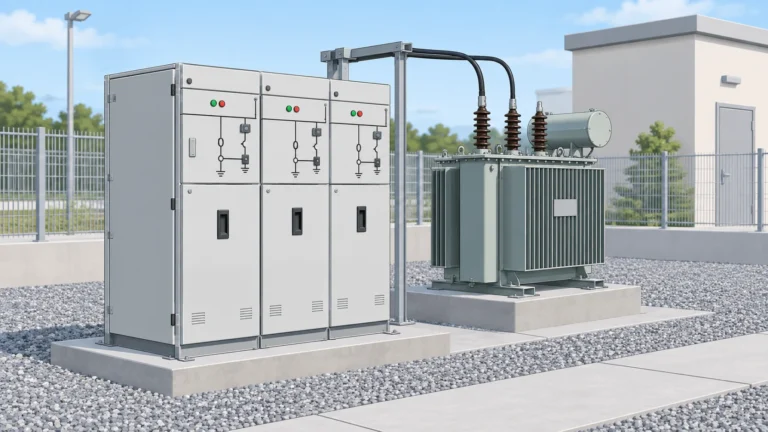
Incoming inspection establishes the identity and condition of MV switchgear and transformer spares before they enter usable stock. This checklist covers delivery documents, packaging, component-specific damage checks, traceability, storage requirements, and disposition records, keeping receipt acceptance distinct from later installation and commissioning tests.
Compare delivered part numbers, revisions, ratings, and serial or batch records with the purchase order and approved documentation before release to inventory.
Photograph packaging and transit damage, then inspect insulation, terminals, seals, and mechanical assemblies using criteria for the received part family.
Record storage orientation and shelf-life requirements, and keep damaged or mismatched items on hold until their disposition is documented.
When MV switchgear and transformer spare parts arrive on site, the receiving inspection is the last controlled opportunity to catch transit damage, misidentification, or documentation gaps before a component enters your inventory or goes directly to a repair bay. A rigorous incoming inspection does not substitute for type-test records or final commissioning acceptance, but it does establish the evidentiary baseline that protects your procurement, warranty, and safety chain.
Why Incoming Inspection Matters for MV Spare Parts
MV spare parts occupy a risk tier that standard commercial goods do not. A vacuum interrupter delivered with a hairline seal crack, a current transformer with a dented secondary terminal, or a bushing with moisture ingress that went unreported will pass visual acceptance if the inspector does not know what to look for — and will fail in service at the worst possible moment.
The inspection function serves three distinct purposes. First, it validates that the delivered item matches the purchase order, the approved drawing set, and the original equipment manufacturer's part number before the part enters your warehouse. Second, it creates a contemporaneous record of condition that anchors any warranty or insurance claim arising from transit damage. Third, it prevents a compromised part from being treated as a serviceable spare, which is the scenario most likely to produce an unplanned outage or a safety event.
Schneider Electric's Masterclad guidance makes this sequencing explicit: receiving, handling, and storage are treated as three separate disciplines, and the receiving step requires immediate comparison against the packing list plus immediate reporting of any suspected transit damage. That principle — compare, inspect, record before moving — applies regardless of manufacturer or part family.
Evidence Boundaries: What Standards Govern and What They Do Not
IEC 62271-1:2017 is the common-specification standard for AC high-voltage switchgear and controlgear at rated voltages above 1 kV, covering both indoor and outdoor equipment. It defines rated characteristics, design and construction requirements, and type-test and routine-test obligations. It is not a receiving-inspection procedure. It does not tell a receiving inspector what to measure on a spare vacuum interrupter or how to judge the acceptability of a dented panel. Treating a type-test certificate issued under IEC 62271-1 as a receiving-acceptance certificate for a replacement part conflates two different points in the quality chain.
The practical implication is that your incoming inspection checklist must draw its acceptance criteria from four sources that IEC 62271-1 does not replace: the OEM's installation and maintenance manual for the specific part number, the purchase order technical specification, any approved drawing or dimensional standard referenced in the contract, and your own site's receiving-inspection procedure. Where those sources conflict, the OEM manual governs physical condition criteria, the purchase order governs identity and marking, and your site procedure governs process and escalation.
Documentation Verification Before Physical Inspection Begins
Documentation review is not a formality. It establishes the identity baseline against which every physical observation will be judged, and it should be completed before the packaging is opened.
The minimum document set for an MV spare part includes the packing list or delivery note, the certificate of conformance or quality release record, the test report (routine test at minimum; type-test certificate for primary insulation components), and — for circuit breaker and switchgear mechanisms — the OEM's serial number traceability record linking this unit to its factory test data.
Compare the following against the purchase order line by line: part number and revision level, rated voltage and current, equipment standard and edition, country of manufacture if contractually specified, and any customer-specific tag or drawing reference. A mismatch at this stage is a hold condition regardless of physical appearance. Parts that arrive with a certificate of conformance referencing a different part number or revision than the purchase order must be quarantined and reported to procurement before inspection continues, because the physical item and its documentation may have been separated in transit or at the distributor's warehouse.
For transformer spare parts — tap changers, bushings, cooling fans, winding thermometers — also verify that the OEM designation matches the transformer nameplate data on file. A bushing with a correct part number but a voltage class one step below the transformer's rating is a documentation failure that physical inspection alone will not catch.
Packaging and Transit Damage Assessment
Assess packaging condition before you open it, and photograph what you find. Damage indicators to record include dents, punctures, crush marks, moisture staining, and evidence of repackaging or resealing. Shock-watch indicators, if fitted, must be read and logged; a triggered indicator does not automatically condemn the part, but it escalates the physical inspection and requires a documented disposition decision.
For fragile dielectric components — bushings, voltage transformers, surge arresters — examine the outer crate for any impact pattern that would align with the component's most vulnerable axis. A bushing shipped vertically that shows a lateral impact mark on the crate warrants detailed inspection of the porcelain or polymer housing for crazing or micro-cracking, which may not be visible without a magnifying glass and adequate lighting.
Schneider Electric's Masterclad guidance specifically calls for immediate reporting of suspected transit damage, which means the reporting clock starts at receipt, not at the conclusion of inspection. If damage is suspected, notify the carrier and the supplier in writing before completing the inspection, because late notification can void freight-damage claims even when the damage is genuine.
Physical Condition Checklist by Part Family
Different part families have different failure modes in transit and in storage, so the physical inspection criteria differ accordingly.
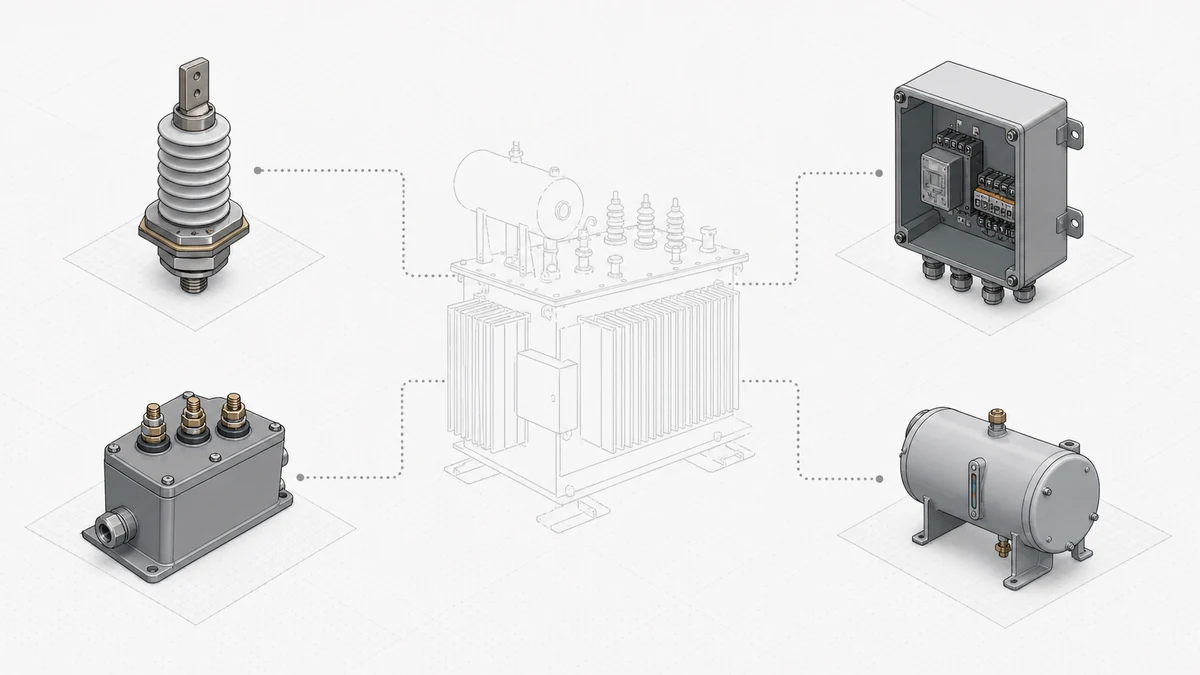
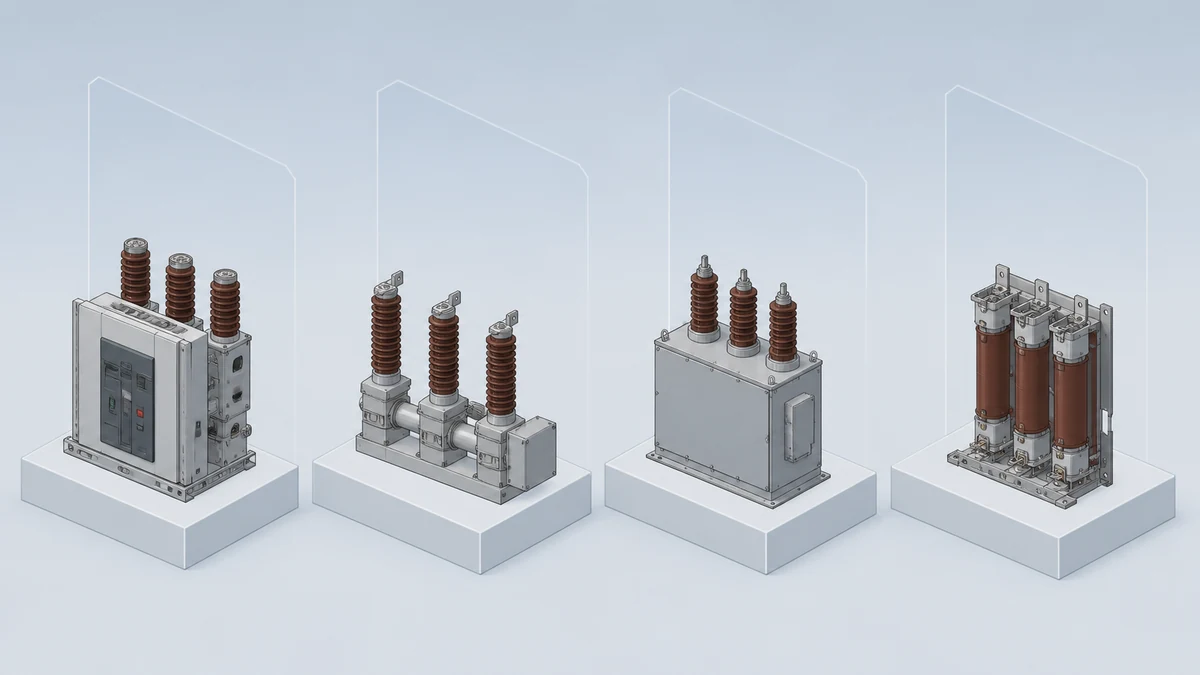
**Vacuum interrupters and SF₆ components:** Check the contact gap indicator or position indicator for correct position. Inspect the ceramic or epoxy envelope for chips, cracks, or discoloration. Verify that any pressure indicator or density gauge on SF₆ components reads within the OEM-specified range; do not attempt to adjust or charge. Check that all port fittings and plugs are intact and sealed. Gas-handling, leak-testing, and pressure-setting operations are governed by the OEM's approved procedures and applicable gas-handling regulations — do not perform them as part of incoming inspection.
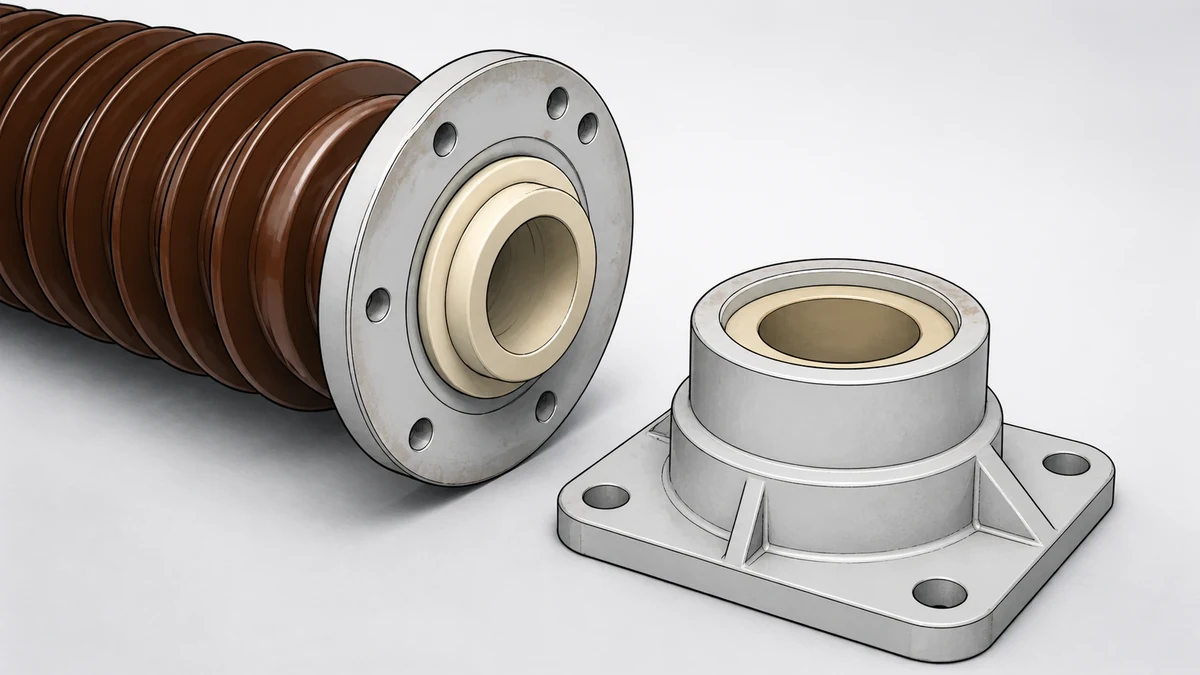
**Bushings (transformer and switchgear):** Inspect the full length of the shed profile for cracks, chips, and contamination. Examine the flange and base for mechanical damage. Verify the oil-level indicator on oil-impregnated bushings if visible. Check that the terminal hardware matches the drawing. Do not energize or apply high voltage during receiving inspection.
**Instrument transformers (CTs and VTs):** Verify the ratio, accuracy class, and burden markings against the purchase order. Inspect terminal covers and labeling. Check that secondary terminal blocks are not damaged and that all shorting links are in place on current transformers. An open-circuited CT secondary is a safety hazard; confirm shorting link integrity visually and record it.
**Circuit breaker mechanisms and operating assemblies:** Inspect for physical damage to the frame, linkages, and spring housings. Verify that all fasteners are present and that no obvious deformation exists in the mechanism housing. Check that the manual trip and close indicators move freely without binding. Do not perform mechanical operation, spring-charging, or electrical function tests during incoming inspection without the OEM's procedure for the specific mechanism type.
**Contactors, disconnectors, and isolators:** Check blade alignment visually. Inspect main contact surfaces for pitting, arc erosion, or contamination beyond what the OEM defines as acceptable for a new part. Verify that arc chutes or arc shields are undamaged and correctly seated.
**Cables and cable terminations:** Check jacket integrity and termination hardware completeness. Verify cable drum or coil labels against the purchase order. Inspect heat-shrink or cold-shrink termination kits for seal integrity; moisture ingress into a pre-prepared kit degrades the dielectric performance of the termination.
**Cooling and ancillary components (fans, pumps, radiators, thermometers):** Inspect for physical damage and verify nameplate data. For fan motors, rotate the shaft by hand to confirm it turns freely without binding or grinding.
Marking, Labeling, and Traceability Verification
Traceability is what connects a physical part to its design authority. For MV parts, inspect and record the following marking elements: the OEM nameplate or label (permanently affixed, legible, not repainted or restamped); the serial number or manufacturing batch code; the rated voltage, current, and frequency; the applicable standard and edition; and the country of manufacture.
A part with an illegible, missing, or obviously re-applied nameplate is a counterfeit risk. Even when the part appears physically correct, a compromised traceability chain means you cannot verify that the item was manufactured and tested to the standard the nameplate claims. Such parts should be quarantined and referred to procurement and, depending on the application, to the site's electrical authority.
Cross-reference the serial number against the certificate of conformance and, where available, the factory test report. If the manufacturer operates a web-based serial number verification portal, use it during incoming inspection. Record the result.
Storage and Handling Requirements Identified at Inspection
The receiving inspection is also the correct point to assign storage classification, because some MV spare parts have storage requirements that are not obvious without reviewing the OEM documentation.
SF₆ components must be stored upright or in the OEM-specified orientation and in conditions that prevent moisture contamination. Bushings must be stored vertically or horizontally according to their design; a bushing stored horizontally when it is designed for vertical storage may suffer oil migration or internal mechanical stress. Vacuum interrupters are sensitive to mechanical shock — their storage location must prevent secondary impact from adjacent stored items.
Note any time-limited storage conditions from the certificate of conformance or the OEM installation manual — for example, maximum storage time before installation for rubber-sealed components, or shelf-life limits for lubricants pre-applied at the factory. Record these on the parts storage tag at the time of inspection so the information is available at the point of use.
Escalation and Disposition Decisions
Every deviation identified during incoming inspection requires a documented disposition. The disposition options are: accept with record (minor cosmetic damage that does not affect function and is within OEM-defined limits), conditional accept pending supplier response (deviations that require OEM or supplier clarification before a fitness-for-purpose determination can be made), return to supplier (wrong part, wrong specification, or damage exceeding OEM acceptance limits), and quarantine for engineering review (suspected counterfeiting, anomalous markings, or damage of uncertain severity).
Do not allow a part to enter usable inventory with an open disposition. A quarantined part that is not formally dispositioned may be used in an emergency by someone who does not know its status. The quarantine label must include the reason for hold, the date, and the name of the inspector.
Escalation triggers that should involve the site electrical engineer or asset owner before disposition include: any SF₆ pressure reading outside the OEM-specified range; any bushing or insulator with visible cracks, regardless of depth or apparent severity; any CT arriving with an open secondary terminal; any part whose markings are inconsistent with the purchase order specification; and any part showing signs of previous installation (wear marks, used sealant, replaced fasteners) when a new part was ordered.
Consolidated Acceptance Checklist and Evidence Table
Inspection Item
Acceptance Criterion
Status
Evidence Reference
Packing list vs. delivery note
All line items match; quantities correct
☐ Pass / ☐ Fail / ☐ Hold
Purchase order and delivery note
Part number and revision
Matches PO and approved drawing exactly
☐ Pass / ☐ Fail / ☐ Hold
PO line item; OEM catalog sheet
Serial number traceability
Serial number on nameplate matches CoC and test report
☐ Pass / ☐ Fail / ☐ Hold
Certificate of conformance; factory test report
Rated voltage and current markings
Match PO specification and nameplate
☐ Pass / ☐ Fail / ☐ Hold
Nameplate; PO technical specification
Applicable standard edition
Matches PO (e.g., IEC 62271-1:2017 for HV switchgear)
☐ Pass / ☐ Fail / ☐ Hold
Nameplate; CoC; IEC 62271-1:2017 scope
Outer packaging condition
No crush, puncture, moisture ingress, or resealing evidence
☐ Pass / ☐ Fail / ☐ Hold
Photographic record at receipt
Shock-watch / tilt indicator
Not triggered, or triggered with documented engineering review
☐ Pass / ☐ Fail / ☐ Hold
Indicator reading; photo
Physical condition — insulation surfaces
No cracks, chips, crazing, or contamination beyond OEM limits
☐ Pass / ☐ Fail / ☐ Hold
OEM installation manual; visual inspection record
Physical condition — metal parts
No deformation, corrosion, or impact damage affecting fit or function
☐ Pass / ☐ Fail / ☐ Hold
OEM acceptance criteria; visual record
SF₆ density / pressure indicator
Within OEM-specified range; no adjustment attempted
☐ Pass / ☐ Fail / ☐ Hold
OEM manual; gauge reading photo
CT secondary shorting links
In place and intact
☐ Pass / ☐ Fail / ☐ Hold
Visual inspection; IEC installation guidance
Counterfeit risk markers
Nameplate original, not restamped/repainted; markings consistent
☐ Pass / ☐ Fail / ☐ Hold
Visual; OEM serial verification portal if available
Storage classification assigned
Storage orientation, temperature, humidity, and shelf life recorded
Accept / conditional / quarantine / return documented with date and inspector
☐ Pass / ☐ Fail / ☐ Hold
Site receiving inspection log
—
FAQ
What is the difference between incoming inspection and final acceptance testing for MV spare parts?
Incoming inspection is a receiving-stage activity focused on identity verification, documentation review, and physical condition assessment against the purchase order and OEM acceptance criteria. It does not involve energization, electrical testing, or operational function tests. Final acceptance testing — which may include high-voltage withstand, contact resistance measurement, or mechanism functional verification — is performed as part of installation or recommissioning and is governed by the OEM's approved procedure for the specific equipment. Treating an incoming inspection record as an acceptance test certificate is not appropriate; the two records serve different purposes in the quality chain.
What is the role of IEC 62271-1:2017 in receiving inspection?
IEC 62271-1:2017 defines the common specifications for AC high-voltage switchgear and controlgear above 1 kV, including rated characteristics, design requirements, and the type-test and routine-test obligations that manufacturers must meet. It is not a receiving-inspection procedure and does not define pass/fail criteria for individual spare parts arriving on site. Its relevance at the receiving stage is as a reference for verifying that the markings and rated values on the delivered part are consistent with the standard edition specified in the purchase order — not as an instruction for how to inspect or accept the part.
What is the correct action when a spare part arrives with a triggered shock-watch indicator?
A triggered shock-watch indicator means the component experienced a mechanical shock event during transit that exceeded the indicator's threshold. This is an escalation trigger, not an automatic rejection. The correct response is to document the indicator reading photographically, notify the carrier and supplier in writing immediately (before completing inspection, to protect freight-damage claim rights as recommended in Schneider Electric's Masterclad guidance), and escalate to an engineer for a fitness-for-purpose assessment before assigning the part to usable inventory. The engineer's review should consider the component type, its sensitivity to shock (vacuum interrupters and bushings are particularly vulnerable), and whether additional inspection — such as dielectric testing — is warranted before the part is approved for storage or installation.
What is the minimum documentation set required before a spare part can be accepted into MV switchgear inventory?
The minimum set comprises the delivery note or packing list (for identity and quantity verification), a certificate of conformance or quality release record linking the specific serial or batch number to a manufacturing and test event, and a routine test report. For primary insulation components — bushings, voltage transformers, surge arresters — a type-test certificate referencing the applicable standard edition should also be on file. Parts arriving without a certificate of conformance or with a CoC referencing a different part number than the purchase order should be placed on hold pending supplier response; they should not enter usable inventory until the documentation discrepancy is resolved in writing.
What is the inspection priority for transformer spare parts compared to switchgear mechanism parts?
Both families require the same documentation and identity verification steps, but the physical inspection priorities differ. Transformer spare parts such as bushings and tap changers carry high dielectric risk if shipped or stored incorrectly — cracks in bushing porcelain and moisture ingress in on-load tap changer mechanisms are difficult or impossible to detect after installation. The physical inspection for these parts should prioritize insulation surface integrity and storage orientation compliance. Switchgear mechanism parts — operating springs, linkages, trip coils — carry a higher risk of functional failure from transit deformation or contamination of precision surfaces, so the inspection priority shifts to dimensional integrity and freedom from contamination. In both cases, the OEM installation manual defines the specific acceptance criteria, and deviations beyond cosmetic limits are hold conditions.
LEO Chen
With more than 20 years of industry experience, LEO Chen has worked with major companies on switchgear, transformer components and medium-voltage equipment projects. He contributes practical guidance for engineers and sourcing teams, with a focus on clear selection criteria, application context and the information needed to prepare an informed RFQ. Connect with LEO on LinkedIn.