Send the request type, manufacturer, equipment model/year, part reference, ratings, quantity, destination, required date, and any drawing or photo notes. The SUVELL team will review the request.
Email: admin@suvell.com
Phone: +86 189 6871 1705
Factory: No.208 Wei 12 Rd, Yueqing Economic Development Zone, Wenzhou, Zhejiang, China
Motorized vs Manual RMU Operating Mechanisms: What Changes in the RFQ
Motorizing an RMU changes the quotation scope beyond adding a drive. This comparison identifies the functional-unit checks, control power, wiring, remote interface, interlock logic, and power-loss provisions that buyers should resolve before requesting a manual or motorized operating mechanism.
Confirm that motorization is documented for the exact RMU functional unit and configuration before specifying a motor drive or retrofit.
A motorized RFQ must assign the control supply, wiring, terminations, and any remote interface in addition to the mechanical mechanism scope.
Request the configured motor-inhibit logic, power-loss behavior, and manual override provision; interlock details from one RMU variant cannot be assumed for another.
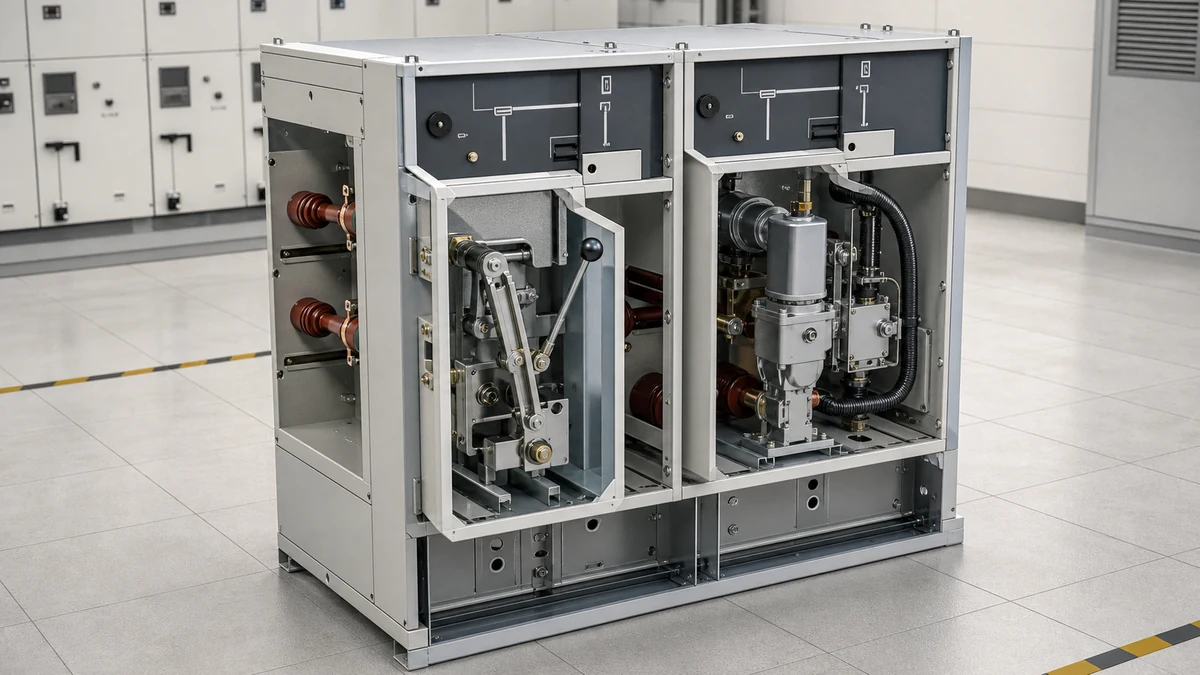
Choosing between a motorized and manual RMU operating mechanism is not a product preference — it is a system architecture decision that reshapes your RFQ scope, interlock dependencies, and site readiness requirements before a single line item is priced. The functional difference is straightforward: manual mechanisms rely on a human operator applying mechanical force through a lever or handle, while motorized mechanisms replace that action with an electric drive that can be triggered locally or from a remote point. What follows from that difference is where most procurement errors occur.
Decision Factor
Manual Mechanism
Motorized Mechanism
Operator presence required
Yes, at the cubicle
Not necessarily — depends on SCADA/remote interface
RFQ additions
Mechanism only
Motor drive unit, control voltage supply, cabling, interlock wiring
Interlock complexity
Mechanical interlocks within the unit
Electrical interlock logic added (e.g., limit-switch-based prevention of motor operation during manual actions)
Configuration dependency
Lower — fewer functional unit variants
High — motorization availability depends on functional unit and configuration
Site readiness scope
None beyond physical access
Control voltage source, cable routing, panel or RTU interface
Failure mode
Operator cannot actuate → manual intervention
Motor or control supply fault → may require manual override provision
—
The Functional Distinction and Why It Matters Before You Write the RFQ
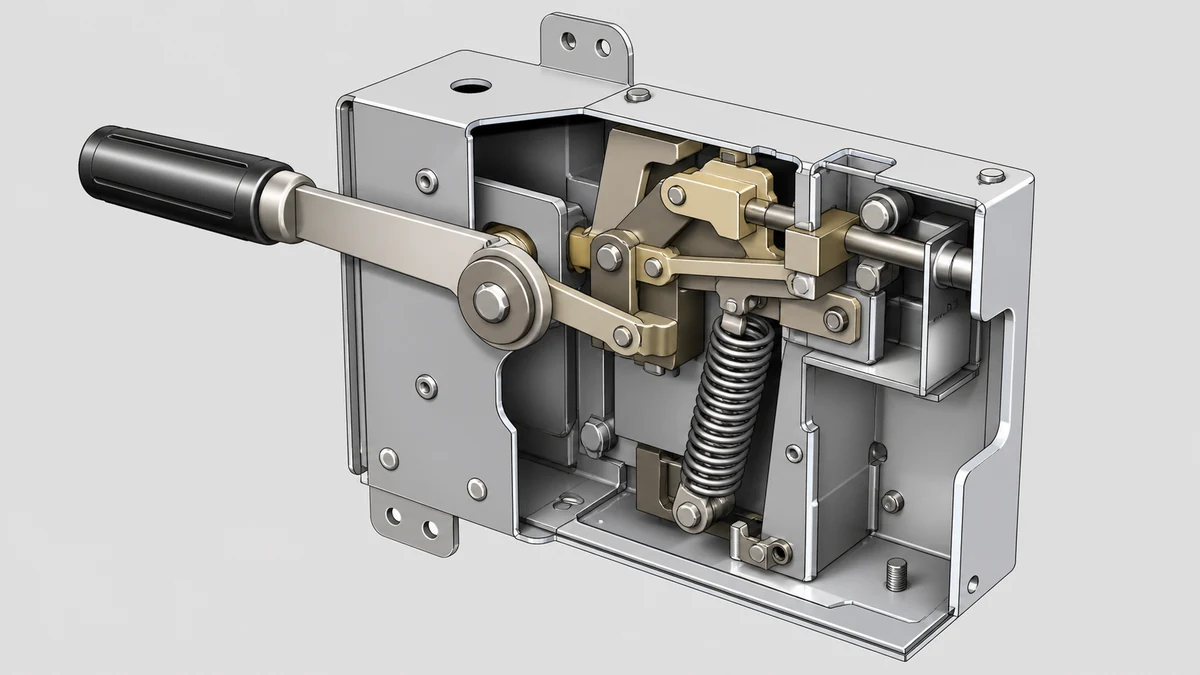
A manual RMU operating mechanism is a mechanical assembly: a lever, cam, or stored-energy spring that an operator loads and releases. The energy source is the operator. All timing, sequencing, and confirmation of operation are direct — the operator sees and feels what happened.
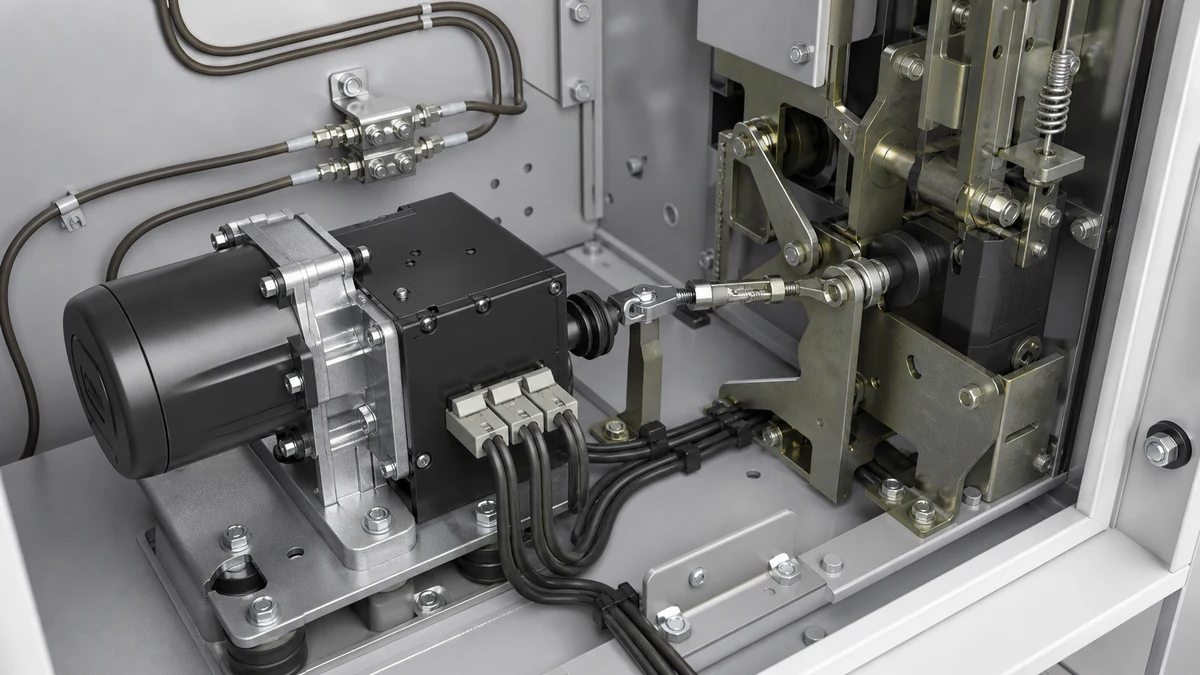
A motorized mechanism replaces the manual energy input with an electric motor drive, but it does not simply bolt onto any manual configuration. The Schneider Electric RM6 catalog makes this explicit: motorization is described as an option tied to specific functional units and configurations. Switch, circuit-breaker, and fuse-switch operating-mechanism functions may each be motorized, but not universally across all RM6 variants. This means your RFQ cannot specify "add motorization" without first confirming which functional unit is in scope and whether that unit supports a motorized drive in the manufacturer's documented configuration matrix.
The procurement consequence is direct: an RFQ that specifies motorization without locking the functional unit and configuration risks receiving non-compliant bids, or — more expensively — a delivered unit that cannot accept a motorized retrofit.
How Interlock Logic Changes Between the Two Approaches
Manual mechanisms rely on mechanical interlocks integral to the RMU: physical barriers, padlock provisions, and key schemes that prevent, for example, opening a panel while a switch is closed. These are self-contained and do not require a control circuit.
Motorized mechanisms introduce an electrical interlock layer that runs parallel to the mechanical layer. The Schneider RM6 motorized circuit-breaker configuration uses limit-switch logic that prevents the motor from operating while specified manual lever, earthing-switch, or locking actions are in progress. This is not a generic feature — it is configuration-specific to that cited variant and must not be assumed to apply to a different RMU model or a different functional unit within the same product family.
The RFQ implication: when specifying a motorized mechanism, the interlock scheme must be described in the tender document, and suppliers must confirm whether limit-switch-based or alternative logic is used, how it interfaces with any earthing-switch provision, and what happens if the control supply is lost mid-sequence. A manual mechanism requires none of this electrical documentation.
Interface and Configuration Dependencies That Belong in the RFQ
For a manual mechanism, the interface scope is limited to physical access, operator training, and any key interlock coordination with adjacent equipment.
For a motorized mechanism, the RFQ must address:
**Control voltage supply.** The motor requires a defined control voltage. The source, conductor sizing, and protection must be confirmed as part of the installation scope, not assumed from the switchgear rating.
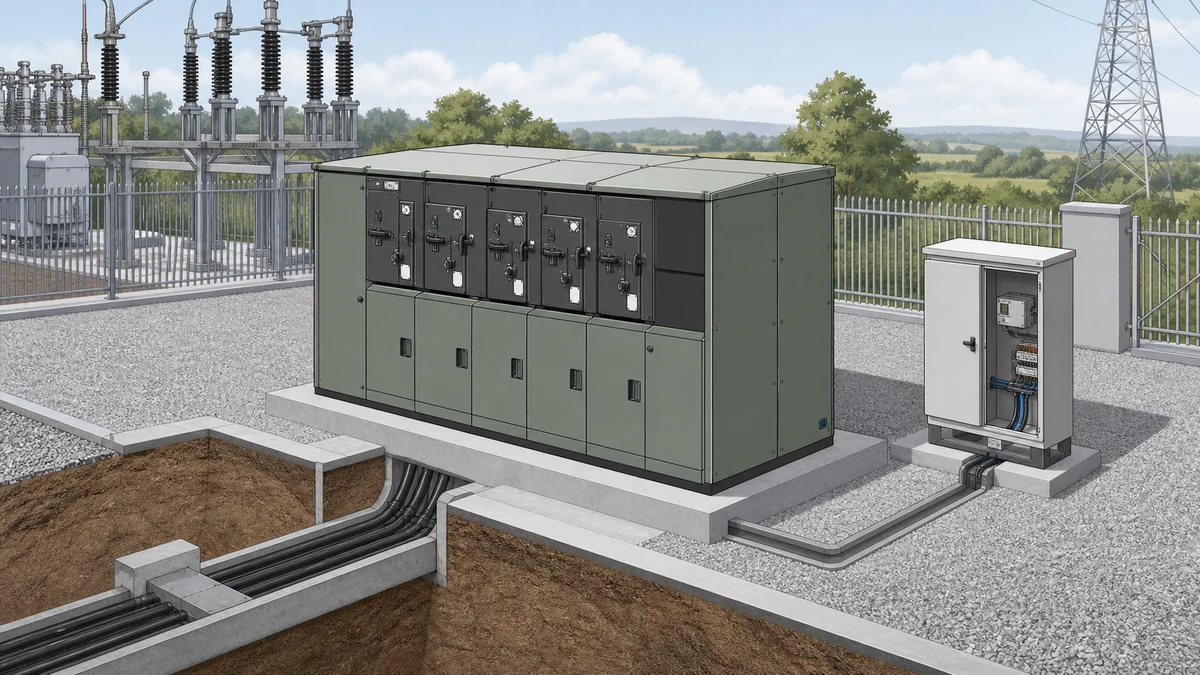
**Remote interface.** If the motorization purpose is SCADA or RTU integration, the communication protocol, signal type (dry contact, digital input, IEC 61850, etc.), and cabling route are all RFQ scope items.
**Wiring and termination.** Motor control wiring between the drive, interlock circuit, and any remote panel is a civil and electrical installation scope that a manual unit does not generate.
**Functional unit confirmation.** As documented for the RM6, motorization depends on the specific functional unit. The RFQ must name the functional unit explicitly, not just the product family.
Omitting any of these from the RFQ does not make them go away — it moves them into variation orders after award.
Standards and Evidence Boundaries
IEC 62271-200 governs metal-enclosed medium-voltage switchgear and defines requirements for operating mechanisms, interlocking, and accessibility. IEC 62271-1 covers common requirements. These standards set the framework for what a mechanism must achieve; they do not specify whether motorization is available on a given unit — that remains a manufacturer-specific design decision.
The RM6 catalog data cited in this article is specific to that product. Limit-switch interlock logic described for the RM6 motorized circuit-breaker configuration is documented by Schneider Electric for that configuration; it has not been verified for other RMU families, other manufacturers, or other functional units within the RM6 range. Do not carry these specifics into a specification for a different product without independently confirming the equivalent documentation from that manufacturer.
Endurance ratings, control voltage tolerances, and cycle-life figures for motorized drives are manufacturer-declared values that vary by product and must be sourced from current product documentation, not from general industry assumptions.
Installation and Failure Risk Differences
A manual mechanism fails in a way that is immediately visible: the operator cannot complete the action, and the cause is local and physical. Recovery is manual and typically does not require control circuit restoration.
A motorized mechanism can fail in several ways that are less obvious at the cubicle: loss of control voltage, motor drive fault, limit-switch misalignment, or interlock logic preventing operation due to an upstream condition that may itself be a fault. Each failure mode requires a different diagnostic path. The RM6 interlock logic — which prevents motor operation during manual lever, earthing-switch, or locking actions — means that a locked or partially operated adjacent function will inhibit motorized operation. An operator relying solely on remote control who does not know the local state of the unit may incorrectly diagnose a communication fault when the actual cause is a mechanical interlock condition.
The RFQ should ask suppliers to document: the manual override provision when control supply is absent, the default position on power loss, and the reset procedure after a failed motorized operation.
A Selection and Verification Workflow Before the RFQ Is Issued
Work through these questions before the tender document is drafted:
1. **Is remote or unattended operation actually required?** If not, manual is lower complexity, lower cost, and has fewer dependencies. Motorization adds value only when it removes a trip or enables genuinely unattended switching.
2. **Which functional unit is in scope?** Confirm the exact RMU model, functional unit designation, and configuration against the manufacturer's catalog to verify that motorization is a documented option — not an assumed one.
3. **What is the control voltage source?** Identify it, confirm its availability at the switchgear location, and include it in the electrical scope.
4. **What does the interlock scheme need to achieve?** Define the earthing-switch, locking, and sequencing requirements, then confirm with the manufacturer how the motorized configuration handles them for the specific unit.
5. **What remote interface is required?** Specify the protocol and signal type in the RFQ. A motorized mechanism without a defined interface delivers a drive with no control path.
6. **What is the failure and override requirement?** Specify whether a manual override is required when control supply is lost. Not all motorized configurations include this as standard.
7. **Who is responsible for control wiring and termination?** Assign this scope explicitly in the RFQ, or it will be excluded from bids.
What Vendors Need to Confirm in Their Response
A well-structured RFQ response for a motorized mechanism should confirm: the specific functional unit and configuration code, that motorization is a factory-fitted option for that unit (not a field retrofit), the control voltage range, the interlock logic and any conditions that inhibit motor operation, the manual override provision, and the test evidence (type test, routine test) relevant to IEC 62271-200.
For a manual mechanism, the confirmation scope is simpler: mechanism type, operating force requirements, interlock scheme, and any key or padlock provisions.
If a vendor's response cannot confirm the functional unit and configuration dependency for a motorized option, that is a bid qualification flag, not a minor omission.
—
FAQ
What is the main difference between a motorized and manual RMU operating mechanism?
A manual mechanism requires an operator at the cubicle to apply mechanical force through a lever or handle. A motorized mechanism uses an electric drive that can be triggered locally or remotely. The operational difference is significant for unattended substations or SCADA-controlled networks, but the deeper difference for procurement is that motorization depends on a specific functional unit and configuration — it cannot be assumed as a universal add-on.
What is limit-switch interlock logic in a motorized RMU mechanism?
In the Schneider Electric RM6 motorized circuit-breaker configuration, limit-switch logic is an electrical interlock that prevents the motor drive from operating while specific manual lever, earthing-switch, or locking actions are being performed. It is a safety layer that avoids mechanical conflict between motorized and manual operation paths. This behavior is documented for that specific RM6 configuration and should not be assumed for other RMU models or other functional units without manufacturer confirmation.
What is the impact on RFQ scope when specifying a motorized mechanism?
A motorized mechanism adds several scope items that a manual mechanism does not require: a control voltage supply and its source, motor control wiring and termination, a defined remote interface (signal type and protocol) if SCADA integration is intended, and documentation of the interlock scheme. Each of these is an installation scope item that must be assigned in the tender document. Omitting them shifts cost and responsibility into post-award variations.
What is the risk of specifying motorization without confirming the functional unit?
The Schneider RM6 catalog documents that motorization availability depends on the functional unit and configuration. Specifying motorization against a product family rather than a confirmed functional unit can result in non-compliant bids or a delivered unit that does not support the motorized drive. Confirming the exact functional unit and configuration code before issuing the RFQ is the simplest way to avoid this.
What is the correct way to handle manual override requirements for motorized mechanisms?
The RFQ should explicitly specify whether a manual override is required when control supply is absent. Not all motorized RMU configurations include a manual override as standard. If the application requires the ability to operate the mechanism without control voltage — for example, during a power supply fault — this must be stated as a requirement in the tender, and suppliers must confirm how their configuration meets it.
LEO Chen
With more than 20 years of industry experience, LEO Chen has worked with major companies on switchgear, transformer components and medium-voltage equipment projects. He contributes practical guidance for engineers and sourcing teams, with a focus on clear selection criteria, application context and the information needed to prepare an informed RFQ. Connect with LEO on LinkedIn.